
Climate in Singapore is tropical (equatorial), warm, and humid throughout the year, with temperatures ranging between 25–31°C and annual precipitation averaging about 2,400 mm. Influenced by its equatorial position, monsoon wind systems, and surrounding marine waters, the city-state experiences frequent intense downpours and strong ultraviolet radiation. Elevated humidity levels and high-intensity rainfall can impact buildings, increasing the risk of water ingress and material degradation. Proper waterproofing systems, durable construction materials, and efficient drainage infrastructure are essential to protect the building envelope from long-term climate-related damage.
What Is the Tropical Climate in Singapore?
Tropical climate is a year-round weather pattern defined by intense heat, heavy rainfall, and persistently high humidity. As a broad category within climate science, it sits under the wider umbrella of equatorial climate systems found close to the Earth’s equator. Singapore experiences this climate type fully, with no winter, no dry season, and no significant temperature drop at any point in the year. The combination of daily solar radiation, monsoon rains, and warm sea breezes shapes everything from how residents dress to how buildings are designed and maintained. Understanding what tropical climate means in practice helps homeowners, developers, and facilities managers across Singapore make smarter long-term decisions.
This climate pattern also brings very real structural challenges. The relentless moisture, strong UV radiation, and thermal movement place building materials under constant stress. Unlike temperate or arid climates, which offer seasonal relief, Singapore’s tropical conditions deliver humidity, rainfall, and heat simultaneously throughout every month. Rooftops leak, facades stain, and waterproofing membranes degrade faster here than almost anywhere else in the world. Recognising the full scope of the tropical climate helps building professionals and property owners plan maintenance schedules, choose the right materials, and protect their investments effectively over the long term.
What Type of Climate Zone Is Singapore In?
Singapore sits in a tropical rainforest climate zone, classified as Af under the Köppen climate classification system.
This zone receives rainfall evenly across all twelve months, with no dry season at any point. Temperatures stay consistently warm, typically between 25°C and 34°C daily. High relative humidity is a permanent feature of this equatorial setting, distinguishing it clearly from tropical monsoon or tropical savanna climate zones found elsewhere in the region.
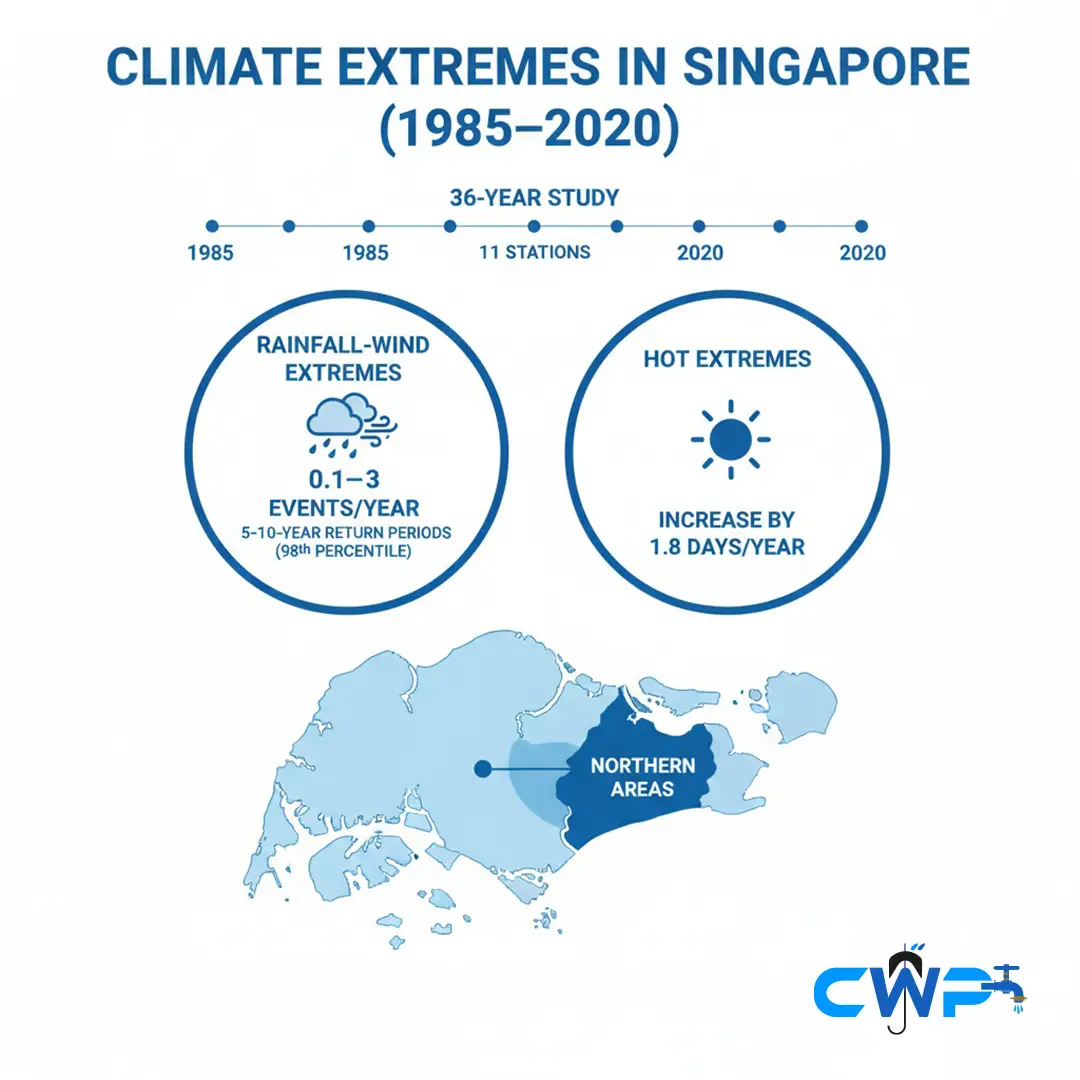
A study published on Climate (A scientific, peer-reviewed, open access journal of climate science) entitled that “Characteristics of Compound Climate Extremes and Impacts in Singapore, 1985–2020” showed that a 36-year study (1985–2020) across 11 stations in Singapore found compound rainfall–wind extremes occurring 0.1–3 events/year, with 5–10-year return periods at the 98th percentile. Hot extremes increased by 1.8 days/year, highlighting rising climate risks and spatial vulnerability in northern areas.
This graphic shows climate extremes in Singapore based on 36 years of data.
Why Does Singapore Have a Tropical Climate?
Singapore has a tropical climate because its equatorial position, warm surrounding seas, and intense year-round solar radiation combine to generate persistent heat, moisture, and rainfall.
1. Equatorial Location
Singapore sits just 1.3 degrees north of the equator. The sun remains nearly overhead throughout the entire calendar year. This geographic position drives powerful convective heating, where warm surface air rises rapidly and generates towering cumulonimbus clouds. Those clouds release the heavy, frequent downpours that define Singapore’s daily weather. No seasonal shift breaks this cycle, making Singapore one of the wettest and most consistently warm cities in Southeast Asia.
2. Consistent Solar Radiation
The sun delivers direct, high-intensity radiation to Singapore on virtually every day of the year. Unlike locations in temperate zones, Singapore receives solar energy at a near-vertical angle without seasonal weakening. This steady solar input keeps land and sea surface temperatures warm and drives rapid evaporation from the ocean. That evaporated moisture rises, condenses into cloud cover, and falls back as rainfall, completing the convective cycle that sustains Singapore’s tropical climate continuously.
3. High Humidity Levels
Singapore’s relative humidity regularly exceeds 80%, particularly during the early morning hours. This persistent atmospheric moisture originates largely from the warm sea waters surrounding the island. High humidity is both a cause and consequence of the tropical climate here. Moisture in the air slows evaporative cooling from the skin, making the heat feel more intense. For buildings, this dampness accelerates material degradation, promotes mould colonisation, and causes moisture infiltration that compromises structural integrity over time.
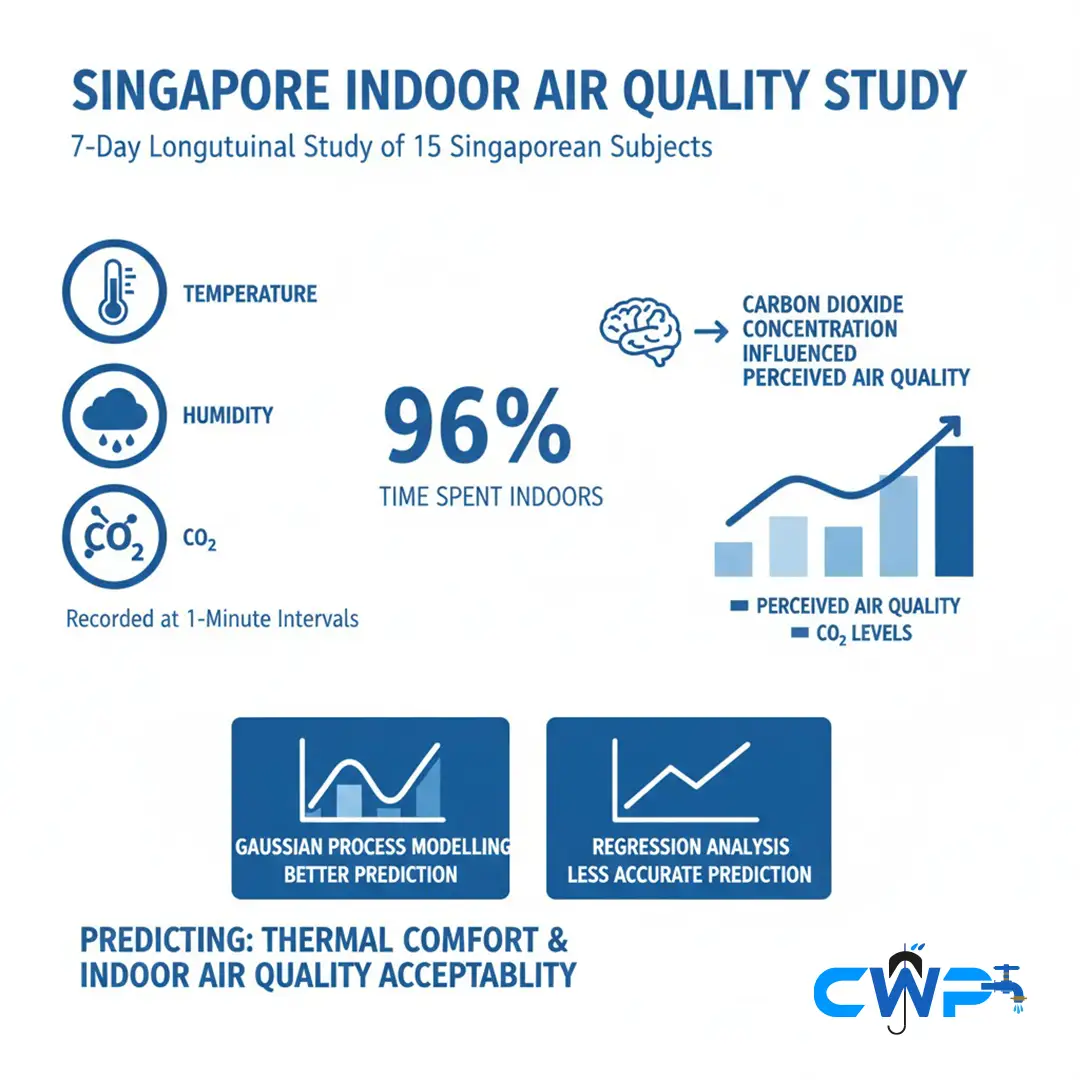
A study published in The International Journal of Building Science and its Applications entitled “Longitudinal assessment of thermal and perceived air quality acceptability in relation to temperature, humidity, and CO2 exposure in Singapore” showed that a 7-day longitudinal study of 15 Singaporean subjects recorded temperature, humidity, and CO2 at 1-minute intervals. Participants spent 96% indoors. Carbon dioxide concentration significantly influenced perceived air quality, and Gaussian process modelling outperformed regression analysis in predicting thermal comfort and indoor air quality acceptability.
The following image shows a Singapore indoor air quality study.
4. Monsoon Winds
Two monsoon seasons drive Singapore’s annual rainfall rhythm. The Northeast Monsoon blows from November to March, bringing prolonged heavy rain and strong north-easterly winds across the region. The Southwest Monsoon runs from June to September, delivering a wetter pattern despite being generally less intense. Between these two monsoon cycles, inter-monsoon periods in April to May and October to November bring frequent afternoon thunderstorms and sudden squalls driven by strong convective activity.
A study published in the Journal of the European Geosciences Union entitled “Importance of tides and winds in influencing the nonstationary behaviour of coastal currents in offshore Singapore” reported that a 1-year (2018–2019) observational study using 8 current meters in southern Singapore found tidal forces explain 14–45% of current variance. Current velocities exceeded 100 cm s−1 during spring tides. Diurnal currents dominated semidiurnal patterns, with 30–60 day MJO-linked wind forcing significantly modulating nonstationary coastal circulation.
5. Being Surrounded by Warm Sea Waters
Singapore is an island state enclosed by the South China Sea, the Strait of Malacca, and the Java Sea. These warm ocean surfaces release vast volumes of water vapour into the atmosphere continuously. That vapour condenses into cloud systems and produces the sudden, heavy downpours Singapore experiences almost daily. The surrounding sea also moderates temperature extremes, preventing the sharp heat spikes or cold drops seen in continental climates and keeping Singapore’s tropical climate remarkably consistent throughout the entire year.
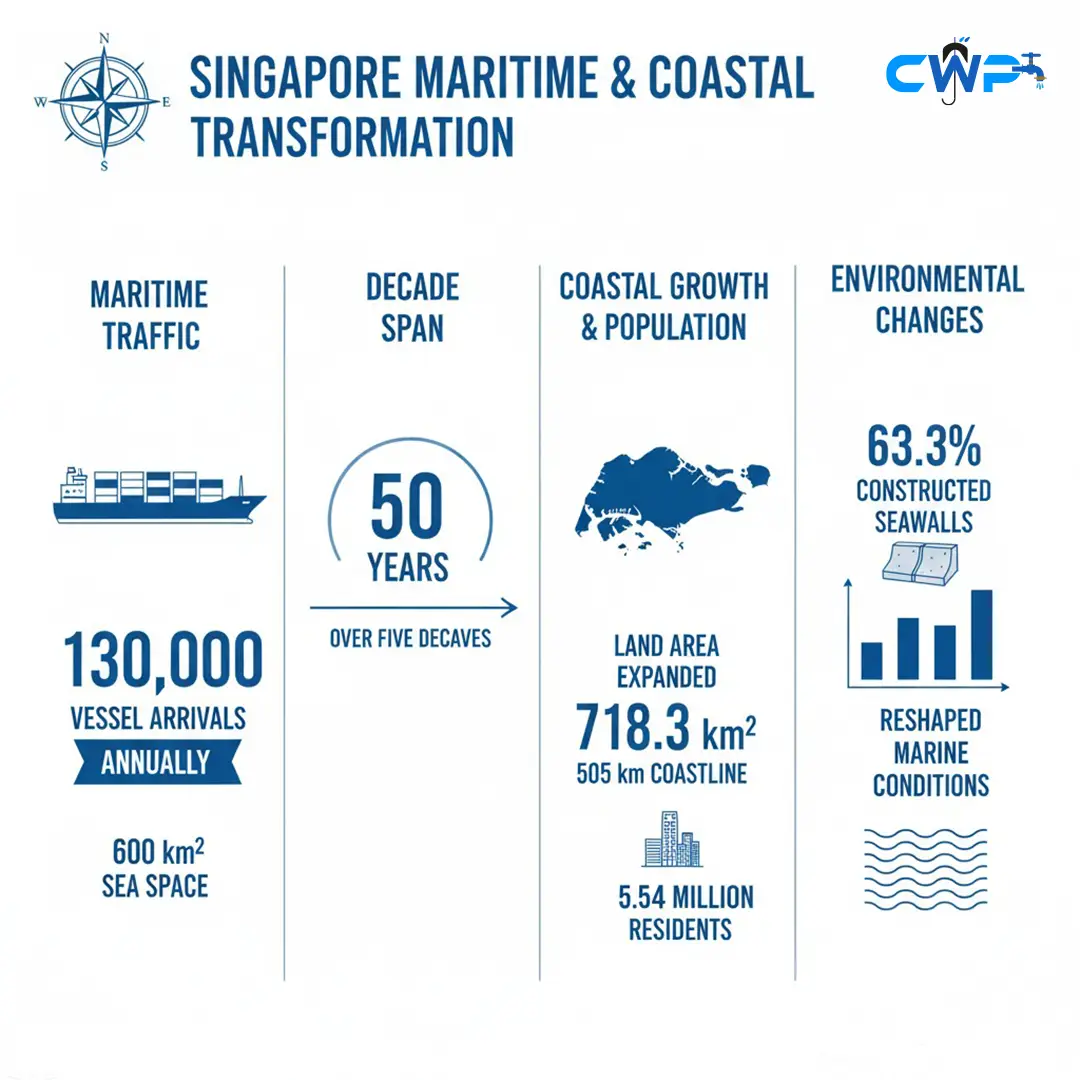
A study published in the journal Regional Studies in Marine Science entitled “The urban marine environment of Singapore” showed that Singapore manages approximately 130,000 vessel arrivals annually within 600 km2 of sea space. Over 50 years, rapid coastal development supporting 5.54 million residents expanded its 718.3 km2 land area and 505 km coastline, with 63.3% constructed seawalls, significantly reshaping marine environmental conditions.
The following image shows warm seawater in Singapore.
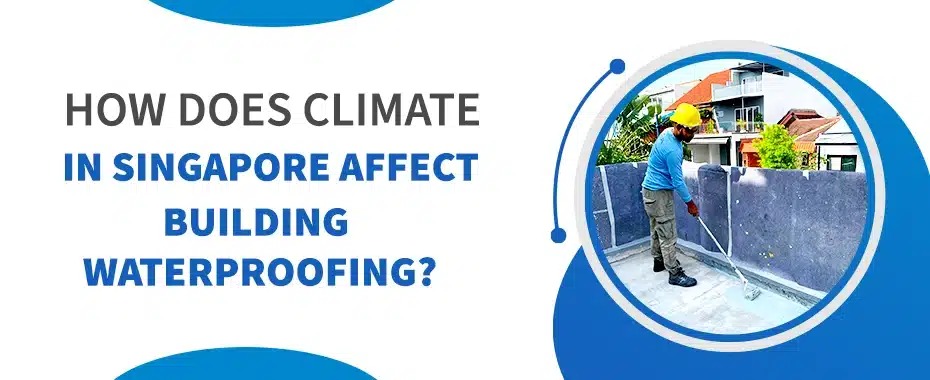
How Does the Climate in Singapore Affect Waterproofing?
Singapore’s tropical climate subjects waterproofing systems to continuous stress from heavy monsoon rainfall, intense UV radiation, and persistent humidity all year round.
To understand the full impact, it helps to first address what waterproofing means in this context. Waterproofing refers to the application of a protective barrier that prevents water and atmospheric moisture from penetrating a building surface, structure, or substrate. In Singapore’s tropical conditions, waterproofing is not a cosmetic finish but a structural necessity. The combination of torrential rainfall, high humidity, and strong solar radiation degrades membranes, sealants, and coatings significantly faster than in temperate regions. Rooftops, balconies, basements, retaining walls, and external facades all require properly specified and regularly maintained waterproofing protection.
A waterproofing system designed for a cooler climate will often fail well ahead of its rated service life when installed in Singapore. Frequent thermal cycling between cool mornings and hot afternoons creates physical stress in bonded membranes and flexible sealants. Choosing the right waterproofing solution, whether a polyurethane coating, cementitious slurry, liquid-applied membrane, or crystalline treatment, is a critical decision that affects long-term building performance. Regular professional inspection and a proactive maintenance programme are both essential to prevent minor failures from escalating into costly structural repairs.
A study published in Buildings (an international, peer-reviewed, open access journal) entitled “Developing a Waterproofing Decision-Making Model for High-Rise Building Projects in the Tropics” emphasised climate-responsive waterproofing selection in tropical high-rise developments.
1. Heavy Rain Creates Continuous Water Exposure
Singapore receives over 2,300mm of rainfall annually, with no genuine dry season providing any structural relief. Rooftops, balconies, and external walls face this water load without interruption across every month of the year. Even hairline cracks in a waterproofing membrane allow rainwater to penetrate the structural substrate beneath. Continuous water exposure accelerates concrete carbonation, promotes corrosion in reinforcing steel, and enables dampness to migrate into interior living and working spaces over time.
A study published in Applied Sciences entitled “Effects of Heavy Rainfall on Shallow Foundations in Bukit Timah Granite in Singapore” found that rainfall intensities of 8–32 mm/h over 1–5 days significantly reduced matric suction and bearing capacity in shallow foundations. Settlement increased up to 100%, with finite element modelling underpredicting results by 4–26% compared to empirical calculations.
2. High Humidity Causes Moisture Retention
High humidity means atmospheric moisture is always present, even between rainfall events. Condensation forms on cooler building surfaces and seeps gradually into walls, ceiling slabs, and floor structures. This retained moisture promotes mould growth, weakens adhesive bonds in membrane overlaps, and corrodes embedded steel reinforcement within concrete elements. Effective waterproofing in Singapore must address not only direct rainwater ingress but also the diffuse moisture penetration that high humidity drives into building envelopes daily.
3. Temperature Fluctuations
Singapore stays warm year-round, but surface temperatures shift noticeably between the cooler early morning and the peak afternoon heat. Roofing membranes, joint sealants, and protective coatings repeatedly expand and contract under this daily thermal cycling. Over time, this movement opens micro-cracks in waterproofing layers, especially at laps, upstands, and perimeter details. Those cracks become entry points for rainwater, particularly during the intense afternoon downpours that follow the hottest periods of each day.
4. Strong UV Exposure Degrades Materials
Singapore’s equatorial position exposes roof surfaces and external facades to intense UV radiation every single day. UV energy breaks down the polymer chains within waterproofing membranes, acrylic sealants, and protective topcoats applied to external surfaces. Without UV-resistant formulations, these materials become brittle, crack, and begin to delaminate from the substrate within a few short years. Specifying UV-stable waterproofing products for all exposed external surfaces is essential in Singapore’s intense solar environment.
A study published in the Slovak Journal of Civil Engineering entitled “Physical-mechanical Properties Of Waterproofing Materials Applied To Roofs In The Context of UV Degradation” analysed PVC-P membranes under UV (290–400 nm), humidity, and temperature exposure. Accelerated testing increased exposure ninefold and deterioration rates five to six times compared to natural conditions. Another study in the International Journal of Infrastructure Research and Management entitled “Sustained Load And Aging Impact On Waterproof Membranes: A Review Of Current Research” reported that waterproof membranes account for 85.29% of materials used in leakage prevention, including over 60% modified bitumen and 11.44% polymer membranes. Testing showed 100% strain at 115°C caused PVC failure within 7 days, while aging at 90°C showed performance decline between 364 and 504 days.
5. Accelerated Material Deterioration
The combined effect of heat, moisture, and UV radiation accelerates material ageing far beyond the rates seen in temperate climates. A waterproofing system rated for twenty years under cooler, drier conditions may fail within eight to ten years in Singapore’s tropical environment. Bituminous membranes, grout joints, sealant beads, and acrylic coatings are all susceptible to this accelerated degradation cycle. Scheduling professional building inspections every three to five years allows building owners to catch early-stage deterioration before it becomes a significant and expensive structural problem.
What Causes Climate Change in Singapore?
Climate change in Singapore stems primarily from rising greenhouse gas emissions, urban heat island intensification, and regional deforestation that disrupts the natural processes regulating Southeast Asia’s climate.
1. Increase Greenhouse Gases
Burning fossil fuels releases carbon dioxide, methane, and nitrous oxide into the atmosphere continuously. These greenhouse gases trap outgoing heat and prevent it from escaping into space, gradually warming the planet. In Singapore, road transport, industry, and power generation are the largest national contributors to carbon emissions. As atmospheric concentrations of these gases continue rising, Singapore’s already warm tropical climate becomes hotter, wetter during peak events, and more unpredictable across the seasonal cycle.
2. Urban Heat Island Effect
Singapore’s dense built environment absorbs and retains solar heat far more effectively than natural vegetation or open countryside. Concrete roads, glass-clad towers, and tarmac surfaces store thermal energy during the day and release it slowly after dark. This urban heat island effect can raise local air temperatures by up to 4°C above those in surrounding forested or rural areas. The effect not only worsens heat stress for residents but also accelerates wear on building materials, increases air conditioning energy demand, and shortens the service life of waterproofing and facade systems.
3. Deforestation and Land Development
Forests across Southeast Asia regulate regional rainfall patterns and absorb significant volumes of carbon dioxide from the atmosphere. When trees are cleared for agriculture or urban development, the land loses its capacity to recycle moisture through transpiration, disrupting cloud formation processes. This regional deforestation directly influences the climate conditions Singapore experiences, even though most of the land clearing occurs well beyond the island’s borders. Reduced forest cover in neighbouring countries alters the moisture cycle that feeds Singapore’s monsoon rainfall each year.
4. Rising Sea Temperatures
The warm seas surrounding Singapore are growing warmer as global ocean heat content continues to rise. Higher sea surface temperatures increase evaporation rates, feeding more atmospheric moisture above Singapore and the broader region. This extra moisture intensifies rainfall events, raises background humidity levels, and contributes to stronger convective storms during the inter-monsoon periods. Rising ocean temperatures also drive sea level rise, which poses a growing long-term coastal and flood risk to Singapore’s low-lying infrastructure and reclaimed land areas.
A study published in the Indonesian Journal of Geography entitled “Sea Surface Temperature (SST) and Rainfall Trends in the Singapore Strait from 2002 to 2019” showed that SST ranged between approximately 28°C and 31°C, inversely correlating with rainfall. Higher rainfall and lower SST occurred during December-February, while lower rainfall and warmer SST prevailed from March to August.
5. Increased Frequency of Extreme Weather
Climate change is shifting Singapore’s rainfall patterns towards more intense, concentrated events with shorter intervals between them. Periods of extreme downpours alternate with drier spells in ways that fall outside historical norms. Flash floods become more frequent when storm drains and urban drainage networks cannot absorb sudden, very heavy rainfall in a short period. These extreme weather events place greater cumulative stress on rooftops, retaining walls, and waterproofing systems, making climate-resilient building design more important than ever before.
How Often Does It Rain in Singapore?
Singapore receives rain on roughly 178 days per year, with frequent showers and afternoon thunderstorms occurring across all twelve months.
The tropical climate drives intense convective storms, particularly between April and November when solar heating is strongest. Showers arrive suddenly, often lasting between thirty minutes and two hours. The Northeast Monsoon season between November and January delivers more prolonged and consistent rainfall. Even during the relatively drier months, brief but heavy downpours remain a daily reality for residents, commuters, and building owners managing water ingress risks across the island.
A study published in the Journal of Applied Meteorology and Climatology entitled “Observed Rainfall Trends over Singapore and the Maritime Continent from the Perspective of Regional-Scale Weather Regimes” reported that from 1980–2014, sea surface temperatures averaged 27–29°C, influencing rainfall variability across eight identified monsoon-related weather regimes.
When Is the Monsoon Season in Singapore?
Singapore has two monsoon seasons: the Northeast Monsoon from November to March, and the Southwest Monsoon from June to September.
The Northeast Monsoon brings the heaviest and most sustained rainfall of the year to Singapore. Strong winds push moisture-laden air masses across the South China Sea, producing prolonged downpours, particularly in December and January. The Southwest Monsoon is generally less intense but still delivers significant rainfall across the island. The inter-monsoon periods in April to May and October to November bring frequent, powerful Sumatra squalls and afternoon thunderstorms fuelled by active convective heating.
What Is the Difference Between Equatorial and Tropical Monsoon Climate?
An equatorial climate delivers heavy rainfall evenly across all twelve months, while a tropical monsoon climate concentrates rainfall in a distinct wet season followed by a clear dry season.
| Feature | Equatorial Climate | Tropical Monsoon Climate |
|---|---|---|
| Rainfall Distribution | Even across all twelve months | Concentrated wet season only |
| Dry Season | None present | Pronounced dry season |
| Temperature Range | Consistently 25°C to 34°C | Warm with seasonal variation |
| Humidity Level | Constantly high year-round | High in wet season, lower in dry |
| Wind Patterns | Light equatorial winds | Strong seasonal monsoon winds |
| Annual Rainfall | Over 2,000mm typically | Between 1,000mm and 3,000mm |
| Examples | Singapore, Borneo, Congo Basin | Mumbai, Bangkok, Manila |
How Much Rainfall Does Singapore Receive Each Year?
Singapore receives an average of 2,340mm of rainfall per year, making it one of the wettest urban environments in the entire Southeast Asian region.
This annual total spreads across most months, with no true dry season offering meaningful relief. The Northeast Monsoon months of November to January contribute the highest monthly rainfall shares. Even the relatively drier months regularly record over 100mm. Singapore’s network of canals, reservoirs, and storm drains manages this high rainfall load, supporting both national flood control objectives and the island’s water supply needs throughout the year.
A study by the Meteorological Service Centre entitled “Climate of Singapore” reported that from 1991 to 2020, Singapore recorded an annual average of 2,113.3 mm of rainfall across approximately 171 rain days per year. Rainfall intensity peaks during the wet phase of the Northeast Monsoon (November–January), with daily maximum temperatures ranging 31–33°C and mean relative humidity averaging 82%. The National Climate Change Secretariat reported that from 1984 to 2022, annual mean temperature increased by 0.24°C per decade, rainfall rose by 83 mm per decade, and projected mean sea level may rise 0.23–1.15 m by 2100.
What Are The Wettest Months In Singapore?
November, December, and January are Singapore’s wettest months, driven by the peak intensity of the Northeast Monsoon bringing prolonged, heavy rain.
Monthly rainfall during this period regularly exceeds 300mm. Persistent cloud cover, strong north-easterly winds, and continuous showers define these months for building owners and facilities managers. Rooftops, balconies, and exposed facades face the greatest waterproofing stress during this monsoon peak. April and May also rank among the wetter months as inter-monsoon thunderstorms and Sumatra squalls bring sudden, intense downpours to the island.
A study published in Sustainability entitled “Climate Change Projection and Its Impacts on Building Façades in Singapore” indicated that projected increases in rainfall intensity and extreme events may accelerate corrosion, material fatigue, adhesive failure, and biological growth on façades.
Does Heavy Rainfall Affect Buildings In Singapore?
Yes, heavy rainfall directly affects buildings in Singapore, causing roof leaks, moisture ingress, structural deterioration, and accelerated degradation of building materials and waterproofing systems.
Singapore’s annual rainfall of over 2,300mm places every building under intense, unrelenting water stress throughout the year. Waterproofing failures allow moisture to enter slabs, walls, and ceiling cavities silently before any visible damage appears. Over time, this unchecked moisture weakens reinforced concrete, triggers widespread mould growth, and leads to costly remedial waterproofing and structural repair works. A proactive inspection and maintenance programme is essential for every building owner seeking to protect their property from the cumulative effects of Singapore’s tropical rainfall.
A study published by Springer Nature Singapore entitled “Wind Driven Rain Analysis for Effective Industrial Building Design in Singapore to Mitigate Rainwater Penetration” demonstrated that wind-driven rain can increase façade wetting by 22–35%, while architectural elements such as louvres and overhangs reduce infiltration.
How Does Frequent Rain Impact Roof Structures?
Frequent rain accelerates roof deterioration by stressing waterproofing membranes, blocking drainage outlets, and causing water ponding that gradually weakens the structural slab underneath.
Roof surfaces receive daily rainfall without any seasonal reprieve in Singapore’s tropical climate. Water ponding on flat rooftops is a common consequence of blocked outlet gullies or insufficient roof drainage falls. Standing water penetrates cracks in membranes and reaches the concrete substrate beneath. Once moisture contacts embedded reinforcing steel, corrosion begins and concrete spalling follows. Without timely waterproofing intervention, this sequence causes structural damage that is far more expensive to repair than early-stage preventive maintenance.
How Does High Humidity Affect Buildings?
High humidity causes building materials to absorb atmospheric moisture persistently, promoting mould growth, weakening adhesive bonds, and corroding metals embedded within structural elements.
Walls, floors, and ceilings absorb diffuse moisture from humid air continuously, even when no rain falls outside. This invisible moisture entry causes paint to peel, timber to warp, and masonry surfaces to develop white efflorescence deposits. Indoor air quality deteriorates as mould spores and dust mites proliferate in persistently damp conditions. Vapour-resistant coatings and breathable waterproofing systems are key tools for managing the significant moisture load that Singapore’s high humidity places on building envelopes year-round.
Does Humidity Cause Concrete Damage?
Yes, high humidity causes concrete damage by enabling carbonation, accelerating steel rebar corrosion, and triggering the surface spalling that weakens structural elements over time.
Atmospheric moisture reacts with carbon dioxide to form carbonic acid, which gradually reduces concrete’s alkalinity. As alkalinity drops, the passive oxide layer protecting embedded steel reinforcement breaks down, and active corrosion begins. Corrosion products expand within the concrete matrix, cracking and spalling the surface visible from below. Singapore’s persistent high humidity accelerates this entire degradation process well beyond rates seen in drier climates, making protective coatings and scheduled waterproofing treatments essential for all exposed concrete structures.
How Does UV Exposure Affect Roof Waterproofing?
UV exposure degrades roof waterproofing by breaking down the polymer chains within membranes and sealants, causing brittleness, surface cracking, and eventual system failure.
Singapore’s equatorial position means roof surfaces receive intense UV radiation on virtually every day of the year. Without UV-resistant product formulations, bituminous membranes, polyurethane coatings, and acrylic sealants deteriorate from flexible and durable to brittle and cracked within just a few years of initial application. UV-degraded waterproofing loses the elasticity it needs to accommodate thermal movement, opening cracks that allow rainwater to penetrate the substrate below. Applying UV-reflective topcoats over existing waterproofing membranes significantly extends their service life under Singapore’s intense solar conditions.
What Building Materials Perform Best In Singapore’s Climate?
Materials that resist moisture absorption, UV degradation, and thermal movement perform best in Singapore. Polyurethane coatings, fibre cement cladding, aluminium facades, and stainless steel fixings consistently lead in performance.
In Singapore’s tropical environment, material selection is as important as design or workmanship. Polymer-based waterproofing membranes, UV-stable protective coatings, and corrosion-resistant stainless steel fixings consistently outperform conventional alternatives in long-term service. Concrete with proper waterproofing treatment, ceramic tiling over bonded membranes, and powder-coated aluminium facades also perform reliably across the monsoon seasons. Materials that absorb moisture readily or degrade under prolonged UV exposure fail early and drive maintenance costs upward, making specification quality a direct determinant of long-term building ownership costs.
Why Do Balconies Leak More During Monsoon Season?
Balconies leak more during monsoon season because ageing or improperly implement balcony waterproofing fails under the sustained, wind-driven rainfall that the wet season delivers.
Balconies face rain, wind-blown water, UV radiation, and foot traffic from multiple directions simultaneously. During the Northeast Monsoon, prolonged downpours saturate exposed surfaces and force water into every unprotected gap in grout joints, sealant beads, and membrane lap seams. Effective balcony waterproofing must handle thermal movement, pedestrian loading, and continuous drainage demands at the same time. Poorly bonded or aged waterproofing at balcony perimeters, drainage upstands, and wall-floor junctions is consistently the most common cause of recurring balcony leaks in Singapore’s residential and commercial buildings.
Does Singapore’s Tropical Climate Shorten Waterproofing Lifespan?
Yes, Singapore’s tropical climate significantly shortens waterproofing lifespan. Heat, UV radiation, and persistent moisture degrade protective systems much faster than in cooler, temperate climates elsewhere.
Waterproofing lifespan in Singapore typically falls between five and ten years for most standard systems, compared to fifteen to twenty years under temperate conditions. Daily UV exposure causes surface membranes to transition gradually from flexible and intact to brittle and cracked. High humidity accelerates adhesive failure at membrane overlaps and joint edges throughout the system. Building owners should commission professional inspections every three to five years to assess waterproofing condition and complete remedial works well before full system failure occurs.
FAQ’s
Yes, Singapore is hot all year round. Temperatures range between 25°C and 34°C throughout the year with no cold or winter season. Its equatorial location ensures consistent warmth, high humidity, and regular rainfall every single month.
Yes, it can. High humidity and monsoon rainfall allow moisture to infiltrate walls, floors, and ceilings silently over time. Hidden moisture damage often triggers mould growth and structural deterioration long before any visible signs appear on internal surfaces.
Singapore’s climate raises indoor humidity persistently, encouraging mould growth and dust mite proliferation. These biological pollutants reduce indoor air quality and worsen respiratory conditions. Good ventilation, dehumidification, and moisture-resistant building materials help manage this risk effectively for occupants.
Daily UV radiation, heavy monsoon rainfall, and thermal cycling degrade rooftop waterproofing membranes rapidly. Without regular inspection and maintenance, roof waterproofing systems deteriorate well ahead of their expected service life under Singapore’s intense tropical conditions.
Yes, it does. Constant heat, humidity, and rainfall accelerate material wear significantly compared to temperate climates. Waterproofing retreatments, protective recoating, and structural repairs are all needed more frequently, raising long-term maintenance budgets for Singapore building owners and property managers.
Singapore sits outside the main typhoon belt. Its equatorial location means the Coriolis force is too weak to generate the rotational wind systems that form tropical cyclones. Typhoons develop further north where Earth’s rotation provides enough spin. Singapore experiences heavy monsoon rain, strong squalls, and occasional Sumatra storms instead.