
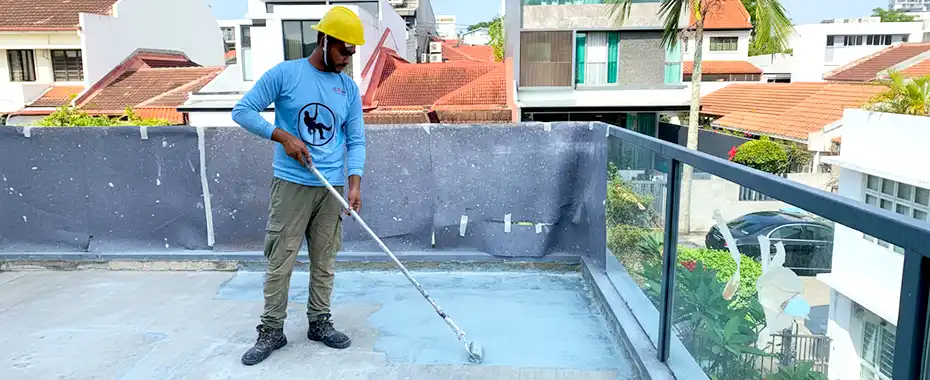
Nano waterproofing is an innovative protective coating system that functions similarly to paint but provides enhanced water-resistant performance at a microscopic level. Nanotechnology waterproofing is a high-tech way to protect surfaces from water damage. Nano-based waterproofing uses tiny invisible particles that seep into concrete, repelling water while allowing air to pass, unlike visible thick traditional coatings. It protects walls, roofs, balconies, bathrooms in Singapore’s rainy climate, staying breathable and unseen. Advantages include easy spray application, quick drying, self-cleaning; disadvantages: higher cost ($15-80/bottle), 2-10 year lifespan needing reapplication. Studies show nano-silicon boosts concrete strength and reduces permeability. Guides detail cleaning, thin coats, maintenance for longevity.
What Is Nano Waterproofing?
Nano waterproofing is an advanced surface protection technology that uses microscopic nanoparticles. These nanoparticles, also called a nano-sealant or hydrophobic coating, bond deep into surfaces. They penetrate the substrate at a molecular level and fill pores invisible to the eye. This molecular bonding creates an invisible hydrophobic barrier, meaning the surface actively repels water.
Common types include silane nano sealants, siloxane coatings, and titanium dioxide treatments. These are all subtypes of nano waterproofing, each suited to different surface materials. Nano waterproofing forms part of the broader building envelope and surface protection sector. It prevents moisture ingress and water absorption before structural deterioration can begin.
Nano waterproofing differs fundamentally from traditional options such as bituminous membranes or cementitious coatings. Unlike those, the nano-coating penetrates the substrate and works from inside the surface. It adds no visible thickness, film, or sheen to the treated surface at all.
The surface stays looking exactly the same once the molecular waterproofing treatment is complete. As a building treatment, it protects exterior walls, roofs, bathrooms, and concrete floors equally well. It also controls damp, seepage, and leakage across basements and water storage tanks. We provide specialist nano waterproofing across HDB flats, condominiums, and commercial buildings in Singapore.
A study published on Buildings (ISSN 2075-5309) entitled “Experimental Investigation into Waterproofing Performance of Cement Mortar Incorporating Nano Silicon”, showed that sustainable self-compacting mortar found that adding nano calcined clay increased 28-day compressive strength by 13% to 22%, while nano TiO₂ improved strength by 16% to 29%. Microstructural analysis showed pore densification and enhanced crack-healing, improving durability and overall mechanical performance.
What Are the Advantages and Disadvantages of Nano Waterproofing?
Nano waterproofing offers several key merits over standard surface sealants, but it also has limitations. Understanding both its strengths and drawbacks helps you decide whether it suits your project. On the positive side, the treatment is highly durable, eco-friendly, and completely invisible after application. On the negative side, the upfront cost is higher than conventional waterproofing products on the market. The table below compares all the major pros and cons for buildings in Singapore.
| Advantages | Disadvantages |
| Invisible treatment preserves original surface appearance | Higher upfront cost than standard sealers |
| Long-lasting protection, often 10 or more years | Requires thorough surface preparation before applying |
| Penetrates substrate and bonds at a molecular level | Will not fix existing cracks without prior repair |
| Repels water, dirt, mould, and mildew effectively | Not suitable for severely crumbling or failing surfaces |
| Works on concrete, tiles, walls, and rooftops | Reapplication may be needed after heavy surface wear |
| Eco-friendly formula with low volatile organic compounds | Some products need specific humidity to cure properly |
| Breathable coating allows moisture vapour to escape | DIY application can produce poor bonding and gaps |
| Protects steel reinforcement bars from rust and corrosion | Certified product availability is more limited than membranes |
| Reduces long-term maintenance and structural repair costs | Best results require a professional and trained applicator |
| Fast to apply with a spray, roller, or brush | Results vary depending on product brand and formulation |
What Is the Difference Between Nano Waterproofing and Traditional Waterproofing?
Nano waterproofing penetrates the substrate at a molecular level; traditional waterproofing sits on top. Traditional waterproofing includes bituminous membranes, polyurethane liquid membranes, and cementitious coatings. Nano coating, by contrast, uses silane, siloxane, or nanoparticle technology to impregnate the surface. Both are subtypes of waterproofing, meaning they belong under the same parent category of building protection. However, they differ greatly in appearance, durability, breathability, and long-term maintenance requirements. Use the comparison table below to understand which option best suits your building in Singapore.
| Feature | Nano Waterproofing | Traditional Waterproofing |
| Application method | Penetrates deep into the substrate material | Applied as a thick layer on top of surface |
| Surface appearance | Invisible, preserves the original surface look | Adds a visible membrane or coating layer |
| Flexibility | Highly flexible at the molecular bond level | Can crack with thermal movement over time |
| Durability | Often lasts 10 to 15 years or more | Typically lasts 5 to 10 years before failing |
| Added thickness | Zero added thickness to any treated surface | Adds measurable thickness to the structure |
| Breathability | Breathable, allows vapour to escape freely | Many types trap moisture inside the surface |
| Environmental impact | Low VOC, water-based, safer for occupants | Some types contain harmful chemical solvents |
| Application speed | Fast-drying, quick to apply professionally | Takes longer and requires more preparation coats |
| Surface preparation | Surface must be clean, sound, and fully dry | Surface must be clean, sound, and fully dry |
| Upfront cost comparison | Higher upfront, lower long-term maintenance | Lower upfront, higher ongoing maintenance cost |
| Suitable surface types | Concrete, tiles, walls, roofs, and basements | Mainly concrete, roofs, and structural walls |
| Common product types | Silane, siloxane, titanium dioxide nano coating | Bitumen, polyurethane membrane, cementitious coating |
Where Do You Use Nano Waterproofing Services?
You can use nano waterproofing on many surfaces across residential and commercial buildings in Singapore. It suits any building envelope component that faces moisture ingress, water absorption, or dampness. As a direct digital marketing channel parallels multiple platforms, nano waterproofing covers many surface types. From exterior building skins to underground basements, the nano-sealant penetrates and protects each area.
A study published on Materials Today: Proceedings entitled “Experimental investigation on the effect of incorporating nanomaterials on some properties of self-compacting cementitious mortar”, Research shows that adding 6.6% nano silicon (w/c 0.42) to cement increased capillary water resistance by 62%, reduced gas permeability by 31%, and lowered permeable voids by 10%. The predictive model achieved 1.62% MAPE accuracy, enhancing concrete durability.
1. Exterior Wall Nano Waterproofing
Nano waterproofing seals exterior walls, also called building facades, against rain and moisture ingress. The hydrophobic nano-sealant penetrates painted, plastered, brick, and rendered wall surfaces equally well. It prevents efflorescence, the white salt staining caused by water moving through the masonry. Without this protection, dampness seeps through the building skin and causes interior water damage over time. The treatment also stops algae, mould, and mildew from colonising the exterior wall surface. Singapore’s monsoon rainfall makes hydrophobic treatment of external walls essential for every building.
- Seals painted, rendered, and brick facades against rain penetration
- Stops water seeping through the wall into the interior space behind
- Prevents efflorescence, algae, and mildew growth on all wall finishes
- Preserves and extends the life of all exterior wall decorative finishes
A study published on E3S Web of Conferences entitled “A Review of Exterior Waterproofing Technologies in Prefabricated Buildings” This study reviews exterior wall waterproofing technologies for prefabricated buildings, including waterproofing coils, sealants, grouting, coatings, and waterproof concrete. It highlights performance evaluation through experimental comparison and emphasises integrating insulation and drainage systems to enhance long-term waterproof efficiency and structural durability.
2. Balconies Nano Waterproofing
Nano waterproofing protects balconies, terraces, and open outdoor platforms from direct rain exposure. Balcony floor tiles, grout lines, and the structural slab beneath all need waterproof treatment. Without sealing, water seeps through tile joints, reaches the slab, and leaks to the flat below. The nano-coating impregnates both tiles and grout lines, sealing every pore from within. This stops damp patches, mould growth, and water staining on the ceiling of the unit below. It also prevents algae from making balcony surfaces slippery and hazardous underfoot during rainfall.
- Seals balcony floor tiles and grout against rain and water ingress
- Stops water from seeping through the slab to the ceiling below
- Prevents algae and mould growth on wet outdoor platform surfaces
- Protects balcony walls from rain splash and damp penetration daily
Research published on Taylor & Francis Journals entitled “Research on waterproofing performance optimisation of cabinet panels based on DOE experimental design”, showed that research using DOE analysis tested 32 balcony cabinet panels with 2 thicknesses, 4 substrates, and 2 edge sealing methods. Results showed edge sealing had the greatest impact on waterproof performance, with ENF MDF panels combined with PUR sealing delivering the best durability results.
3. Roof Nano Waterproofing
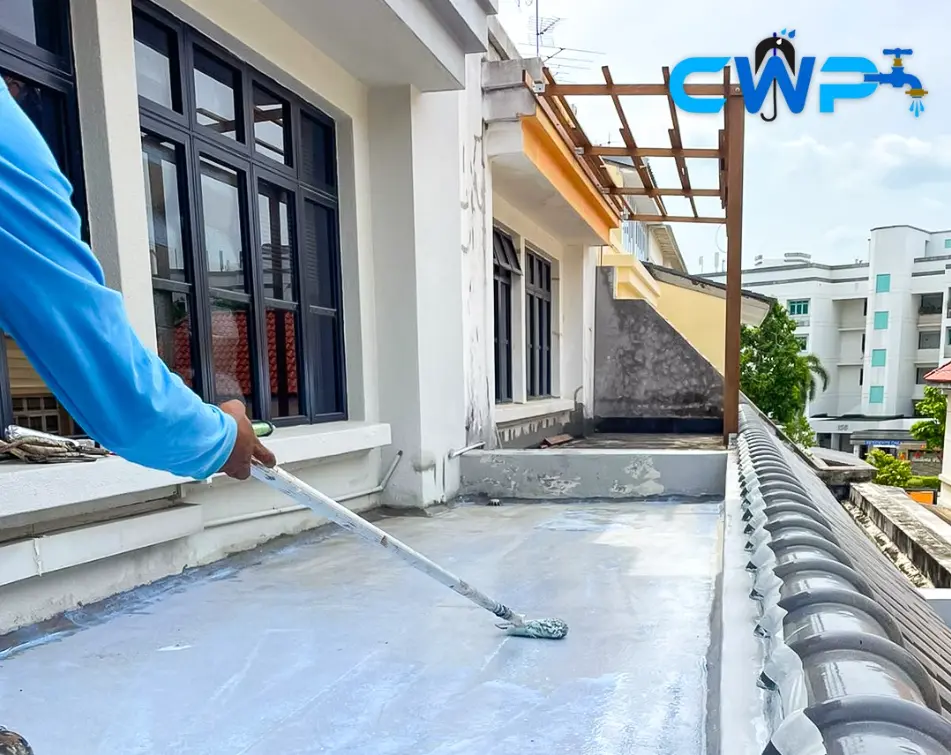
Nano waterproofing seals flat roofs, roof slabs, and roof garden structures against heavy tropical rainfall. Rooftops are the most directly exposed building components and face ponding water, UV, and heat daily. Ponding refers to standing water that accumulates on flat roofs with blocked or slow drainage. The nano-sealant bonds to concrete, screed, and roof surfaces and repels water from inside the material. It works across flat roofs, pitched roof surfaces, podium roofs, and green roof structures. The treatment prevents hairline crack ingress and stops roof leaks before they reach the floor below.
- Seals concrete roof slabs against ponding water and heavy monsoon rain
- Works on flat roofs, podium roofs, and pitched roof surfaces
- Prevents water ingress through hairline cracks in the roof screed layer
- Protects roof surfaces from UV radiation and Singapore’s intense tropical heat
A study published on Buildings (ISSN 2075-5309) entitled “prefabricated flat roof systems highlights the ADAPTIVE solution, a 100% prefabricated, zero-waste roofing retrofit designed to improve energy performance, rainwater collection, and rooftop usability. Computerised modelling confirmed high hygrothermal, acoustic, and structural performance for sustainable flat roof waterproofing systems.
4. Bathroom Nano Waterproofing
Nano waterproofing protects bathroom walls, floor tiles, and grout lines from constant moisture and steam. Bathrooms and wet rooms face the highest indoor moisture exposure of any area in the building. Grout is highly porous and absorbs water, causing dark mould staining between tiles over time. The nano-sealant impregnates both the tile surface and the grout joint, sealing every capillary pore. Capillary pores are the tiny channels that draw liquid water into masonry or cement by suction. Sealing these pores removes the dampness and condensation conditions that mould and mildew need to grow. The treatment suits residential bathrooms, en-suite shower rooms, hotel bathrooms, and commercial washrooms.
- Seals wall and floor tiles against constant water splash and steam
- Impregnates grout joints to stop mould staining and water absorption
- Stops water from penetrating behind tiles and damaging the wall structure
- Keeps bathroom surfaces hygienic, clean, and far easier to maintain
A study published on Emerald Publishing, Author: Yue Choong Kog, Ph.D entitled “Waterproofing integrity and water tightness of buildings in the tropic”, studies in Singapore and Southeast Asia show that heavy rainfall and high water usage in bathrooms and toilets significantly increase waterproofing failures. Investigations of public housing projects found many defects linked to copied temperate designs, highlighting the need for revised tropical-specific waterproofing standards.
5. Kitchen Nano Waterproofing
Nano waterproofing protects kitchen walls, floors, countertops, and splashbacks from water and grease. Kitchens and food preparation areas face daily exposure to water, steam, oil, and cleaning agents. Without sealing, tile surfaces absorb stains and grout lines darken with grease and mould quickly. The hydrophobic nano treatment creates a water-repellent and stain-resistant barrier across all kitchen surfaces. This reduces cleaning time, extends tile life, and keeps the kitchen hygienic for much longer. The treatment suits residential kitchens, commercial kitchens, and industrial food preparation facilities equally well.
- Protects tiled kitchen walls against daily water splashes and cooking steam
- Seals floor tiles and grout lines against moisture and grease build-up
- Prevents staining from cooking oils, sauces, and strong cleaning products
- Reduces kitchen cleaning time and extends the life of all tile surfaces
A study published on the Scientific Research Center entitled “Identifying Customer Satisfaction Indicators for the Design, Production, and Implementation of the New Generation of Kitchen Cabinets with Waterproof Seams and Moisture Resistance”, A mixed-methods study using interviews and SPSS analysis, found that moisture resistance and waterproof seams are key drivers of customer satisfaction in modern kitchen cabinets. Quantitative surveys confirmed that material quality, durability, innovative design, and easy cleaning significantly influence overall customer preference.
6. Concrete Floor Nano Waterproofing
Nano waterproofing seals concrete floors, including car park slabs and industrial floor surfaces, against moisture. Concrete is naturally porous, meaning it absorbs water, oil stains, and chemicals without surface protection. Sealed surfaces repel liquid, while unsealed concrete absorbs it, causing staining and structural deterioration. The nano-sealant fills internal capillary channels, reducing surface dusting and improving chemical resistance greatly. Surface laitance, the weak top layer of fresh concrete, benefits most from molecular penetration treatment. Polished concrete, stamped concrete, exposed aggregate, and plain concrete slabs all respond well to nano treatment.
- Penetrates capillary channels and seals the full depth of the concrete
- Prevents oil, water, and chemical staining on all floor surfaces
- Reduces surface dusting, making floors far easier to sweep and clean
- Protects basement and car park slabs from rising groundwater ingress
A study published on Academia.edu entitled “Characteristic Study On Behaviour Of Integral Crystalline Water Proofing Concrete” Research shows integral crystalline waterproofing blocks water by sealing pores, capillaries, and microcracks within concrete. Partial cement replacements using GGBS, silica fume, fly ash, and rice husk ash improved compressive, split tensile, and flexural strength compared to conventional concrete. Another study published on Scientific Research and Community Ltd entitled “Comparative Analysis of Concrete Water-Proofing Materials”, Research comparing concrete waterproofing found bituminous felt is widely used, while cementitious crystalline material is less known. Cost analysis showed cementitious crystalline is cheaper to install, with negligible maintenance costs, making it a promising alternative for long-term concrete protection.
7. Basement Nano Waterproofing
Nano waterproofing protects basements and below-grade structures from groundwater pressure and rising damp. Rising damp refers to moisture that travels upward through concrete via capillary suction from the soil. Basements also face hydrostatic pressure, meaning the constant outward force of water in surrounding ground soil. The nano-sealant penetrates retaining walls, basement slabs, and concrete surfaces to seal every entry point. This stops efflorescence, white salt deposits caused by water movement, from forming on basement walls. Treated areas include basement car parks, underground plant rooms, storage rooms, and mechanical service areas.
- Seals basement walls against groundwater pressure and rising damp ingress
- Protects floor slabs from moisture rising upward from the ground below
- Stops white efflorescence staining on treated concrete basement wall surfaces
- Prevents mould and damp patches in car parks and underground storage rooms
A research published in the Journal of Building Survey, Appraisal & Valuation, entitled “Ground water assessment and the design of basement waterproofing”, Author: Steve Wilson and Alwyn Hughes showed that basement waterproofing emphasizes groundwater risk assessment. Hydrostatic pressure can exceed sustainable drainage rates, limiting external drainage options. BS8485’s simple screening is unsuitable below groundwater tables. Proper assessment by SoBRA-accredited professionals ensures safe design against methane, CO₂, and hydrocarbon contamination. Another research published on Polymer Composites Journal titled “Moisture Effect On Selected Polymer-based Membranes Used For Waterproofing Building Basements”, showed that that rising groundwater levels in Kuwait cause basement water leakage. Various waterproofing materials were tested, showing that moisture, not salts, degraded some materials. Oxidized bitumen membranes were unsuitable, while polymer-modified bitumen membranes performed better for basement waterproofing.
8. Swimming Pool Nano Waterproofing
Nano waterproofing protects swimming pool surroundings, pool decks, and pool coping tiles from water and chemicals. Pool coping refers to the edge tiles that cap the perimeter of the swimming pool structure. Pool deck areas face constant chlorinated water contact, which causes rapid surface staining and tile deterioration. Chlorine and pool chemicals accelerate grout breakdown far faster than rainfall or groundwater exposure alone. A chemical-resistant nano-sealant penetrates both tiles and grout joints, resisting this ongoing chemical attack. It also reduces algae and slime colonisation, which makes pool surround surfaces dangerously slippery when wet. We offer specialist swimming pool waterproofing services for outdoor and indoor pools across Singapore. Combining this treatment with proper swimming pool waterproofing helps protect nearby structures and reduces long-term maintenance.
- Protects pool deck tiles and coping from daily chlorinated water exposure
- Seals grout lines around the pool against chemical and water ingress
- Reduces algae and slime growth on wet pool surround surfaces
- Resists pool chemicals, preventing staining of tiles and concrete surrounds
9. Tiles and Grout Lines Nano Waterproofing
Nano waterproofing seals tile surfaces and grout joints, making them water-repellent and stain-resistant throughout. Grout joints, the cement filler between tiles, are highly porous and absorb moisture with ease. Left unsealed, grout lines darken with mould, grease, and mineral deposits within weeks of use. The nano-sealant impregnates both glazed tiles and unglazed surfaces, filling every microscopic pore from within. Glazed tiles carry a glass-fused top coat; unglazed and natural stone tiles are far more porous. The treatment works on ceramic, porcelain, marble, terracotta, and mosaic tiles, covering all common types. This makes it highly versatile across bathrooms, kitchens, balconies, and outdoor tiled areas in Singapore.
- Impregnates porous grout joints to stop water absorption and mould staining
- Protects ceramic, porcelain, marble, and natural stone tile surfaces equally
- Makes tiles and grout far easier to wipe clean after daily use
- Works across indoor and outdoor tiled areas throughout the whole building
This study evaluates the durability of waterproofing systems for terraces and balconies, focusing on adhesion between ceramic tiles, tile adhesives, and waterproof coatings under various aging factors (water, heat, freeze/thaw cycles). Results show that water exposure significantly reduces adhesion strength, while polymer-cement coatings perform best in transitional climates. Another research on Advances in Sustainable Building Material Engineering entitled “Experimental Investigation of Adhesion Failure between Waterproof Coatings and Terrace Tiles under Usage Loads”, this research investigates the loss of adhesion in water-impermeable products used under ceramic tiles, affected by water, temperature, and freeze/thaw cycles. The results showed that water had the greatest impact on adhesion loss, especially with cement-based adhesives and polymer-based waterproof coatings with absorbability above 7%.
10. Utility Areas and Water Tanks Nano Waterproofing
Nano waterproofing seals utility rooms, service areas, and water storage tanks against leaks and damp. Water storage tanks include overhead tanks, underground cisterns, and fire water reserves across buildings. Leaking tanks cause seepage into adjacent walls and structural slabs, leading to costly repair works. The nano-sealant we use for water tanks is food-safe, non-toxic, and approved for potable water contact. Potable water means water that is safe for drinking and direct human consumption. The treatment also resists algae growth inside tanks, keeping the stored water clean and uncontaminated. Utility rooms, pump rooms, and mechanical plant areas benefit from the same moisture-control and mould-prevention properties.
- Seals internal tank surfaces against water leaks and seepage through walls
- Uses food-safe, non-toxic nano formula approved for drinking water tanks
- Prevents algae and microbial growth inside water storage structures
- Protects utility room walls and floors from damp and moisture ingress
A study published on IOP Conference Series: Earth and Environmental Science entitled “Research on Assembly Waterproofing Technology of Prefabricated Utility Tunnel”, The paper explores prefabricated utility tunnels as a future urban infrastructure solution, highlighting their advantages in quality, cost, and construction time compared to traditional methods. It compares waterproof materials, analyzes existing projects, and forecasts future trends in assembly waterproofing technology.
When Should You Apply Nano Waterproofing?
Choose nano waterproofing when you need invisible, long-lasting, and eco-friendly surface protection for your building. It outperforms basic sealants and standard coatings when durability, aesthetics, or sustainability matter most. The following scenarios explain when nano treatment is the right choice over conventional alternatives.
For Superior Durability: Choose nano waterproofing when long-lasting protection is your priority over a quick or cheap fix. Nano treatments bond at a molecular level and resist peeling, flaking, and cracking far longer than standard coatings. While basic sealants last one to three years and standard coatings last five to eight years, nano treatments last 10 to 15 years. This extended service life reduces reapplication frequency, lowers lifecycle maintenance costs, and protects your investment. The treatment withstands UV radiation, tropical heat, and Singapore’s intense monsoon rainfall throughout its lifespan.
When Aesthetic Integrity is Important: Choose nano waterproofing when protecting a surface without altering its visual appearance is essential. Unlike bituminous membranes or polyurethane film coatings, the nano-sealant adds no visible layer to the surface. It adds no thickness, colour, or sheen to any treated surface after application is complete. This invisible, non-film-forming treatment suits heritage buildings, feature stone walls, and decorative tile surfaces. Aesthetic integrity, meaning the preservation of the surface’s original look, remains fully intact after treatment.
When You Need Easy Maintenance: Choose nano waterproofing when you want surfaces that need less cleaning, scrubbing, and ongoing upkeep. The hydrophobic barrier repels water, dirt, and grease, reducing the frequency of deep cleaning sessions. On a maintenance scale from intensive upkeep to low maintenance, nano-treated surfaces sit at the lowest end. Less cleaning means fewer harsh chemical cleaning products, which further protects the treated surface layer. This saves time, labour costs, and building maintenance expenditure across all property types in Singapore.
In Areas Exposed to Harsh Weather Conditions: Choose nano waterproofing for surfaces exposed to extreme weather, tropical heat, strong wind, and heavy rain. Singapore’s tropical climate, characterised by monsoon seasons, high humidity, and intense UV radiation, tests surfaces hard. UV radiation causes surface degradation through carbonation, oxidation, and photochemical breakdown of cement binders. Carbonation is the process where CO2 reacts with concrete and reduces the alkalinity protecting internal steel bars. Nano coatings resist UV radiation and thermal expansion, staying effective even on the most exposed outdoor surfaces.
When You Need Protection Against Mould and Mildew: Choose nano waterproofing when mould, mildew, and algae keep colonising the same surfaces repeatedly. These organisms need surface moisture to germinate and spread; a hydrophobic surface denies them this condition. On a scale from mould-prone to fully mould-resistant, nano-treated surfaces sit at the resistant end. The anti-fungal, anti-microbial effect of the treatment keeps surfaces hygienic without relying on chemical disinfectants. This is especially important for bathrooms, kitchens, pool surrounds, and shaded outdoor walls in Singapore.
In Low-Temperature Environments: Choose nano waterproofing for cold rooms, chiller units, and refrigerated storage areas within Singapore buildings. Cold rooms and chiller spaces generate condensation, the water droplets that form when warm air meets cold surfaces. Condensation causes damp, mould growth, and surface deterioration in poorly protected cold-storage environments. Nano coatings remain flexible and fully effective at low temperatures without cracking, delaminating, or peeling away. They suit food processing facilities, cold stores, pharmaceutical rooms, and air-conditioned commercial spaces in Singapore.
When You Want Environmentally Friendly Options: Choose nano waterproofing when you want a low-VOC, water-based, and environmentally responsible surface treatment. VOC stands for volatile organic compound, the harmful chemical vapours released by many solvent-based coatings. Water-based nano formulas produce far fewer VOCs than solvent-based bituminous or polyurethane membrane products. This makes them a safer choice for occupied residential buildings, schools, hospitals, and childcare centres. The eco-friendly formulation also aligns with green building standards increasingly required for Singapore developments.
In High-Risk Areas for Water Damage: Choose nano waterproofing in areas where even a small water leak causes very serious structural damage. High-risk zones include rooftops above occupied rooms, basement retaining walls, planter boxes, and water tanks. Planter boxes, the built-in garden beds on building ledges, cause concentrated water ingress into slabs below. A reliable nano-sealant provides a durable, long-lasting barrier against water ingress in all these critical locations. It prevents the kind of costly structural rehabilitation that results from prolonged, untreated moisture penetration.
When You Require Fast Application: Choose nano waterproofing when you need a quick, minimally disruptive treatment with short downtime. Most nano products dry within one to four hours and reach workable strength within 24 hours. This fast-drying, rapid-application process contrasts sharply with traditional membranes that need long curing periods. There is no need for heavy equipment, thick screed overlays, or extended drying and curing schedules. This speed makes nano waterproofing ideal for occupied buildings, hotels, hospitals, and time-sensitive projects in Singapore.
How Do You Apply Nano Waterproofing?
You apply nano waterproofing by cleaning the surface, repairing defects, coating, curing, and then maintaining. This DIY waterproofing process follows clear sequential steps whether you hire a contractor or self-apply. Each step builds on the last, and skipping any stage reduces bonding strength and protection lifespan. Follow all steps below for the best results on any surface across your Singapore building.
- Inspect and assess the substrate condition before starting any work
- Clean and prepare the surface by removing all contaminants
- Seal all cracks, joints, and open defects before coating
- Allow the surface to dry fully and confirm moisture content
- Apply the nano coating evenly using the correct application tool
- Apply a second or third coat after the first coat dries
- Allow the full cure period before loading or wetting the surface
1. Check the Concrete or Substrate
Inspect the substrate, meaning the base surface material, carefully before applying any nano waterproofing product. Look for structural cracks, flaking paint, loose render, damp patches, and surface contamination throughout. The substrate must be sound, meaning free from delamination, spalling, or crumbling surface material. A thorough condition assessment ensures the nano particles penetrate correctly and bond strongly at depth. Call a BCA-registered structural specialist if you find deep cracks or signs of reinforcement corrosion.
2. Clean and Prepare the Surface
Clean the entire surface to remove all dust, grease, oil, biological growth, and existing sealer residue. Use a wire brush, mechanical grinder, or acid wash depending on the degree of surface contamination. Biological growth such as algae, moss, and mould must be killed and removed completely before coating. A clean, rough, and open surface profile maximises nano particle penetration and molecular bonding strength. Surface profiling, meaning creating a slightly rough texture, ensures the coating grips rather than slides over.
3. Seal All Cracks and Joints
Fill and seal all visible cracks, fissures, and open joints before applying the nano waterproofing coat. Use polymer-modified repair mortar for structural cracks and deep surface defects in concrete substrates. Seal movement joints, which accommodate thermal expansion and contraction, with a flexible polyurethane sealant. Polyurethane sealant stretches with thermal movement and prevents the joint from reopening under stress. Sealing all cracks first stops water bypassing the nano layer through untreated gaps in the surface.
4. Allow the Surface to Dry
Confirm the substrate is completely dry before applying any nano waterproofing product to the surface. Use a moisture meter to measure the substrate’s relative humidity level before you start coating. Relative humidity refers to the percentage of moisture present in the surface compared to its maximum. In Singapore’s humid climate, drying can take much longer than expected after rainfall or cleaning. A fully dry substrate allows the nano particles to penetrate deep and bond correctly at a molecular level.
5. Apply the Nano-Coating
Apply the nano waterproofing product evenly across the entire prepared and fully dry surface area. Follow the manufacturer’s product datasheet for dilution ratios, coverage rates, and application temperature ranges. Apply in manageable sections to maintain consistent, even coverage and avoid missed pores or patches. Ensure complete saturation of the surface, meaning the nano-sealant visibly wets the entire area treated. Avoid applying in direct midday sun, as rapid evaporation reduces penetration depth and bonding quality.
6. Use a Spray, Roller, or Brush to Apply the Nano-Coating
Select the application tool that best suits your surface type, product viscosity, and project scale. A low-pressure sprayer broadcasts the nano-sealant evenly and efficiently across large wall or floor areas. A paint roller is ideal for smooth flat surfaces, such as concrete floors and large wall panels. A brush works best for narrow joints, tile grout lines, corners, and small or irregular surface areas. Use the correct tool to achieve full surface coverage and maximise nano particle penetration depth.
7. Apply a Second or Third Coat
Apply a second coat once the first has dried and is no longer visibly wet or tacky. Most nano products need two to three coats for complete pore saturation and maximum protection. Pore saturation means every capillary channel in the substrate has been filled by nano particles throughout. Allow the manufacturer’s specified drying interval between each coat before proceeding to the next layer. Multiple coats are more important on highly porous substrates such as bare concrete and natural stone.
8. Let the Coating Cure Properly
How Do You Maintain Nano Waterproofing After Repairs?
You maintain nano waterproofing after repairs by curing fully, cleaning gently, and inspecting regularly. Good maintenance preserves the hydrophobic barrier and extends the coating’s full service lifespan significantly. Neglecting aftercare is the most common reason nano treatments fail before their expected service life ends. Follow the steps below to protect your nano waterproofing investment across all surfaces in Singapore.
- Wait for the coating to cure completely before using the treated surface
- Clean the surface regularly using only mild, pH-neutral cleaning products
- Avoid scratching the nano-treated surface with abrasive tools or materials
- Check the surface periodically using the water bead absorption test
- Avoid all harsh chemicals and solvents that break down the nano layer
- Reapply the nanotechnology waterproofing solution when the coating shows wear
1. Wait for Complete Curing
Always wait for the nano coating to reach its full cure before resuming normal use of the area. Partial curing means incomplete molecular bonding, which reduces both durability and long-term water-repellent performance. Check the product datasheet for the minimum curing time before the area returns to normal use. In Singapore’s humid conditions, full curing may take longer than it would in drier climates.
2. Clean the Surface Regularly
Clean nano-treated surfaces regularly with mild, pH-neutral soap and lukewarm water to maintain performance. Avoid acidic cleaners, bleach-based disinfectants, and abrasive scrubbing pads that degrade the nano layer. Gentle, regular cleaning removes accumulated dirt and residue that gradually reduce the hydrophobic surface effect. On a scale from heavy-duty scrubbing to light wiping, nano-treated surfaces only need the lightest maintenance.
3. Avoid Scratching the Surface
Protect nano-coated surfaces from deep scratches, abrasion, and heavy mechanical impact wherever possible. Deep scratches break through the nano layer and create unprotected gaps in the waterproof barrier. Use only soft-bristle brushes and non-abrasive cleaning cloths on all nano-treated surface areas. Place protective pads under furniture and mats at entry points on nano-coated floor surfaces.
4. Check the Surface Periodically
Inspect nano-treated surfaces every 12 to 24 months by performing a simple water bead test. The water bead test involves dropping water on the surface and watching how it behaves. If the water beads and rolls off, the hydrophobic nano-sealant remains active and effective. If water absorbs into the surface quickly, the coating has worn and needs prompt reapplication.
5. Avoid Harsh Chemicals and Solvents
Never use strong solvents, concentrated acids, or bleach-based products on any nano-waterproofed surface. Harsh chemicals dissolve the hydrophobic molecules that form the nano layer’s water-repellent barrier. Always use pH-neutral, mild cleaning solutions approved by the nano product manufacturer for safe maintenance. Protecting the treatment from chemical attack extends its service life and reduces early reapplication costs.
6. Reapply the Nanotechnology Waterproofing Solution
Reapply the nano waterproofing treatment every 5 to 10 years based on surface wear and exposure. High-traffic outdoor surfaces wear faster than sheltered indoor areas and require more frequent resealing. Clean the surface thoroughly and ensure full dryness before reapplying any nano waterproofing product. Timely reapplication of the nanotechnology waterproofing solution ensures continuous, gap-free protection for your building.
7. Minimise High-Pressure Water Exposure
Avoid directing high-pressure jet washers onto nano-treated surfaces as a regular cleaning method. Repeated high-pressure blasting erodes the nano layer, reducing its hydrophobic effectiveness over time. Use low-pressure rinsing and gentle cleaning methods for all routine maintenance of treated surfaces. After any necessary high-pressure wash, perform a water bead test to check coating integrity.
8. Protect From Extreme Temperatures
Avoid applying or exposing freshly applied nano coatings to extreme heat or direct midday sun. High ambient temperatures cause rapid evaporation, which prevents proper penetration of the nano particles. Apply nano products during the cooler early morning or late afternoon hours across Singapore. Correct temperature management during application ensures full penetration and maximum long-term protection performance.
9. Seal Cracks Promptly
Repair any new cracks that appear on the treated surface as soon as you notice them. New cracks bypass the nano waterproofing layer completely and allow direct water ingress to the substrate. Fill cracks with flexible polyurethane sealant or polymer-modified mortar before they grow wider. Reapply a fresh coat of nano waterproofing over the repaired crack to restore full seamless protection.
10. Maintain Proper Drainage
Keep gutters, drainage channels, downpipes, and surface outlets clear to prevent ponding water on treated areas. Ponding, meaning standing water on flat surfaces, places continuous hydrostatic pressure on any waterproof coating. Regular drainage maintenance is essential before and after Singapore’s monsoon seasons each year. Good drainage management reduces the load on the nano coating and extends its full service lifespan.
How Do You Find a Nano Waterproofing Specialists in Singapore?
Find a trusted nano waterproofing specialist by verifying their BCA licence, experience, and product knowledge. BCA stands for the Building and Construction Authority, Singapore’s official body regulating licensed building contractors. A BCA-registered specialist differs from a general builder; they hold the specific licence for waterproofing works. Follow the steps below to choose the right contractor confidently for your Singapore building project.
- Search “nano waterproofing Singapore” on Google.
- Look at sites like Atlas Works or Nano-Star.
- Read customer reviews on Google or forums.
- Check if they give warranty like 3 years.
- Ask friends or neighbours for good names.
- Call for free site check before this project.
- Pick ones with experience in roofs and walls.
Understand What Nano Waterproofing Is
Learn the basics of nano waterproofing, including its key differences from standard membranes and sealants. Knowing that nano coating is an impregnating treatment, not a surface film, helps you assess contractors accurately. You can tell immediately if a contractor understands molecular waterproofing or is simply rebranding a standard product. This knowledge protects you from overpriced or incorrect product recommendations during any consultation process.
Check for Certifications and Licensing
Always verify that the contractor holds an active BCA licence before you engage them for any work. BCA CW01 covers general structural works and CW02 covers specialist waterproofing and repair works. A licensed waterproofing applicator meets Singapore’s building safety standards and protects your legal position as owner. Unlicensed or unregistered traders carry significant risk; always verify on the official BCA website before proceeding.
Look for Experience and Specialisation
Choose a specialist with demonstrated experience in nano waterproofing, not only general construction or renovation. Ask how many completed nano waterproofing projects they have across HDB blocks, condominiums, or commercial buildings. An experienced specialist has encountered diverse substrates and surface conditions, giving them better diagnostic skills. Specialisation in molecular waterproofing treatment distinguishes a true expert from a general maintenance contractor.
Seek Customer Reviews and Testimonials
Read customer reviews on Google, renovation forums, and HDB community portals before shortlisting any contractor. Genuine testimonials from Singapore homeowners and building managers carry much more weight than advertising claims. Ask the contractor directly for references and contact details of past clients willing to speak to you. Real feedback gives you reliable insight into the quality, reliability, and professionalism of the contractor’s work.
Request a Consultation or Quote
Request a site inspection and written quotation from at least three BCA-registered nano waterproofing specialists. A reputable specialist inspects the substrate condition, identifies the correct product, and explains the treatment process. Compare all quotations carefully, reviewing material specifications, number of coats, warranty terms, and total cost. Never choose a contractor based on the lowest price alone, especially for structural waterproofing works.
Check Their Portfolio and Past Projects
Request photographs, case studies, or site visits to past nano waterproofing projects the contractor has completed. A strong portfolio demonstrates real experience across residential buildings, commercial properties, and varied surface types. Look specifically for projects on buildings of similar age, material, and construction type to yours. Request photographs, case studies, or site visits to past nano waterproofing projects the contractor has completed. A strong portfolio demonstrates real experience across residential buildings, commercial properties, and varied surface types. Look specifically for projects on buildings of similar age, material, and construction type to yours.
Ensure They Use High-Quality Materials
Ask the contractor to confirm the brand, product name, and technical specifications of their nano waterproofing product. Request the product datasheet, which lists penetration depth, coverage rate, curing time, and warranty period. High-quality nano sealants certified for tropical and humid climates significantly outlast cheap, unbranded products. The right product choice, combined with professional application, determines the service life of your waterproofing treatment.
Consider Customer Service and Communication
Choose a contractor who communicates clearly, responds promptly, and explains the full treatment process simply. Poor responsiveness at the quotation stage is an early indicator of unreliability during the actual project. A professional contractor keeps you informed throughout, from surface preparation to final inspection and sign-off. Good communication reduces misunderstandings about scope, timing, cost, and quality expectations for the project.
Ask About Maintenance Services
Ask whether the contractor offers follow-up inspections, periodic reapplication, and post-project maintenance services. A reliable specialist is willing to revisit the site, perform the water bead test, and assess coating condition. Some firms offer annual maintenance contracts covering inspection, minor crack sealing, and timely reapplication visits. This ongoing relationship between building owner and specialist maximises your nano waterproofing investment long-term.
How Much Does Nano Waterproofing Cost in Singapore?
Nano waterproofing costs between $15 and $80 per bottle in Singapore. One bottle covers about 10 to 20 square metres. Before beginning this project, work out how much you need for your space.
- Small bottles (500ml) cost $15 to $30
- Medium bottles (1 litre) cost $35 to $50
- Large bottles (5 litres) cost $60 to $80
- Professional service costs $200 to $500
How Long Does Nano Waterproofing Last?
Nano waterproofing lasts 2 to 5 years when applied properly. Good quality products last longer than cheap ones. Before beginning this project, choose a trusted brand for better results.
- Indoor waterproofing lasts 4 to 5 years
- Outdoor waterproofing lasts 2 to 3 years
- Nanotechnology waterproofing lasts 5 to 10 years on balconies.
- Nano waterproofing lasts 5 to 10 years on roofs.
- Nano-coating waterproofing lasts 3 to 5 years in bathrooms.
- Nano-based waterproofing lasts 3 to 5 years in kitchens.
- Nanotech waterproof coating lasts 5 to 8 years on concrete floors.
- Nano surface protection lasts 5 to 10 years in basements.
- Nano barrier waterproofing lasts 3 to 6 years around pools.
- Nano waterproofing lasts 3 to 5 years on tiles and grout.
- Nano waterproofing lasts 4 to 7 years in utility areas and tanks.
FAQ’s
Yes, nano waterproofing is completely safe for concrete and actually helps it stay strong. The tiny particles fill concrete pores without damaging the material at all inside. It protects concrete from water damage and prevents cracks from growing bigger. Concrete can still breathe naturally whilst staying waterproof which is very good. Nano coating makes concrete last much longer by stopping water from weakening it.
Yes, nano waterproofing is very suitable for buildings both old and new ones. It works perfectly on concrete, brick, stone, and painted building walls everywhere. Many big buildings in Singapore use nano technology to protect their exterior walls. It keeps buildings looking original whilst protecting them from rain and dampness always. Heritage buildings benefit greatly because nano coating remains invisible and doesn’t change appearance.
Yes, you can apply nano waterproofing over old waterproofing if the surface is clean. The old coating must be firmly stuck and not peeling or flaking off. Clean the surface well and remove any loose bits before applying nano coating. Nano particles will penetrate through and add extra protection on top of existing layers. However, if old waterproofing is damaged badly, remove it completely first before applying.