
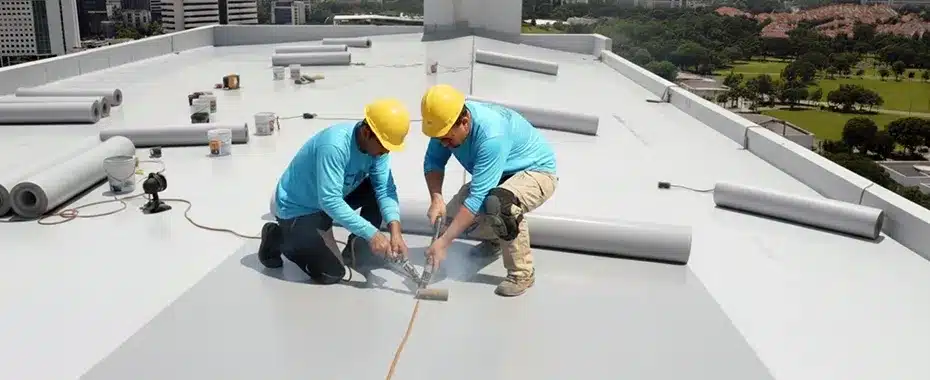
Waterproofing material refers to any substance applied to a surface to block water penetration. In Singapore, heavy rain and high humidity make it an essential part of building protection. Without it, structures face seepage, mould, and serious long-term structural damage. This guide covers everything you need to know about waterproofing materials in one place. We explore ten types, from bitumen membranes to crystalline compounds. We explain where to apply each one and how to choose the right product. You will also find waterproofing cost ranges and lifespan data for Singapore. Use this practical guide to make the right waterproofing decisions for your building.
What Is Waterproofing Material?
Waterproofing material is a protective substance that stops water from entering surfaces. It acts as a moisture barrier, sealing the surface against rain, seepage, and rising damp. As part of building protection and civil construction, waterproofing keeps structures dry and safe. You apply it as a liquid coating, a solid sheet membrane, or a spray-on layer.
A waterproofing system is made up of several layers working together. The primer coat bonds to the substrate, which is the surface being coated. Next comes the waterproof membrane itself, the core protective layer. A protection screed or top coat goes on last to shield the membrane from damage. This system forms part of the building envelope, the outer shell of a structure. A well-waterproofed building envelope protects everything inside it from moisture damage.
Key features of waterproofing materials include:
- Bonds and seals the substrate against rain, seepage, and groundwater
- Acts as a moisture barrier, also called a damp-proof layer or waterproof seal
- Made up of a primer coat, waterproof membrane, and a top coat or screed
- Covers the building envelope: roofs, walls, floors, and foundations
A study published in the Journal of Building Engineering entitled “Investigating Effective Waterproofing Materials in Preventing Roof Leaking; Initial Comparative Study: Malaysia, U.K”, showed that some waterproofing products distributed in Malaysia originate from companies with operations in Singapore, reflecting the use of globally engineered systems suited to tropical climates. For Singapore, this suggests that selecting high-quality, internationally tested waterproofing materials is critical to improving durability, preventing roof leakage, and ensuring long-term building performance.
What Are the Types of Waterproofing Materials?
The different types of cementitious waterproofing include bitumen, cementitious, polyurethane (PU), EPDM (ethylene propylene diene monomer), PVC waterproofing membranes, TPO (thermoplastic olefin), rubberised asphalt, crystalline, geotextile, and acrylic options.
In building construction, waterproofing sits alongside insulation, fire-stopping, and damp-proofing. These are sibling protective systems, each addressing a different threat to the structure. In building work, the word “membrane” means a waterproof sheet, not a biological cell layer. Knowing this distinction helps when comparing products and reading technical datasheets.
1. Bitumen Waterproofing
Bitumen waterproofing uses asphalt-based sheets or liquid layers to seal surfaces against water. It suits roofs, basements, and below-grade structures effectively.
A study published in the Journal of Materials in Civil Engineering entitled “Investigation of Antiaging Performance and Service Life of OMMT/SBS Modified Bitumen Waterproof Membranes”, showed that Adding 3% organic montmorillonite (OMMT) to SBS-modified bitumen improves aging resistance, thermal performance, and network structure, reducing chemical degradation. This enhancement extends the service life of bitumen waterproof membranes from 16.9 to 21.3 years, ensuring long-lasting waterproofing protection.
2. Cementitious Waterproofing
A cementitious waterproofing coating bonds directly to concrete and masonry surfaces. It creates a rigid, durable moisture barrier on wet areas like water tanks and bathrooms.
A study published in IOP Conference Series Materials Science and Engineering, entitled “Development of Polymer Modified Cement Mortars for Waterproof”, shows that polymer-modified cement mortars for waterproofing, focusing on their raw materials, properties, and performance improvements. It analyzes how different polymer–cement ratios affect compressive and flexural strength, and explains the mechanisms by which super mineral powder and re-dispersible polymer powders enhance impermeability, durability, and adhesion.
3. Polyurethane (PU) Waterproofing
Polyurethane waterproofing forms a seamless, flexible membrane directly on the substrate. It handles structural movement and suits exposed roof decks well.
A study from Journal of Applied Polymer Science entitled “A polyurethane elastomer combining high strength and excellent self-healing properties for waterproofing coatings”, a high-strength, self-healing polyurethane (PUGI-D3B2) with enhanced hydrogen bonding. It restores 98% of mechanical strength after damage and can be applied in waterproof coatings, offering durable, multifunctional solutions for PU waterproofing applications.
4. EPDM (Ethylene Propylene Diene Monomer)
EPDM (Ethylene Propylene Diene Monomer) waterproofing uses synthetic rubber sheets for roofing and waterproofing applications. EPDM, a synthetic rubber membrane, resists UV exposure and weathering extremely well. It suits flat roofs and offers a long service life in harsh outdoor conditions.
A study published in Polymer Composites: Structure, Properties and Processing entitled “A Review of EPDM (Ethylene Propylene Diene Monomer) Rubber-Based Nanocomposites: Properties and Progress”, showed that Ethylene propylene diene monomer (EPDM) waterproofing benefits from nanotechnology, which enhances tensile, chemical, thermal, and electrical properties. Nanomaterials in EPDM improve durability and flexibility, making it a high-performance solution for long-lasting waterproofing applications.
5. PVC Waterproofing Membranes
PVC membranes are durable plastic sheets that block water with high reliability. They suit flat roofs, tunnels, and below-grade structures well.
A study published in Polymers entitled “Durability and Degradation of PVC-P Roofing Membrane—Example of Dynamic Fatigue Testing”, showed that 11-year-old PVC-P waterproofing membranes revealed degradation due to polymer dehydrochlorination. Mechanical properties often remain within standards, but cyclic dynamic fatigue and SEM/EDS analysis can detect deterioration, highlighting risks for roof watertightness, liability, and warranty claims.
6. TPO (Thermoplastic Olefin) Membranes
TPO (Thermoplastic Olefin) membranes are heat-welded sheets with strong UV and weather resistance. They work well on commercial flat rooftops across Singapore.
A study published in National Research Council Canada entitled “Evaluation of thermoplastic olefin (TPO) roofing membranes” showed that A 5-year study on TPO roof membranes evaluated mechanical and chemical performance. Non-reinforced membranes met ASTM minimum thickness and tensile strength standards, while polyester-reinforced TPO showed higher strength and elongation than glass fiber types. Thermogravimetry identified at least 4 TPO variations in service.
7. Rubberized Asphalt
Rubberised asphalt blends rubber polymers with bitumen for a flexible waterproof layer. It suits foundations, tunnels, and below-grade applications requiring movement tolerance.
A study published in the Journal of Building Engineering entitled “Standardization to evaluate the lasting capacity of rubberized asphalt mixtures with different testing approaches”, Research on rubberized asphalt mixtures shows that loading rate significantly affects mechanical performance. The strength yield surface is elliptical and expands as loading rates increase. A unified fatigue equation was developed, linking fatigue life to fatigue stress ratio, improving pavement structural design accuracy.
8. Crystalline Waterproofing
Crystalline waterproofing fills concrete pores with mineral crystals that block water. It self-seals cracks when moisture activates the crystals inside the concrete.
A Research published in the Journal of Building Engineering indicates entitled “Combined effect of rice husk ash and cementitious capillary crystalline waterproofing materials on the performance of mortar”, Research on combining rice husk ash (RHA) and cementitious capillary crystalline waterproofing (CCCW) shows improved durability and impermeability. Compressive strength increased by 22.83% and flexural strength by 25% compared to control samples, while CCCW enhanced crack filling and reduced porosity through crystallization effects.
9. Geotextile Membranes
Geotextile membranes are permeable fabrics used in drainage and waterproofing systems together. They protect foundations and retaining walls from water ingress effectively.
A study published in the Journal of Building Engineering entitled “Geotextile composition, application and ecotoxicology—A review”, Research on geosynthetics identified 42 polymer additives, with 26 assessed under REACH PBT criteria. Among them, 15 were classified as very persistent and 2 as toxic, while 13 lacked ecotoxicity data. Findings highlight environmental risks from microplastic degradation and limited long-term toxicity information.
10. Acrylic Waterproofing
Acrylic waterproofing is a water-based coating with good UV and weather resistance. It suits roofs and external wall surfaces across Singapore’s tropical climate.
A study published in Journal of the Korea Institute of Building Construction entitled “A Study on the Crack Response and Waterproof Properties of High-Functional Water-Based Acrylic Paints for Exterior Walls” showed that specially developed elastic acrylic waterproof paint outperforms general water-based paint, providing up to 10× better crack response, strong adhesion (≥1.3 MPa), and resistance to 0.1 MPa water pressure, ensuring improved watertightness for concrete walls.
Why Do Buildings Need Waterproofing Material?
Buildings need waterproofing materials because water causes serious, hidden damage over time. Without protection, surfaces absorb rain and moisture, leading to cracking and efflorescence. Efflorescence refers to the white salt deposits that appear on damp concrete or masonry. As water seeps deeper, it weakens steel reinforcement, causing rust and spalling. Spalling is where concrete chips and flakes away from the surface beneath.
Buildings require waterproofing for these key reasons:
- Stops water ingress through roofs, walls, and below-grade floors
- Prevents surface damp from escalating into active leaks or structural flooding
- Blocks mould, mildew, and dry rot from spreading inside walls
- Protects steel reinforcement from rust and long-term corrosion
- Resists hydrostatic pressure, meaning water pushing up from below, in basements
- Reduces long-term repair costs and avoids full structural restoration work
- Maintains healthy indoor air quality for occupants throughout the building
- Extends the full service life of the entire building structure
The damage water causes follows a clear pattern, from mild to severe. A building first shows surface damp and minor discolouration on walls or ceilings. Without action, this worsens into minor seepage, then active leaks. Finally, structural water ingress sets in and compromises the entire framework. In Singapore, high humidity accelerates every stage of this progression rapidly. A proper waterproofing system, alongside insulation and damp-proofing, stops damage at the earliest stage. This protects the building structure for decades to come.
Where to Use Waterproofing Material in Your Space?
Use waterproofing material in bathrooms, kitchens, basements, roofs, balconies and foundations of your building. Bathrooms need waterproofing on floors and walls to stop water leaking through. Kitchen wet areas around sinks require waterproofing for protection. Basements face groundwater so need complete waterproofing on walls and floors. Roofs must have waterproofing to keep rain out of buildings. Balconies and terraces need waterproofing as they face weather directly. Building foundations require waterproofing against soil moisture. Water tanks and swimming pools need waterproofing to hold water safely. External walls benefit from waterproofing against rain. Use waterproofing materials wherever water touches your building regularly.
1. Waterproofing Material for Roof
Apply liquid membranes or bitumen sheets on roofs to stop rainwater from penetrating the structure below.
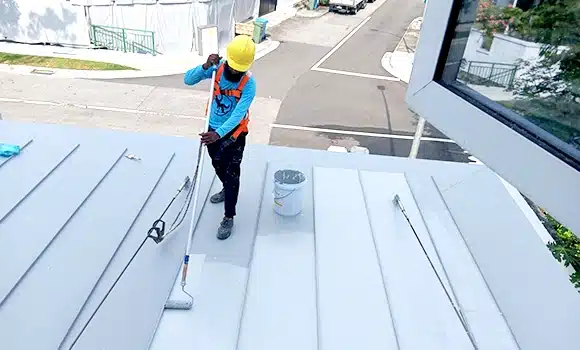
A study published in Construction and Building Materials entitled “Effect of waterproofing materials on resistivity and pore properties of concrete under insolation and rain”, Roof studies show concrete temperatures can reach 328 K (55 °C) under sun exposure, causing thermal fatigue. After 240 heating–cooling cycles, resistivity strongly correlated with air content (R² > 0.95). Rigid-flexible composite waterproofing provided the highest resistance, significantly improving roof durability against rain and heat.
When to use:
Use waterproofing material for roof on all new roof construction projects. Apply when replacing old damaged roofs that leak. Use on flat roofs where water collects in puddles. Apply before installing roof gardens or solar panels. Use when roof shows signs of leaks or water damage.
2. Waterproofing Materials for Walls
Use acrylic or cementitious coatings on external walls to block moisture and stop efflorescence from forming.
A study published in Academic journal Industrial Machine Building Civil Engineering entitled “Retrospective analysis of wall waterproofing structures to determine the main directions of the relevant restoration work”, Research on wall waterproofing shows that before 1953, domestic buildings lacked mandatory foundation and plinth waterproofing. Since 1956, mass-produced materials enabled standardized wall waterproofing solutions. Modern practice emphasizes site-specific approaches to protect walls from soil moisture and groundwater infiltration.
When to use:
Use damp-proofing materials for walls on external walls facing heavy rain. Apply on bathroom walls especially in shower areas. Use on basement walls below ground level. Apply on retaining walls holding back soil and water. Use when walls show damp patches or water stains.
3. Waterproof Ceiling Material
Apply waterproof coatings or membranes on ceilings, especially under wet rooms or bathrooms located above.
When to use:
Use waterproof ceiling material in bathrooms below other bathrooms. Apply in kitchens and wet areas of buildings. Use on top floor ceilings under roofs. Apply in basements with groundwater seepage. Use when ceilings show water stains or dampness.
4. Waterproof Material for Bathroom
Use flexible PU or cementitious coatings in bathrooms to seal tiles, joints, and wet floor areas.
When to use:
Use waterproof material for bathroom in all new bathroom construction. Apply when renovating old bathrooms completely. Use after discovering leaks or water damage. Apply before installing tiles on floors and walls. Use in shower areas and around bathtubs always.
5. Toilet Waterproofing Materials
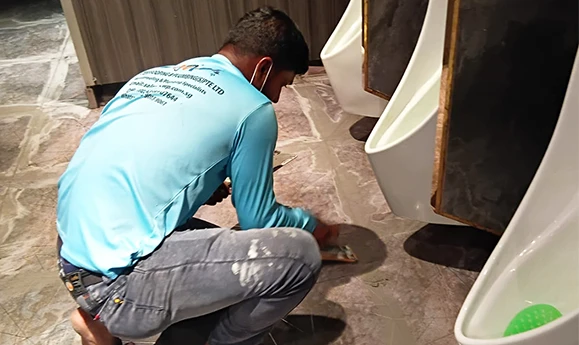
Apply waterproof membranes under toilet floor tiles to stop water from seeping into the concrete slab below.
When to use:
Use toilet waterproofing materials in all new toilet construction. Apply when renovating or repairing old toilets. Use after discovering leaks around toilet areas. Apply before installing tiles or flooring. Use around toilet fixtures and floor drains always.
How Do You Choose the Right Waterproofing Material?
Choose waterproofing material based on surface type, water exposure level, flexibility needs, and your overall budget.
Step 1: Identify the area needing protection
Determine whether it is a roof, wall, basement, or wet room.
Step 2: Assess the water exposure level
Check whether the surface faces rain, standing water, or constant humidity.
Step 3: Choose between flexible and rigid systems
Flexible membranes handle structural movement well. Rigid cementitious coatings suit static surfaces.
Step 4: Check the substrate
The substrate is the surface you are coating, whether concrete, masonry, timber, or metal.
Step 5: Match the product to Singapore’s climate
Choose materials that resist UV rays, intense heat, and high tropical humidity effectively.
Step 6: Understand bond strength and cure time
Bond strength measures how firmly the material adheres to the substrate after application. Cure time is how long the material needs to harden fully before water exposure. Poor bond strength or insufficient cure time leads to early delamination and leaks.
Step 7: Compare waterproofing cost options
Get quotes from several contractors and compare materials and labour rates carefully.
Step 8: Check product warranties
Choose products with a proven adhesion rate and a solid manufacturer warranty for Singapore conditions.
Step 9: Consult a specialist
A waterproofing contractor confirms the best system for your building type and budget.
How Much Does Waterproofing Material Cost in Singapore?
Waterproofing material cost in Singapore varies widely depending on the type and quality you choose. Basic cementitious waterproofing materials cost SGD $50 to $150 for small bathroom projects. Liquid membrane waterproofing costs SGD $100 to $300 for balcony-sized areas. Sheet membrane materials cost SGD $200 to $800 depending on quality and size. Polyurethane waterproofing materials cost SGD $150 to $400 for residential applications. Bituminous waterproofing costs SGD $100 to $500 for foundation treatments. Premium materials like crystalline waterproofing cost SGD $200 to $600 per application.
Material costs by type:
- Cementitious waterproofing: SGD $50 to $150
- Liquid membranes: SGD $100 to $300
- Sheet membranes: SGD $200 to $800
- Polyurethane coating: SGD $150 to $400
- Bituminous materials: SGD $100 to $500
- Crystalline treatment: SGD $200 to $600
- Acrylic waterproofing: SGD $80 to $250
- EPDM rubber sheets: SGD $300 to $1,000
Professional installation adds significantly to total waterproofing costs in Singapore projects. Labour charges range from SGD $200 to $500 per day depending on contractor experience. Complete bathroom waterproofing costs SGD $500 to $2,000 including materials and labour. Balcony waterproofing totals SGD $1,000 to $3,500 for complete treatment. Basement waterproofing costs SGD $3,000 to $10,000 for full protection systems. Roof waterproofing charges SGD $8 to $30 per square metre installed. Although quality materials cost more initially, they provide better long-term value. Cheap materials fail quickly requiring expensive repairs and replacements later on.
How Long Does Waterproofing Material Last?
Waterproofing material lasts between 5 to 30 years in Singapore depending on type and installation quality. Cementitious waterproofing lasts 10 to 15 years in bathrooms and wet areas. Liquid membrane waterproofing lasts 15 to 20 years on balconies and roofs. Sheet membrane systems last 20 to 25 years with proper installation care. Polyurethane waterproofing lasts 15 to 20 years even in harsh outdoor conditions. Bituminous waterproofing lasts 20 to 30 years on foundations and basements. Crystalline waterproofing lasts the lifetime of concrete structures permanently.
Lifespan by waterproofing material type:
- Cementitious: 10 to 15 years
- Liquid membranes: 15 to 20 years
- Sheet membranes: 20 to 25 years
- Polyurethane: 15 to 20 years
- Bituminous: 20 to 30 years
- Crystalline: 30+ years
- EPDM rubber: 25 to 30 years
- Acrylic coating: 8 to 12 years
FAQ’s
Waterproofing material forms a moisture barrier that stops water from entering walls, roofs, and floors. It prevents mould, decay, and rust, keeping buildings dry, safe, and structurally sound over many years.
Crystalline or rubberised asphalt waterproofing works best for basements. These resist hydrostatic pressure, meaning water pushing up from below, self-seal cracks, and protect against groundwater and seepage.
Acrylic or cementitious coatings work well on external walls. They resist rain, UV rays, and humidity while allowing the wall to breathe naturally. This maintains surface integrity without trapping moisture inside the wall structure.
Yes, professional application gives the best results. Trained contractors ensure correct surface preparation, proper bond strength, and adequate cure time. This delivers a waterproof seal that outlasts any DIY application by years.
Yes, waterproofing material can crack due to building movement, UV exposure, or poor surface preparation.
Regular inspections, timely touch-ups, and resealing prevent failures and extend the overall service life.
Yes, acrylic material is waterproof when applied as a coating on a surface. It forms a flexible, water-resistant layer that works well on roofs and external walls. Acrylic also bonds well to most substrates, including concrete and masonry.