
Waterproofing cost in Singapore between SGD $500 to S$15,000. Waterproofing cost is an essential investment to protect your home from water damage. Waterproofing prevents leaks, mould, and dampness, ensuring your property’s longevity and structural integrity. While the upfront cost may vary depending on the space, method, and materials used, it saves you from costly repairs and enhances your property’s value. Whether it’s for roofs, bathrooms, or basements, waterproofing ensures your home stays safe, dry, and well-maintained for years to come. By understanding the costs involved, you can make informed decisions for long-term benefits.
Is Waterproofing Cost Worth It?
Yes, waterproofing cost is absolutely worth the investment. Water damage silently destroys structures over time. It triggers seepage, dampness, and mould growth. Ignoring these issues leads to far higher repair bills. A proper waterproofing treatment shields your home from moisture infiltration. It also preserves your property value in Singapore’s humid climate. Many homeowners treat waterproofing as a core building maintenance priority.
- Waterproofing prevents costly structural repairs down the line.
- It stops leaks, seepage, and water ingress before they spread.
- It protects walls, ceilings, and floors from moisture damage.
- It extends the service life of your building.
- It keeps mould and dampness from penetrating interior spaces.
Skipping waterproofing often leads to much bigger expenses later. Water ingress weakens concrete and damages surface finishes badly. A moisture barrier applied now avoids expensive remediation costs later. Singapore’s tropical rainfall and high humidity make professional waterproofing services a smart, long-term investment. Spending on proper sealants and membranes today protects your home’s structure for years ahead.
What Influences Waterproofing Cost in Singapore?
Several key factors directly influence waterproofing cost in Singapore, including the method used, the area treated, surface condition, and contractor workmanship.
Multiple variables shape the final waterproofing price you receive. These include the type of membrane or sealant selected and the total surface area involved. The complexity and accessibility of the job also affect the final waterproofing charges. Understanding each factor helps you budget accurately and avoid surprises.
- Type of Waterproofing Method: The waterproofing method you select directly affects the overall cost. Cementitious waterproofing is generally the most affordable application. Membrane waterproofing, including bituminous and polyurethane membranes, costs more. Crystalline waterproofing suits concrete surfaces and offers deep penetration protection. Each technique serves different surfaces and exposure conditions differently.
- Waterproofing Space: The type of space being treated shapes the waterproofing charge significantly. Wet areas like bathrooms and kitchens need different treatments than roofs. External walls face different weather exposure than internal floors and screeds. Each waterproofing zone, from pool decks to water tanks, requires specific materials and skilled application methods.
- Space Size: The total surface area determines how much material and labour you need. Larger spaces require more waterproofing compound, primer, and topcoat layers. Contractors typically quote a fee per square metre for most waterproofing jobs. A bigger roof or wider basement floor naturally raises the total waterproofing price.
- Present Condition of the Space: A damaged or deteriorated surface costs more to prepare before waterproofing starts. Cracks, spalling concrete, and active leaks require careful remediation first. Surface preparation, including grinding, crack patching, and priming, adds to the total cost. A clean, structurally sound surface reduces preparation time and keeps overall fees lower.
- Labour and Workmanship Cost: Skilled waterproofing specialists charge more than general contractors but deliver better results. Labour fees vary based on job complexity and the applicator’s experience level. Experienced professionals ensure proper adhesion of membranes, sealants, and protective coatings. Poor workmanship often causes premature failure and leads to costly re-application.
- Waterproofing Materials Cost: The quality and type of waterproofing product directly affects the final price. Premium polyurethane or epoxy coatings cost more than basic cementitious compounds. Trusted brands with certified waterproofing systems carry higher material costs. Choosing the right product for your specific surface improves long-term performance and reduces future maintenance costs.
- Depends on Area Accessibility: Hard-to-reach areas raise the waterproofing price noticeably. Overhead surfaces, confined spaces, and elevated locations require scaffolding or special access equipment. A rooftop or high external wall costs more to treat than a ground-floor bathroom. Contractors factor access difficulty into every waterproofing quotation they prepare.
- Effects on Warranty and After-Service Support: Reputable waterproofing companies offer clear warranties on their completed work. A longer warranty period often reflects higher-quality materials and superior workmanship standards. After-service support, including follow-up inspections and minor repairs, adds real value. Choosing a provider with strong after-sales backing protects your long-term interests effectively.
What is the Waterproofing Cost by Area in Singapore?
Waterproofing cost in Singapore varies by area type, size, and method, ranging from around SGD $500 for small spaces to over SGD $25,000 for large or complex zones.
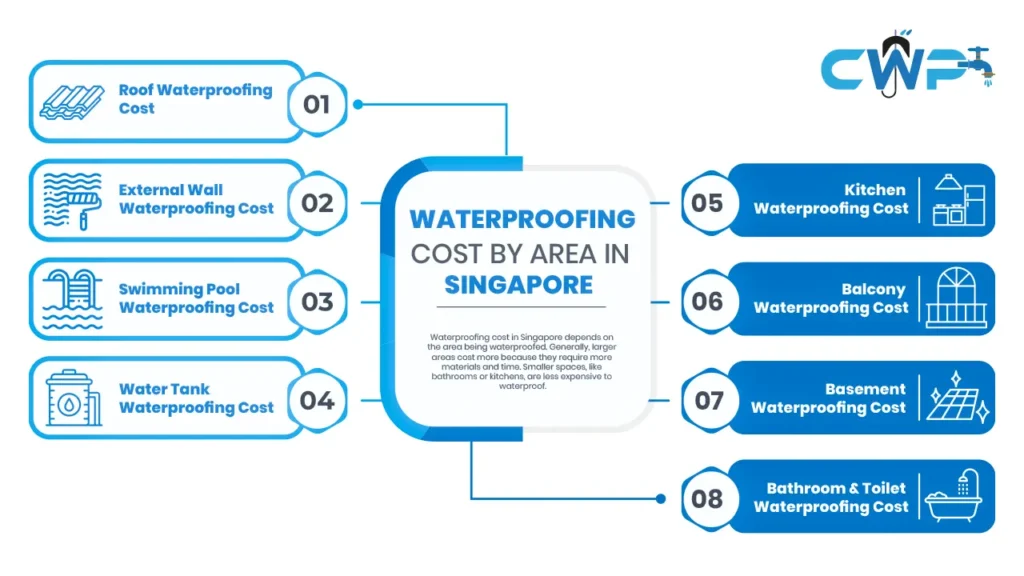
Different parts of a building carry different waterproofing needs. Bathrooms need wet-area sealants and cementitious treatments. Roofs need UV-resistant membrane systems to handle tropical rainfall. Basements need heavy-duty moisture barriers against hydrostatic pressure. Each space has its own treatment requirements and price range. Knowing the cost by area helps you plan your waterproofing budget accurately. Singapore contractors price jobs per square metre or as a lump sum, depending on scope.
What Is the Cost of Roof Waterproofing in Singapore?
Roof waterproofing in Singapore typically costs between S$8 to S$30 per square metre. The price depends on roof size, type, and the membrane system selected. Flat roofs often use torch-on bitumen or liquid-applied polyurethane membranes. Proper roof waterproofing stops leaks from heavy, seasonal tropical rainfall reaching your interior.
What is the Average Cost for External Waterproofing in Singapore?
External wall waterproofing average costs between SGD $15 to S$50 per square. Contractors brush or spray elastomeric coatings or crystalline treatments to block water ingress. Wall size, height, and access difficulty affect the total fee significantly. Proper external wall treatment protects your building’s facade and structural integrity year-round.
What Are the Typical Swimming Pool Waterproofing Costs in Singapore?
Swimming pool waterproofing costs typically range from SGD $5000 to SGD $15,000 or more. Pool shells require specialised waterproofing compounds that resist continuous water exposure. The treatment covers the pool basin, walls, and surrounding pool deck area. Proper pool waterproofing prevents slow leaks and long-term structural deterioration.
What Is the Price Range for Water Tank Waterproofing in Singapore?
Water tank waterproofing in Singapore price range between S$25 to S$50 per square metre. Food-safe, non-toxic coatings are essential for any potable water tank treatment. The tank’s size and access difficulty influence the final waterproofing fee. Regular resealing maintains the tank’s integrity and prevents contamination of stored water.
How Much Will It Cost to Waterproof a Basement in Singapore?
Waterproof a Basement in Singapore will cost from SGD $3,000 to SGD $10,000. Basements face high hydrostatic pressure from surrounding soil and groundwater seepage. Contractors use drainage membranes, injection grouting, and tanking systems for basement protection. Proper basement waterproofing safeguards the entire building’s foundation from rising moisture.
How Much Does Bathroom and Toilet Waterproofing Cost?
Bathroom and toilet waterproofing typically costs between SGD $500 and SGD $2,000. Wet areas require thorough sealing at floor-wall junctions and around all fixtures. Contractors apply cementitious slurry or polyurethane membranes in these high-moisture zones. Proper wet-area waterproofing prevents hidden leaks from spreading to adjacent rooms below.
How Much Does Kitchen Waterproofing Cost?
Kitchen waterproofing in Singapore costs roughly SGD $800 to SGD $2,500. The kitchen floor and wet zones around sinks and pipes need proper sealing. Contractors apply moisture-resistant coatings under tiles and screeds for lasting protection. A well-sealed kitchen prevents hidden leaks and long-term sub-floor damage.
How Expensive Is Balcony Waterproofing in Singapore?
Balcony waterproofing expense ranges from SGD $1000 to SGD $3,500. Balconies face direct sun, heavy rain, and temperature changes, making them leak-prone. Contractors apply UV-stable membranes to resist Singapore’s demanding tropical weather conditions. Proper balcony treatment stops water from seeping into the rooms directly below.
What is the Difference Between DIY Waterproofing Cost and Professional Waterproofing Cost?
DIY waterproofing costs less upfront but often leads to higher long-term expenses due to improper application and early failure. Homeowners sometimes consider DIY waterproofing to reduce initial costs. However, professional waterproofing services deliver more reliable, longer-lasting moisture protection. The table below compares both approaches across key areas to help you decide wisely.
| Factor | DIY Waterproofing | Professional Waterproofing |
|---|---|---|
| Upfront Cost | Low (SGD $100 to S$500) | Moderate to High (SGD $800 onwards) |
| Materials Used | Off-the-shelf sealants | Commercial-grade membranes and coatings |
| Application Quality | Inconsistent | Precise and tested |
| Surface Preparation | Often skipped | Thorough: grinding, priming, crack repair |
| Warranty | None | 2–10 years typically |
| Effective Lifespan | 1–3 years | 5–15 years |
| Risk of Failure | High | Low |
| Long-term Cost | Higher (repeated re-applications needed) | Lower (durable single treatment) |
| Regulatory Compliance | Uncertain | Meets BCA standards in Singapore |
DIY methods use basic sealants available at hardware stores. They suit only minor surface cracks or small patch repairs. For wet areas, roofs, or basements, professional waterproofing contractors deliver superior, code-compliant results. The cost difference becomes worthwhile when you factor in longevity.
What is the Cost of Waterproofing Maintenance?
Waterproofing maintenance in Singapore typically costs between SGD $200 and SGD $1,500 per visit, depending on the area, condition, and repair scope needed.
Regular maintenance keeps your waterproofing system performing at its best. It also extends the working lifespan of your installed membrane or sealant. Follow this step-by-step maintenance guide to protect your investment and avoid costly water damage:
Step 1: Inspect Surfaces Regularly
Check all waterproofed surfaces every 6 to 12 months. Look for cracks, blistering, or peeling in the membrane or topcoat layer. Early detection prevents minor seepage from escalating into major structural leaks.
Step 2: Clear All Drainage Points
Remove debris from drains, gutters, and water outlets regularly. Blocked drainage causes water to pool on waterproofed surfaces and accelerates wear. Standing water shortens membrane lifespan and raises maintenance costs significantly.
Step 3: Reseal Minor Cracks Promptly
Address small cracks and gaps immediately using compatible sealant material. Use products from the same waterproofing system where possible for best results. This maintains membrane continuity and keeps moisture fully out of the substrate.
Step 4: Re-coat the Surface When Needed
Reapply a fresh protective topcoat or coating every 3 to 5 years. UV exposure, foot traffic, and weathering gradually degrade surface coatings over time. Re-coating restores waterproofing performance without requiring full system replacement.
Step 5: Hire a Specialist for Major Repairs
Contact a certified waterproofing contractor for any large-scale repairs needed. They assess the system, identify all failure points, and carry out remediation properly. Professional repair ensures your building meets Singapore’s building and safety regulations.
Step 6: Document All Maintenance Activities
Keep clear records of every inspection, repair, and re-application carried out. Good documentation supports warranty claims and improves future resale value. It also helps the next contractor understand your building’s full waterproofing history.
How Does Waterproofing Lifespan Impact Maintenance Costs?
The longer your waterproofing lasts, the lower your total maintenance costs become over time.
A high-quality waterproofing system typically lasts 10 to 25 years or more. Premium membranes and professional installation significantly extend waterproofing lifespan, reducing maintenance frequency. Budget sealants may need re-application every 1 to 3 years, raising long-term costs. Investing in a durable, correctly applied system reduces maintenance expenditure over your building’s life. In Singapore, certified contractors apply waterproofing systems designed for tropical durability and humidity. Choosing a longer-lasting treatment lowers your total waterproofing ownership cost considerably.
How Do You Reduce Waterproofing Cost?
You can reduce waterproofing cost by planning early, selecting the right method, and maintaining your system consistently. Follow these practical steps to lower your waterproofing expenses without compromising quality:
Step 1: Collect Multiple Quotations
Request written quotes from at least three waterproofing companies. Compare scope of work, materials specified, warranty terms, and workmanship standards. Never simply choose the cheapest waterproofing quote available without reviewing all terms.
Step 2: Waterproof During Renovation Works
Schedule waterproofing alongside ongoing renovation or tile-hacking works. Combining tasks reduces site preparation time and cuts total labour costs. This approach also avoids the need for additional tile removal and reinstatement later.
Step 3: Match the Method to Your Needs
Select a waterproofing system suited to the specific surface and exposure involved. Avoid over-specifying costly membrane systems for low-risk, protected interior areas. Use cementitious waterproofing for sheltered wet areas where it performs adequately.
Step 4: Maintain the System Regularly
Routine care significantly extends the lifespan of any waterproofing system. Early minor repairs cost a fraction of full-system replacement and re-tiling. A well-maintained membrane lasts noticeably longer than a neglected one.
Step 5: Choose a Contractor with Clear Warranty Coverage
Select a waterproofing company that offers a transparent, written warranty. Warranty-backed work reduces the risk of unexpected re-treatment costs arising early. It also gives you clear recourse if the application fails within the covered period.
Step 6: Tackle Water Damage Early
Address minor leaks and seepage as soon as you notice them. Early intervention costs far less than waiting for major structural remediation work. Prompt action keeps both the repair scope and the waterproofing expense manageable.
How Do You Choose a Waterproofing Contractor Based on Cost?
Choose a waterproofing company that balances competitive pricing, proven experience, quality materials, and reliable after-service support.
Finding the right waterproofing contractor in Singapore involves more than comparing prices alone. A low-cost waterproofing company with poor workmanship costs you far more long term. Follow this step-by-step guide to make a confident, cost-effective choice:
Step 1: Verify Credentials and Experience
Check that the waterproofing company holds the relevant trade licences. Look for BCA-registered contractors or HDB-approved applicators where applicable. Experience handling similar waterproofing projects matters significantly when quality counts.
Step 2: Request Itemised Quotations
Ask each contractor for a detailed, itemised cost breakdown in writing. The quote should cover materials, labour, surface preparation, and warranty terms clearly. A transparent quotation allows you to compare contractors fairly and accurately.
Step 3: Compare Material Quality
Ask which waterproofing products each contractor plans to use. Premium certified brands deliver longer performance and better system compatibility overall. Avoid contractors who specify unknown, unverified, or substandard materials on their quotes.
Step 4: Review Past Work and Client Feedback
Request a portfolio of completed waterproofing projects from each contractor. Read client reviews on Google, HDB forums, or home renovation platforms in Singapore. Positive feedback on workmanship, punctuality, and after-service support builds solid confidence.
Step 5: Confirm Warranty Terms in Writing
Ask the contractor to specify warranty period and exact coverage in writing. A reputable waterproofing company offers at least a 2 to 5-year warranty. Clarify whether the warranty covers material failure, workmanship defects, or both fully.
Step 6: Assess Responsiveness and Communication Quality
A reliable waterproofing contractor responds promptly and answers all questions clearly. Clear communication before the job signals professional after-sales service standards. Avoid companies that remain vague about scope, timeline, or pricing details.
Step 7: Do Not Decide on Price Alone
The cheapest waterproofing quote does not always deliver the best overall value. A low price may mean inferior materials or shortcuts taken during surface preparation. Balance cost against quality, track record, materials used, and warranty assurance provided.
FAQ’s
Yes, waterproofing increases property value. It signals to buyers that the building is well-maintained and protected against water damage. A leak-free, moisture-resistant property commands stronger buyer confidence and better resale prices in Singapore.
Yes, some methods work without hacking existing tiles. Injection grouting and surface-applied sealants can treat active leaks without full tile removal. However, severe water damage or failed membranes may still require hacking for effective remediation.
Cementitious waterproofing is the most affordable option available. It suits protected wet areas such as bathrooms and internal walls well. It costs less than membrane or crystalline systems but carries a shorter effective lifespan.
Yes, most professional waterproofing services in Singapore include a warranty period. Warranty durations typically range from 2 to 10 years depending on the contractor. Always confirm full warranty terms in writing before signing any waterproofing contract.