
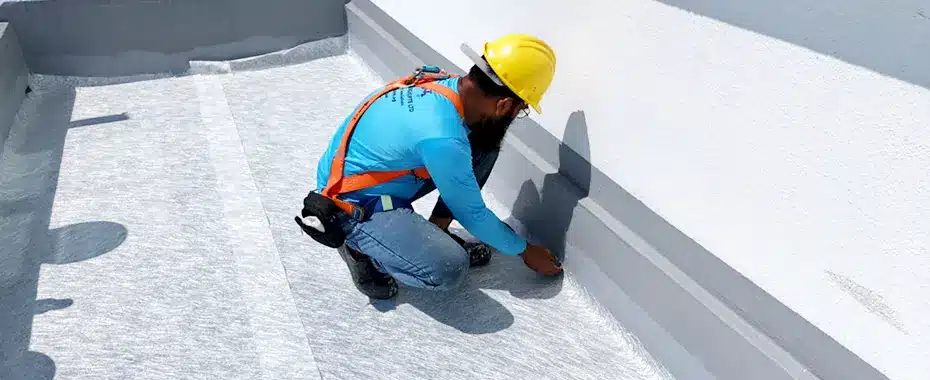
Waterproofing is a protective building treatment, also called damp proofing. Some professionals refer to it as moisture protection or water sealing. As a form of building protection, it sits within structural maintenance. Workers seal, coat, bond, spray, and laminate surfaces to protect them. These actions stop water infiltration, seepage, and moisture ingress. Waterproofing applies specialist materials to walls, roofs, and floors. The materials create a moisture barrier across the entire surface. This barrier preserves the structural integrity of the building envelope. It reduces the risk of dampness, mould growth, and structural weakening. From damp-resistant coatings to fully impermeable membrane systems, waterproofing covers a wide spectrum of protection levels and products. In Singapore, heavy tropical rainfall makes water sealing critically important. Every concrete surface exposed to rain, soil, or ponding water needs it. Waterproofing is part of every responsible asset management plan here.
What Is Waterproofing in Building?
Waterproofing in building is a structural maintenance process. It protects the building envelope from water damage throughout. Workers seal, coat, and treat walls, roofs, floors, and foundations. Water causes cracks, mould growth, dampness, and structural weakness. Without moisture protection, water slowly destroys concrete and metal. Waterproof treatment creates a durable barrier that keeps buildings dry. It acts as part of a long-term building maintenance programme. Damp buildings become unhealthy and structurally compromised over time.
A study from Emerald Insight, entitled “Waterproofing integrity and water tightness of buildings in the tropic”, showed that recurrent leakage problems occur when design, installation, and maintenance are not adapted to local climate and use patterns.
Waterproofing in buildings covers five critical structural areas:
- Roofs stop rain from leaking into building inside.
- Walls prevent dampness and moisture from penetrating masonry.
- Basements keep groundwater out of habitable underground spaces.
- Bathrooms and kitchens protect against daily water splashes.
- Balconies and terraces resist constant tropical weather exposure.
From minor damp patches to severe water ingress and active flooding, early waterproofing prevents every stage of structural deterioration. Proactive moisture control is always cheaper than reactive remediation.
What Is Waterproofing in Construction?
Waterproofing in construction applies protective layers during the build. Unlike remedial or post-construction repair, it is proactive and permanent. Workers integrate membranes, coatings, and admixtures as they build. They seal, bond, spray, and prime surfaces during active construction. This creates a moisture barrier that becomes part of the structure itself. Pre-applied membranes protect foundations before concrete is poured. Admixtures, which are chemicals mixed directly into concrete, reduce permeability. Blind-side waterproofing lines excavation faces before wall construction. Construction waterproofing is specified before the project begins on site. Good tanking, integral waterproofing, and drainage systems work together. Protection ranges from a basic damp-proof course to a fully tanked basement. Waterproofing during construction costs far less than fixing leaks later.
How construction waterproofing works:
- Workers apply pre-applied membranes before concrete placement.
- They mix waterproof admixtures into the concrete itself.
- Multiple layers provide better protection than a single coat.
- Basements use thick waterproof membranes for maximum resistance.
- Walls receive coatings to stay completely dry and sealed.
What Is Foundation Waterproofing?
Foundation waterproofing is a form of substructure protection. It guards the building’s base from groundwater and soil moisture constantly. Professionals also call it basement slab waterproofing or foundation sealing. Foundations sit underground where hydrostatic pressure is very strong. Hydrostatic pressure is the force that saturated soil exerts on walls. Wet soil constantly pushes moisture against unprotected foundation walls. Without protection, water seeps through capillary action and damages the structure. Capillary action draws groundwater upward through tiny concrete pores. Foundation waterproofing stops this process before water enters. Protection ranges from a basic damp-proof course to a fully tanked system. Tanking means waterproofing all four sides of a basement box completely. This keeps basements and ground floors completely dry and structurally sound.
Foundation waterproofing methods include:
Waterproofing in foundation works by applying protective layers to the outside or inside of foundation walls. Workers can use:
- Thick waterproof membranes bonded to external foundation walls.
- Crystalline admixtures mixed directly into the foundation concrete.
- Drainage cells that relieve hydrostatic pressure against foundations.
- Waterproof render coatings brushed onto internal concrete surfaces.
What Is Basement Waterproofing?
Basement waterproofing, also called cellar waterproofing or basement tanking, protects underground rooms from groundwater and persistent soil moisture. It is a critical form of subterranean moisture control for any building. Basements sit below ground level where water collects naturally in soil. Groundwater pushes hard against walls and floors through hydrostatic pressure. Heavy monsoon rain in Singapore raises groundwater levels even further. This forces moisture through unprotected concrete via capillary action. Without moisture protection, basements become damp, mouldy, and unusable spaces. Three recognised systems exist: Type A, Type B, and Type C. Type A is barrier waterproofing, which directly stops water entry. Type B is integral waterproofing, which treats the concrete itself. Type C is cavity drain waterproofing, which collects and removes water. Sump pumps, drainage channels, and wall tanking slurry are key components. Protection ranges from basic barrier coatings to full multi-layer systems.
The basement waterproofing process includes:
Waterproofing in basement works by sealing all surfaces where water might enter. The process includes:
- Applying waterproof coatings or tanking slurry to all walls.
- Installing cavity drain membranes to relieve hydrostatic pressure.
- Fitting drainage channels and sump pumps to expel water.
- Sealing all cracks and construction joints with specialist products.
What Is Waterproofing Membrane?
A waterproofing membrane is an impermeable layer applied to building surfaces. Also known as a waterproof liner, moisture barrier sheet, or sealing membrane, it forms a seamless, gap-free barrier against all water infiltration. Membranes come in two main forms: sheet membranes and liquid membranes. Sheet membranes include bituminous sheets, PVC liners, EPDM rubber, and TPO. EPDM stands for ethylene propylene diene monomer, a flexible rubber material. TPO stands for thermoplastic polyolefin, a heat-weldable single-ply sheet. Liquid membranes include polyurethane coatings, acrylic systems, and rubberised coatings. Workers lay, bond, weld, heat-fuse, torch-apply, or self-adhere sheet membranes. They brush, roll, pour, or spray liquid membranes directly onto surfaces. Lap joints, which are overlapping membrane edges, prevent water penetration at seams. Termination bars secure membrane edges to walls and upstands firmly. Protection boards protect the installed membrane from construction damage. From light sheet membranes to heavy-duty reinforced composite systems, membranes suit roofs, basements, balconies, and foundations across Singapore.
The waterproofing membrane process includes:
Waterproofing in membrane works by creating a continuous barrier with no gaps or holes. The membrane materials include:
- Bitumen sheets that stick to surfaces with heat or glue
- Rubber membranes that stretch and seal tightly
- Liquid polyurethane that forms flexible coatings
- PVC sheets that join together at edges
What Is Waterproofing Paint?
Waterproofing paint, also called damp-proof paint or elastomeric coating, is a specialist surface treatment that stops water soaking through walls. It is a type of masonry paint with waterproofing polymers added inside. Elastomeric coatings are flexible and bridge hairline cracks in masonry. Standard emulsion paint and decorative-only paint offer no waterproof protection. Waterproofing paint sits at the lighter end of the protection spectrum. From budget waterproof paint to premium heavy-duty elastomeric finishes, there is a product for every level of moisture exposure. Workers brush, roll, or spray it onto surfaces just like regular paint. It works well on exterior walls, bathrooms, kitchens, and damp masonry. Fungicidal additives in the formula prevent mould growth on treated surfaces. Apply a fungicidal wash to the surface before painting damp walls. Two coats give better protection than a single thick application. Most waterproof paints last three to five years before reapplication. In Singapore’s tropical climate, UV degradation shortens this interval. VOCs, or volatile organic compounds, are present in solvent-based products. Always use water-based acrylic waterproof paint in enclosed Singapore spaces.
How does it work:
Waterproofing in paint works by forming a protective film over the surface when it dries. The paint contains:
- Special polymers that repel water
- Chemicals that seal tiny holes in walls
- Flexible ingredients that move with the surface
- Additives that prevent mould growth
How Does Waterproofing Work?
Waterproofing works by sealing, coating, bonding, and protecting surfaces. Specialist materials fill tiny pores, capillary channels, and surface cracks. The waterproofing layer bonds firmly to the substrate underneath it. Substrate is the technical term for the existing surface being treated. Water cannot penetrate this sealed barrier or reach structural steel. Open time refers to how long the primer remains tacky before application. Pot life refers to how long a mixed compound stays workable on site. Tack-free time is when the surface stops feeling sticky after application. Full cure is when the applied material achieves its maximum design strength. Different methods use different materials, but all achieve the same goal. They create a shield that keeps structures dry and fully protected. Poor adhesion, acceptable bond, good bond strength, and excellent adhesion represent the quality spectrum achieved through correct surface preparation.
The waterproofing process follows these clear steps:
- Clean the surface thoroughly to remove all dirt and dust.
- Repair any cracks, voids, or holes in the structure first.
- Apply a primer coat and allow it to reach the tacky stage.
- Apply waterproofing materials in successive, even layers.
- Allow each layer to cure fully before applying the next.
- Conduct a water test or adhesion test after full curing.
What Are the Different Types of Waterproofing in a House?
The different types of waterproofing in a house are cementitious waterproofing, liquid membranes, polyurethane coatings, bituminous membranes, sheet membranes, crystalline waterproofing, PU injection, waterproofing plaster, and waterproof paints. From the lightest waterproof paint to a heavy multi-layer composite system, the right choice depends on location, water pressure, and structural role.
1. Cementitious Waterproofing
Cementitious waterproofing is a cement-based coating, also called a cementitious slurry. It is one of the easiest water resistance treatment methods available. Unlike liquid membranes, it is rigid when it cures and fully hardens. It suits permanently damp or wet areas that do not flex or bend. From bathrooms to swimming pools, it bonds strongly to concrete and masonry. Workers clean, fill cracks, mix, and apply it in thin successive coats. Shrinkage-resistant versions reduce post-application cracking in hot conditions. At least two coats are essential for adequate moisture protection. Keep the surface damp for several days to allow proper curing.
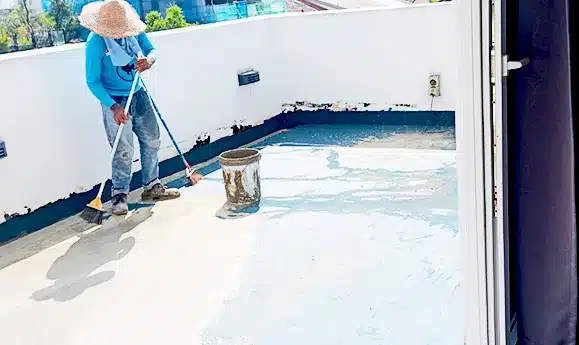
When to use:
- Bathrooms and shower areas with constant daily water exposure.
- Water tanks and swimming pools needing complete water retention.
- Basements and underground structures with active groundwater pressure.
- Wet balconies and terraces exposed to Singapore’s heavy monsoon rain.
- Foundations below ground level in waterlogged or saturated soil.
2. Liquid Waterproofing Membranes
Liquid membranes are flexible, liquid-applied coatings that form a seamless layer. Also called liquid-applied waterproofing or elastomeric liquid membranes, they include polyurethane, acrylic, and rubber-based liquid formulations. Unlike rigid cementitious coatings, liquid membranes stretch without cracking. Workers brush, roll, pour, or spray them evenly across the entire surface. The liquid fills all gaps, corners, and complex shapes without gaps. Reinforcement fabric, placed between coats, strengthens the finished system. From light two-coat acrylic systems to heavy reinforced PU membranes, liquid membranes suit flat roofs, balconies, and areas with movement.
Best areas for liquid waterproofing membranes:
- Flat roofs and roof terraces exposed to ponding rainwater.
- Balconies and external walkways with heavy foot traffic.
- Bathroom wet areas with complex shapes, corners, and drainage outlets.
- Surfaces that experience minor structural movement or vibration.
3. PU (Polyurethane) Waterproofing
PU waterproofing, or polyurethane waterproofing, is a highly flexible system. It is more durable and chemical-resistant than basic elastomeric coatings. Unlike cementitious or bituminous systems, PU expands and contracts freely. This prevents re-cracking and delamination under tropical thermal cycling. Workers apply PU using a brush, roller, or squeegee in successive coats. Two-part PU systems, which mix resin and hardener on site, are most durable. From standard roofs to heavy-duty car parks and industrial floors, PU waterproofing suits the most demanding moisture protection requirements. It costs more than cementitious products but delivers far longer service life.
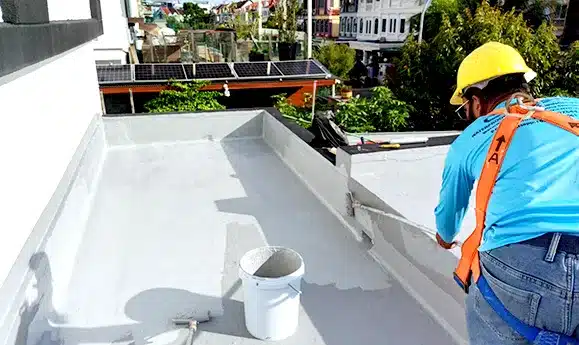
Best areas for PU waterproofing:
- Roofs exposed to direct sun, heavy rain, and UV radiation.
- Parking areas and driveways with heavy vehicular traffic.
- Industrial floors with chemical spills and mechanical loads.
- Balconies and terraces requiring long-lasting, durable protection.
4. Bituminous Waterproofing
Bituminous waterproofing uses bitumen, a thick black petroleum-derived material. Also called tar-based waterproofing or bituminous coating, it is fully impermeable. Unlike newer PVC or TPO membranes, bitumen has been used for over a century. It comes as torch-on sheets, self-adhesive rolls, or liquid bituminous coatings. Workers torch-apply sheets, heat-fusing them firmly onto primed surfaces. A bitumen primer coat always goes on first to improve bonding and adhesion. Sheets must overlap by at least 100mm at all seams and joints. From building foundations to commercial flat roofs and bridge decks, bituminous systems resist soil chemicals and groundwater extremely well.
Best areas for bituminous waterproofing:
- Building foundations and basements with constant groundwater exposure.
- Underground car parks with soil moisture and chemical spills.
- Flat roofs on commercial buildings with large surface areas.
- Areas with very high hydrostatic water pressure below ground.
5. Sheet Membrane Waterproofing
Sheet membrane waterproofing uses pre-manufactured impermeable sheets on surfaces. These include bituminous sheets, PVC liners, EPDM rubber, and polyethylene. Unlike liquid membranes, factory-made sheets have consistent, certified quality. Workers lay, unroll, heat-weld, bond, or mechanically fix them to surfaces. Sheets overlap at seams and workers weld or seal all lap joints carefully. Protection boards prevent membrane puncture during backfilling and construction. From single-ply EPDM roofing to multi-layer basement tanking systems, sheet membranes suit large flat areas such as roofs and basement slabs.
Best areas for sheet membrane waterproofing:
- Large flat roofs on houses and commercial buildings in Singapore.
- Terrace gardens and green roofs with planted soil above the membrane.
- Basement floors and walls with high hydrostatic groundwater pressure.
- Water features, decorative ponds, and ornamental pool linings.
6. Crystalline Waterproofing
Crystalline waterproofing is a chemical treatment that works from inside the concrete. Unlike surface coatings, it reacts with cement and water to grow crystals. These crystals fill all pores, capillary channels, and hairline cracks internally. The crystals block liquid water but still allow vapour to pass through. This is what makes it breathable yet fully impermeable to liquid water. Crystalline waterproofing becomes a permanent part of the concrete structure. Uniquely, new crystals regrow and self-seal if cracks appear later. From water tanks and swimming pools to tunnels and basement walls, crystalline systems suit any structure that constantly holds or contacts water.
Best areas for crystalline waterproofing:
- Water tanks and reservoirs storing clean drinking water safely.
- Swimming pools exposed to constant water pressure and pool chemicals.
- Basements with active groundwater pressure pushing through concrete.
- Tunnels, sewage treatment plants, and other underground structures.
7. PU Injection Waterproofing
PU injection, also called polyurethane grouting or chemical injection, pumps expanding polyurethane foam or gel into active cracks and voids. Unlike surface coatings, injection works from inside the crack outward. Specialist equipment drives PU resin under pressure into damaged areas. The polyurethane expands many times its original volume when it sets. It fills every void and creates a permanent, flexible waterproof seal. Workers can carry out PU injection while water is actively leaking. The expanding foam stops active water flow almost immediately on contact. From emergency basement leak repairs to leaking construction joints, PU injection is faster and cheaper than breaking open concrete.
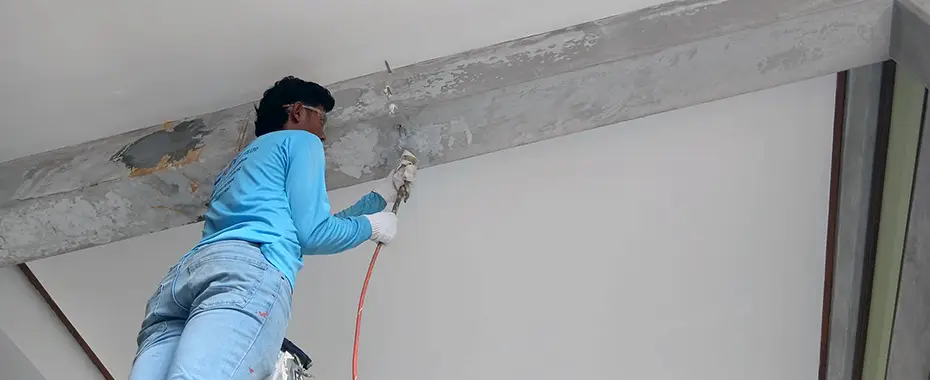
Best areas for PU injection:
- Active water leaks in basement walls and underground structures.
- Cracks and voids in concrete walls, slabs, and retaining structures.
- Leaking expansion joints and construction joints in wet areas.
- Emergency leak repairs where immediate water stoppage is critical.
8. Waterproofing Plaster
Waterproofing plaster, also called waterproof render or damp-proof plaster, is a specialist render with waterproofing chemicals blended inside it. Unlike standard decorative render, it repels water once fully cured. The water-resistant ingredients create a moisture barrier within the render layer. Workers apply it with a trowel in thin, successive, even coats. Two or three coats build adequate thickness for reliable protection. Keeping it damp after application helps it develop full waterproofing strength. From external walls exposed to tropical monsoon rain to damp interior walls, waterproofing plaster provides protection and a smooth decorative finish together.
Best areas for waterproofing plaster:
- External walls exposed to rain and weather
- Retaining walls that face soil moisture
- Bathroom and kitchen walls
- Damp walls in old buildings
- Areas with rising damp problems
- Walls around water tanks
9. Waterproof Coatings and Paints
Waterproof coatings and paints, also called masonry sealers or protective coatings, create a water-resistant surface barrier on treated building surfaces. Unlike full membrane systems, these suit light to moderate moisture exposure. They contain polymers, fungicide additives, and water-repelling chemicals. Workers brush, roll, or spray them exactly as they would regular paint. From cheap water-resistant emulsions to premium silicone masonry coatings, there is a waterproof paint product for every budget and surface type. They provide basic moisture protection and decorative colour at the same time. Reapply every three to five years for continued effectiveness in Singapore.
When to use:
- Interior bathroom and kitchen walls.
- Exterior walls facing rain.
- Concrete surfaces needing light protection..
- Areas with minor dampness issues.
- Decorative waterproofing for visible surfaces.
- Quick waterproofing solutions.
Why Is Waterproofing Important?
Waterproofing is a critical form of building protection and risk management. It preserves structural integrity and guards every occupant’s health and safety. Water destroys concrete, corrodes structural steel, and rots timber over time. It triggers mould growth, dampness, and progressive structural deterioration. From minor damp patches to severe flooding and full structural failure, unprotected buildings move steadily down the deterioration spectrum. Waterproofing saves money by preventing costly reactive remediation later. It keeps buildings dry, comfortable, compliant, and marketable for sale. Good moisture control forms part of every responsible asset management plan.
Why Is Waterproofing Important in the Industrial Sector?
Industrial waterproofing is a critical part of factory and warehouse protection. Factories store valuable machinery, equipment, and perishable goods inside. Water leaks damage machinery, ruin stock, and halt production schedules. Industrial buildings often have large flat roofs that collect rainwater heavily. Without roof waterproofing, this water seeps inside and disrupts operations. Chemical factories need waterproofing to contain and segregate hazardous materials. Food processing plants need it to maintain BCA and NEA hygiene standards.
Waterproof coatings prevent rust and corrosion on metal structures and frames. They stop water from reaching electrical systems and causing dangerous short circuits. Water on factory floors creates dangerous slipping hazards for all workers. Good industrial waterproofing means fewer production shutdowns and emergency repairs. From basic protection to heavy-duty industrial coating systems, every factory and warehouse in Singapore needs a waterproofing programme.
Why Is Waterproofing Important in Commercial Sector?
Commercial waterproofing protects shops, offices, hotels, and restaurants. Water leaks damage stock, furniture, equipment, and professional reputation. Customers avoid damp, mouldy, and unprofessional-looking commercial spaces. Office workers cannot function productively in buildings with water ingress problems. Water stains on ceilings and walls drive customers away permanently. Leaks in multi-storey commercial buildings affect many tenants simultaneously.
Commercial waterproofing maintains property values and attracts quality tenants. Shopping centres protect expensive fit-outs and stock from water damage. Hotels need bathroom waterproofing to stop water damaging rooms below. Restaurants must waterproof kitchens to meet health and safety compliance. Car parks beneath buildings must be waterproofed to protect lower floor structures. From basic masonry coating to full basement waterproofing systems, commercial moisture control keeps buildings compliant, profitable, and valued.
Why Is Waterproofing Important in the Residential Sector?
Residential waterproofing protects homes, families, and property investments. Water leaks make homes unhealthy, with mould, dampness, and foul smells. Children and elderly people suffer respiratory problems in damp houses. Water damage ruins furniture, carpets, and irreplaceable personal belongings. Leaking roofs and walls let tropical monsoon rain destroy building interiors. Wet basements become unusable, mouldy, and structurally compromised spaces. Rising damp moves from damp patches through moderate ingress to severe flooding without intervention, destroying plaster, paint, and ground floor rooms completely.
Waterproofing prevents expensive repairs and preserves resale property values. Bathrooms and kitchens need it to protect neighbouring rooms and floors below. Balconies and roofs need it to prevent inter-tenancy water damage claims. From waterproof paint to fully tanked basement systems, residential waterproofing gives families lasting peace of mind in all weather.
Why Singapore’s Climate Makes Waterproofing Critical?
Singapore sits in the equatorial tropics with year-round heavy rainfall. The island receives over 2,300mm of rain annually on average. Unlike temperate countries, Singapore has no freeze-thaw cycle but far more rain. Freeze-thaw protection, temperate climate design, and arid region building methods do not apply here and should not guide waterproofing specification decisions. Tropical moisture control demands climate-adaptive, Singapore-specific solutions instead.
A study from MDPI, entitled “Climate Change Projection and Its Impacts on Building Façades in Singapore”, showed that Climate projections for Singapore suggest faster deterioration of façades, sealants and coatings in future, through corrosion, adhesion failure and persistent dampnes.
For tropical high-rise buildings, water ingress is the most severe structural problem. Leaks through flat roofs, bathroom slabs, and wet rooms cause the most defects. Recurrent leakage occurs when design and maintenance ignore the Singapore climate. Every concrete surface exposed to monsoon rain needs a waterproofing system here. From light rain exposure through seasonal monsoon to extreme tropical storm events, Singapore buildings face a full range of water exposure throughout the year.
Where Do You Need Waterproofing in a Building?
Buildings need waterproofing in every area exposed to water and moisture. Wet areas, water-prone zones, and high-risk moisture areas all need protection. From permanently wet swimming pools to occasionally damp exterior walls, every area sits at a different point on the moisture exposure spectrum.
- Toilet & Bathroom Waterproofing
Bathrooms and toilets are permanently wet areas with intensive daily water use. They receive water splashes, condensation, and floor drainage every day. Water soaks into floors and walls and leaks into rooms and slabs below. The floor-to-wall junction, drainage gully, and pipe penetrations are critical details. An upstand is the membrane turned up at wall edges to prevent edge leaks.
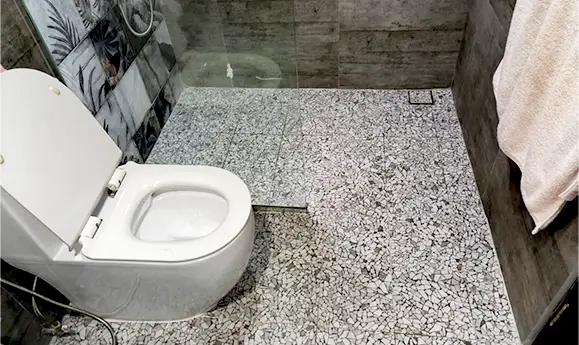
A study from Emerald Insight, entitled “Waterproofing integrity and water tightness of buildings in the tropic”, showed that frequent heavy rain, very high humidity and intensive water use in toilets/bathrooms lead to rapid failure of conventional waterproofing details copied from temperate countries.
- Kitchen Waterproofing
Kitchens are wet areas that use large volumes of water daily for cooking and cleaning. Water splashes from sinks, cooking steam, and dishwasher leaks are constant risks. Kitchen waterproofing prevents water from reaching the structural slab below. It stops inter-tenancy water damage claims from neighbours in the flat below. From basic waterproof paint around sinks to full screed membrane systems, kitchen moisture protection keeps surfaces hygienic and structurally sound.
A study from the Scientific Research Center entitled “Identifying Customer Satisfaction Indicators for the Design, Production, and Implementation of the New Generation of Kitchen Cabinets with Waterproof Seams and Moisture Resistance” showed that moisture resistance and waterproof seams significantly improve customer satisfaction in modern kitchen cabinets. Key factors include durable materials, innovative design, ease of cleaning, and long-term performance, emphasizing the importance of effective kitchen waterproofing in enhancing product quality and user experience.
- Roof Waterproofing
Roofs are the most heavily exposed part of any building in Singapore. They face direct UV radiation, heavy monsoon rain, and strong tropical winds constantly. Flat roofs collect water in puddles that penetrate weak spots and joints. Sloped roofs shed water faster but still need membrane protection at joints.

A study from MDPI, entitled “Developing a Waterproofing Decision-Making Model for High-Rise Building Projects in the Tropics,” published 22 November 2024, showed that frequent leakage and water ingress, especially at roofs, façades, toilets and bathrooms.
- Balcony Waterproofing
Balconies face rain, UV exposure, wind-driven water, and daily foot traffic. Water collects on balcony floors and penetrates into rooms directly below. Without waterproofing, cracks form and inter-tenancy water damage claims follow.
A study from Forest Service Research and Development (R&D)entitled “Durable solutions for balconies and decks” showed that wood-framed balconies and decks in multifamily buildings are highly vulnerable to moisture damage. Past structural failures show that poor design, construction defects, and inadequate balcony waterproofing significantly increase the risk of water infiltration, deterioration, and potential structural collapse.
- Basement Waterproofing
Basements sit below ground level in constantly saturated soil. Groundwater pushes through walls and floors via hydrostatic pressure. Heavy Singapore monsoon rain raises groundwater levels even further. Without tanking, sump pumps, or cavity drain systems, basements flood.
A study from Henry Stewart Talks Ltd (HSTalks) entitled “Ground water assessment and the design of basement waterproofing”, showed that Effective basement waterproofing requires thorough groundwater risk assessment to ensure cost efficiency and long-term durability. Proper drainage design, contamination evaluation, and gas risk analysis are essential, especially below groundwater levels. Professional assessment helps prevent hydrostatic pressure issues, vapour intrusion, and system failure in contaminated environments.
- Wall & Exterior Waterproofing
External walls face harsh tropical weather every day throughout the year. Wind-driven monsoon rain penetrates tiny cracks and gaps in masonry. Rising damp draws groundwater upward through wall pores by capillary action. Exterior waterproofing creates a breathable yet water-resistant surface coating. From basic elastomeric masonry paint to cementitious render systems, wall waterproofing prevents damp staining, mould growth, and structural damage.
A study from E3S Web of Conferences entitled “A Review of Exterior Waterproofing Technologies in Prefabricated Buildings”, showed that current exterior wall waterproofing technologies for prefabricated buildings, including membranes, sealants, grouting, coatings, and waterproof concrete. It evaluates their advantages and limitations, highlighting the need for advanced materials and experimental comparisons to improve long-term waterproof performance of external walls.
- Swimming Pool Waterproofing
Swimming pools hold thousands of litres of water under constant pressure. Even tiny leaks waste water and cause surrounding ground and slab damage. Chlorine and pool chemicals attack concrete surfaces and break down coatings. Pool waterproofing must resist both hydrostatic pressure and chemical attack. From cementitious pool coatings to crystalline admixture treatments, swimming pool waterproofing keeps water in and protects the pool structure.
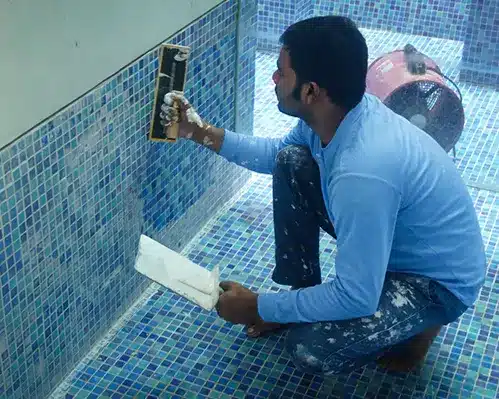
A study from Springer Nature Limited entitled “Technical and Sustainability Analysis of Construction Processes and Covering Systems for Outdoor Swimming Pools” showed that construction methods and covering systems for outdoor swimming pools, highlighting key factors such as design, soil conditions, durability, cost, and sustainability. The findings support informed decision-making and emphasize the importance of proper swimming pool waterproofing for long-term performance and environmental efficiency.
- Water Tank Waterproofing
Water tanks store clean drinking water under constant internal pressure. Leaking tanks waste water and can contaminate stored supplies with pathogens. Tank waterproofing must be food-safe and release no harmful chemicals. Crystalline waterproofing and cementitious coatings are the safest options here. From small domestic header tanks to large communal rooftop storage tanks, water tank waterproofing protects supply quality and structural integrity.
- Underground Structures Waterproofing
Car parks, tunnels, basements, and foundations sit fully below ground level. Groundwater exerts very strong and constant hydrostatic pressure on all sides. Without tanking or cavity drain systems, these spaces flood and deteriorate. From heavy-duty sheet membranes to multi-layer composite waterproofing systems, underground waterproofing must withstand high pressure for many decades of use.
What’s The Difference Between Waterproofing vs. Re-tiling?
The difference between waterproofing and re-tiling is that waterproofing creates a protective barrier under tiles whilst re-tiling just replaces the tiles on top. Waterproofing creates a hidden moisture barrier under the tiles. Re-tiling replaces old tiles on top of the existing substrate. Re-tiling changes appearance; it never stops leaks or fixes water ingress. Waterproofing is invisible but essential; re-tiling is visible but cosmetic. From minor cosmetic tile replacement to full waterproof membrane installation, these two processes serve very different structural and aesthetic purposes.
| Aspect | Waterproofing | Re-tiling |
|---|---|---|
| What it does | Creates a barrier to block water | Replaces old tiles with new ones |
| Where it goes | Under the tiles on floors and walls | On top of the waterproofing layer |
| Main purpose | Stops water leaks and damage | Makes surfaces look nice and clean |
| Visibility | Hidden underneath, you cannot see it | Visible surface that everyone sees |
| Fixes leaks | Yes, stops water from passing through | No, does not stop leaks at all |
| Cost | Moderate to expensive | Moderate cost for materials and labour |
| How long it lasts | 10-25 years with good installation | 15-20 years if installed properly |
| When needed | When leaks occur or during construction | When tiles crack, break or look old |
What’s The Difference Between Waterproofing and Sealing?
The difference between waterproofing and sealing is that waterproofing creates a complete barrier against all water whilst sealing fills gaps and cracks. Waterproofing and sealing are related but distinct moisture control processes. Waterproofing covers large surfaces and forms a complete moisture barrier. Sealing fills small gaps, cracks, construction joints, and weak points. Silicone sealant, polyurethane sealant, and rubber sealants are the main tools. Waterproofing provides the main protection; sealing adds detail protection. Together they form a complete, watertight building protection system.
| Aspect | Waterproofing | Sealing |
|---|---|---|
| What it does | Blocks water across entire surfaces | Fills gaps, cracks and joints |
| Coverage area | Large areas like whole floors and walls | Small areas like edges and corners |
| Materials used | Membranes, coatings and special systems | Silicone, polyurethane and rubber sealants |
| Main purpose | Stops water soaking through materials | Stops water entering through openings |
| Application | Applied in layers across surfaces | Applied to specific joints and gaps |
| Protection level | Complete water barrier | Extra protection at weak points |
| Where used | Bathrooms, basements, roofs, balconies | Around baths, sinks, windows, doors |
| Working together | Provides main protection | Adds extra protection to waterproofing |
What is the Difference Between Waterproofing and Water Resistant?
The difference between waterproofing and water resistant is that waterproofing blocks water completely whilst water resistant only slows water down temporarily. Waterproofing and water resistance sit at different ends of the protection spectrum. Waterproof means fully impermeable: water cannot pass through at all. Water-resistant means it slows water down but fails under sustained exposure. Damp-resistant, moisture-resistant, water-resistant, waterproof, and fully impermeable represent the full gradable spectrum of surface water protection levels. Choose waterproofing for constant exposure and water-resistant for light moisture only.
| Aspect | Waterproofing | Water Resistant |
|---|---|---|
| Water blocking | Blocks water completely | Slows water down temporarily |
| Duration | Works indefinitely when wet | Fails after prolonged water exposure |
| Protection level | 100% protection against all water | Partial protection from light moisture |
| Best use | Constant water exposure areas | Occasional dampness areas |
| Examples | Bathroom floors, swimming pools, basements | Exterior walls, raincoats, outdoor furniture |
| Water pressure | Handles high water pressure | Cannot handle strong water pressure |
| Cost | More expensive materials and installation | Cheaper and easier to apply |
| Effectiveness | Keeps areas completely dry always | May eventually leak in heavy water |
How Much Does Waterproofing Cost in Building Singapore?
Waterproofing cost in Singapore varies by area size, system type, and complexity. From budget waterproof paint to premium multi-layer membrane systems, every price point has a suitable product for Singapore building owners. Small bathroom waterproofing typically costs between SGD 500 and SGD 2,000. Larger balconies cost between SGD 1,000 and SGD 3,500 depending on condition. Basement waterproofing ranges from SGD 3,000 to SGD 10,000 for full tanking. Roof waterproofing costs between SGD 8 and SGD 30 per square metre. Premium polyurethane systems cost more than basic cementitious products. HDB residents can apply for the Home Improvement Programme, or HIP, for grants. Private condominium owners fund common area works through the MCST levy. MCST stands for Management Corporation Strata Title, the condo management body. Always request at least three quotations from BCA-registered contractors.
Factors affecting waterproofing costs include:
- Size of the area needing treatment and the ease of access.
- Type of waterproofing system and brand of materials selected.
- Complexity of the job and any structural defects found.
- Labour rates and the contractor’s BCA certification level.
- Additional crack repair and surface preparation works needed.
How Many Days Does Waterproofing Take?
Waterproofing project duration varies by area size, system type, and weather. From a two-day bathroom to a three-week swimming pool, every waterproofing project follows a preparation, application, and curing timeline. Pot life refers to how long a mixed material stays workable. Tack-free time refers to when the surface stops feeling sticky. Full cure is when the material achieves its maximum designed strength. Singapore’s high ambient temperature can shorten standard curing periods slightly. Singapore’s high humidity during the monsoon season can extend them instead. Always allow full cure before loading, tiling, or sealing any waterproofed surface.
Typical waterproofing project timelines:
- Bathroom: 2 to 4 days including preparation and curing.
- Kitchen wet areas: 2 to 3 days for a standard-sized space.
- Balcony: 3 to 5 days depending on size and condition.
- Basement: 5 to 10 days for a full tanking system.
- Roof: 7 to 14 days depending on weather and size.
- Swimming pool: 10 to 21 days for a complete relining.
FAQs About Understanding Waterproofing in Building
Waterproof paint is the cheapest method of waterproofing for buildings. It sits at the budget end of the waterproofing cost spectrum. It costs less than membranes, slurries, and injection systems. However, it provides only basic, light moisture protection. It suits minor damp patches and light moisture exposure areas only. For permanently wet areas, bathroom floors, and basements, upgrade the system.
The dry season is the best time to do waterproofing of your home. Waterproofing works best when surfaces are completely dry and weather stays sunny. Avoid rainy seasons as moisture affects waterproofing application and curing. Plan waterproofing during good weather for best results and faster completion times.The dry season is the best time to waterproof any home or building. Waterproofing achieves best adhesion and curing on fully dry substrates. Avoid Singapore’s monsoon season as surface moisture affects system bonding. Postpone application if rain is forecast within the next 24 hours. Plan all waterproofing works during favourable, dry weather for best results.
Reapply waterproofing every five to ten years depending on system type. From quick-dry paint systems that need recoating every three years to crystalline treatments that last the full lifetime of the concrete, reapplication frequency depends on the product and level of exposure. High-traffic balconies and roofs need reapplication sooner than internal areas. Inspect all waterproofed surfaces every two years and reapply as needed.
Cementitious waterproofing type of waterproofing is best for walls in most situations. It bonds strongly to concrete, brick, and masonry wall substrates. Liquid PU membrane waterproofing also works excellently on exterior walls. For internal damp walls, elastomeric masonry paint provides basic protection. Always select based on wall substrate type and water exposure level.
Yes, you can apply new waterproofing over existing intact systems. The existing layer must be sound, well bonded, and fully undamaged. Remove all delaminating, peeling, or loose material before reapplication. Surface preparation is always the most critical step before any new coat. A bonding primer improves adhesion between old and new waterproofing materials.
Building owners and MCST management committees hold legal repair responsibility. MCST covers all common area waterproofing in private condominiums. HDB flat owners share responsibility with the Town Council in some cases. The BCA issues Structural Defect Notices to owners who ignore waterproofing failures. Always consult BCA guidelines and your MCST rules for repair responsibilities.
Classic Waterproofing and Plumbing Pte Ltd is Singapore’s trusted waterproofing specialist. We are BCA-registered and serve HDB, condominium, and commercial buildings. We use only certified, high-quality materials tested for Singapore’s tropical climate. We offer durable moisture protection, structural repair, and waterproofing remediation. Contact us today for a free site assessment and competitive quotation.