
Climate in Singapore is tropical (equatorial), warm, and humid throughout the year, with temperatures ranging between 25–31°C and annual precipitation averaging about 2,400 mm. Influenced by its equatorial position, monsoon wind systems, and surrounding marine waters, the city-state experiences frequent intense downpours and strong ultraviolet radiation. Elevated humidity levels and high-intensity rainfall can impact buildings, increasing the risk of water ingress and material degradation. Proper waterproofing systems, durable construction materials, and efficient drainage infrastructure are essential to protect the building envelope from long-term climate-related damage.
What is the Climate in Singapore?
The Climate in Singapore is warm and humid year-round. The sun radiates intensely every day. Temperatures remain around 30°C. Convective rainfall occurs in short bursts. Elevated humidity levels make the air feel oppressive. The northeast monsoon generates rainfall from December to March. The southwest monsoon arrives between June and September. Nights cool slightly to 24°C. Residents use fans and air-conditioning to remain comfortable. Dense tropical vegetation thrives in this climate. The city-state pulses with energy despite the heat. No cold or temperate seasons occur here.
The Climate in Singapore shapes daily routines consistently. Tropical thunderstorms develop rapidly and intensely. Residents carry umbrellas quickly. Annual precipitation exceeds 2300 mm consistently. Marine breezes circulate steadily and refresh the atmosphere. Drainage systems channel runoff efficiently. Urban parks remain vibrant and active. Relative humidity averages near 80 percent. Lightweight clothing dominates wardrobes. No distinct dry months interrupt the cycle. Atmospheric conditions influence shared routines. Visitors adapt quickly and enjoy it.
What Type of Climate Zone Is Singapore In?
Singapore is classified under a tropical rainforest climate zone.
It remains warm and humid throughout the year. Precipitation occurs frequently, with no prolonged dry season. Temperatures remain stable, around 25–31°C. Dense vegetation thrives under these climatic conditions. Residents enjoy sunny days but must prepare for abrupt rainfall. This equatorial climate classification supports diverse flora and fauna.
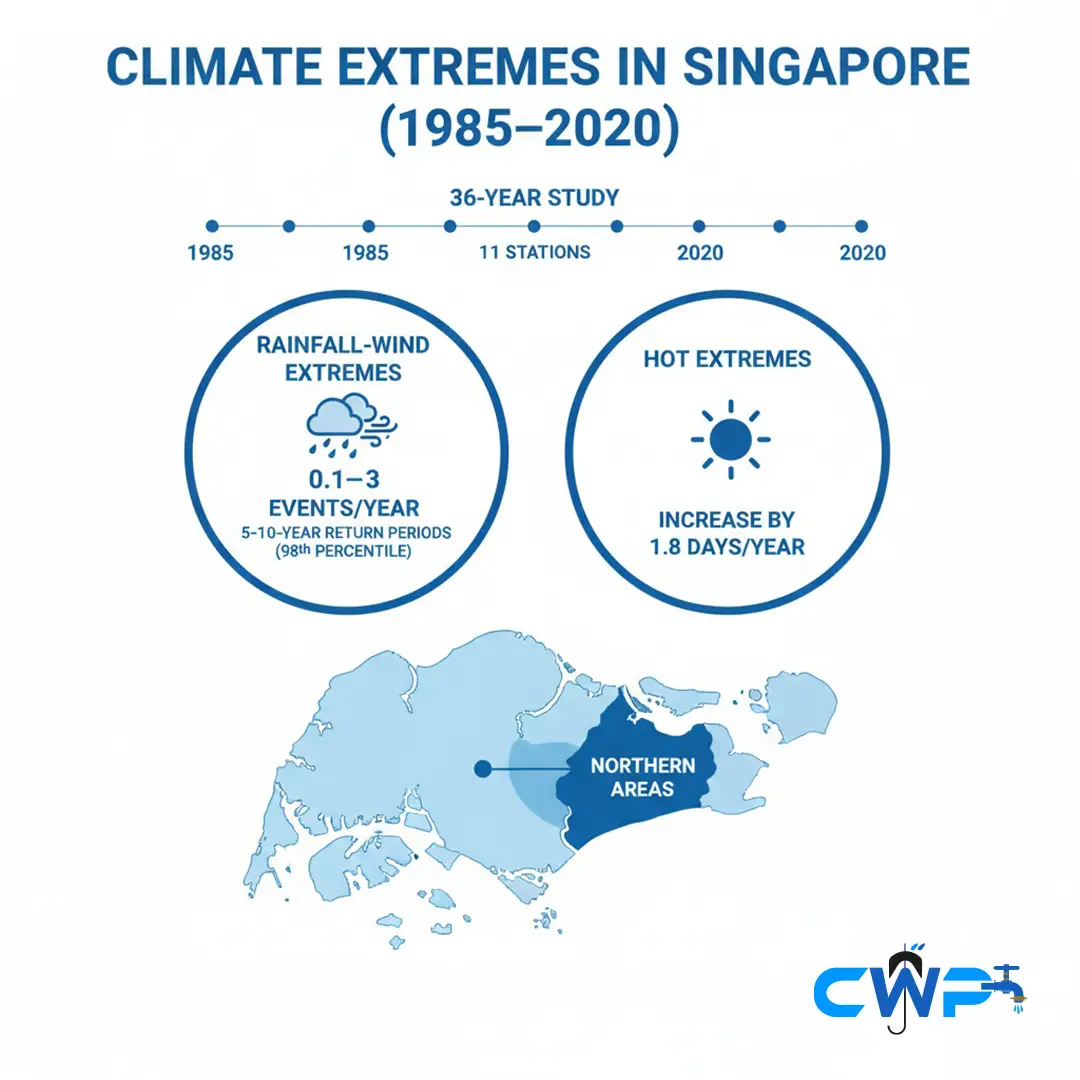
A study published on Climate (A scientific, peer-reviewed, open access journal of climate science) entitled that “Characteristics of Compound Climate Extremes and Impacts in Singapore, 1985–2020” showed that a 36-year study (1985–2020) across 11 stations in Singapore found compound rainfall–wind extremes occurring 0.1–3 events/year, with 5–10-year return periods at the 98th percentile. Hot extremes increased by 1.8 days/year, highlighting rising climate risks and spatial vulnerability in northern areas.
This graphic shows climate extremes in Singapore based on 36 years of data.
Why Does Singapore Have a Tropical Climate?
Singapore has a tropical climate because it is located near the equator. This geographical position results in consistently warm temperatures and elevated humidity throughout the year. Solar radiation and frequent precipitation create a lush ecological environment. Monsoon wind systems and surrounding marine waters further regulate atmospheric conditions, maintaining a stable equatorial climate regime.
1. Equatorial Location
Singapore’s equatorial position sustains its warm and humid atmospheric profile. It lies close to the equator, where solar radiation strikes directly. This positioning ensures stable temperature ranges and no marked seasonal variation. The equatorial influence keeps Singapore’s climate tropical and relatively predictable.
2. Consistent Solar Radiation
Singapore receives consistent solar radiation due to its geographic latitude. The sun’s rays impact perpendicularly throughout the year. This maintains steady thermal conditions. Continuous solar exposure supports vegetation growth and reinforces a tropical climatic system.
3. High Humidity Levels
Singapore experiences elevated humidity due to its equatorial climate. Warm air masses retain higher moisture content, making the air feel humid and heavy. Frequent precipitation increases atmospheric moisture levels. This moisture-laden air supports plant growth but may feel uncomfortable for residents.
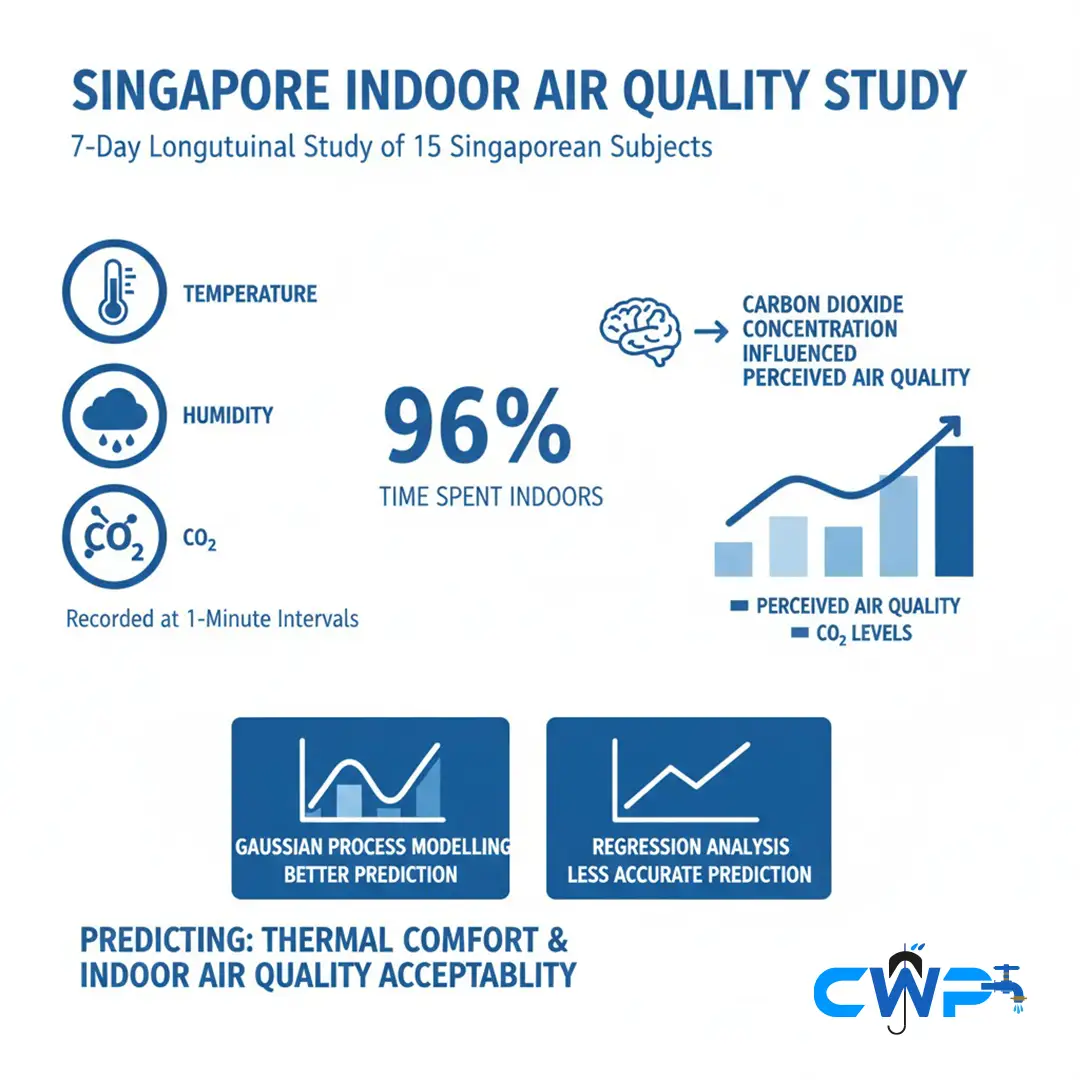
A study published in The International Journal of Building Science and its Applications entitled “Longitudinal assessment of thermal and perceived air quality acceptability in relation to temperature, humidity, and CO2 exposure in Singapore” showed that a 7-day longitudinal study of 15 Singaporean subjects recorded temperature, humidity, and CO2 at 1-minute intervals. Participants spent 96% indoors. Carbon dioxide concentration significantly influenced perceived air quality, and Gaussian process modelling outperformed regression analysis in predicting thermal comfort and indoor air quality acceptability.
The following image shows a Singapore indoor air quality study.
4. Monsoon Winds
Monsoon wind systems influence Singapore’s tropical atmospheric conditions. These seasonal winds generate intense monsoon rainfall during specific periods. They also regulate temperature patterns and humidity levels. Monsoon circulation prevents a prolonged dry season, sustaining a humid climate regime.
A study published in the Journal of the European Geosciences Union entitled “Importance of tides and winds in influencing the nonstationary behaviour of coastal currents in offshore Singapore” reported that a 1-year (2018–2019) observational study using 8 current meters in southern Singapore found tidal forces explain 14–45% of current variance. Current velocities exceeded 100 cm s−1 during spring tides. Diurnal currents dominated semidiurnal patterns, with 30–60 day MJO-linked wind forcing significantly modulating nonstationary coastal circulation.
5. Being Surrounded by Warm Sea Waters
Surrounding marine waters help regulate Singapore’s equatorial climate. Elevated sea surface temperatures warm adjacent air masses and increase atmospheric moisture. This interaction contributes to frequent precipitation events. The combined ocean–atmosphere system maintains a stable tropical climate throughout the year.
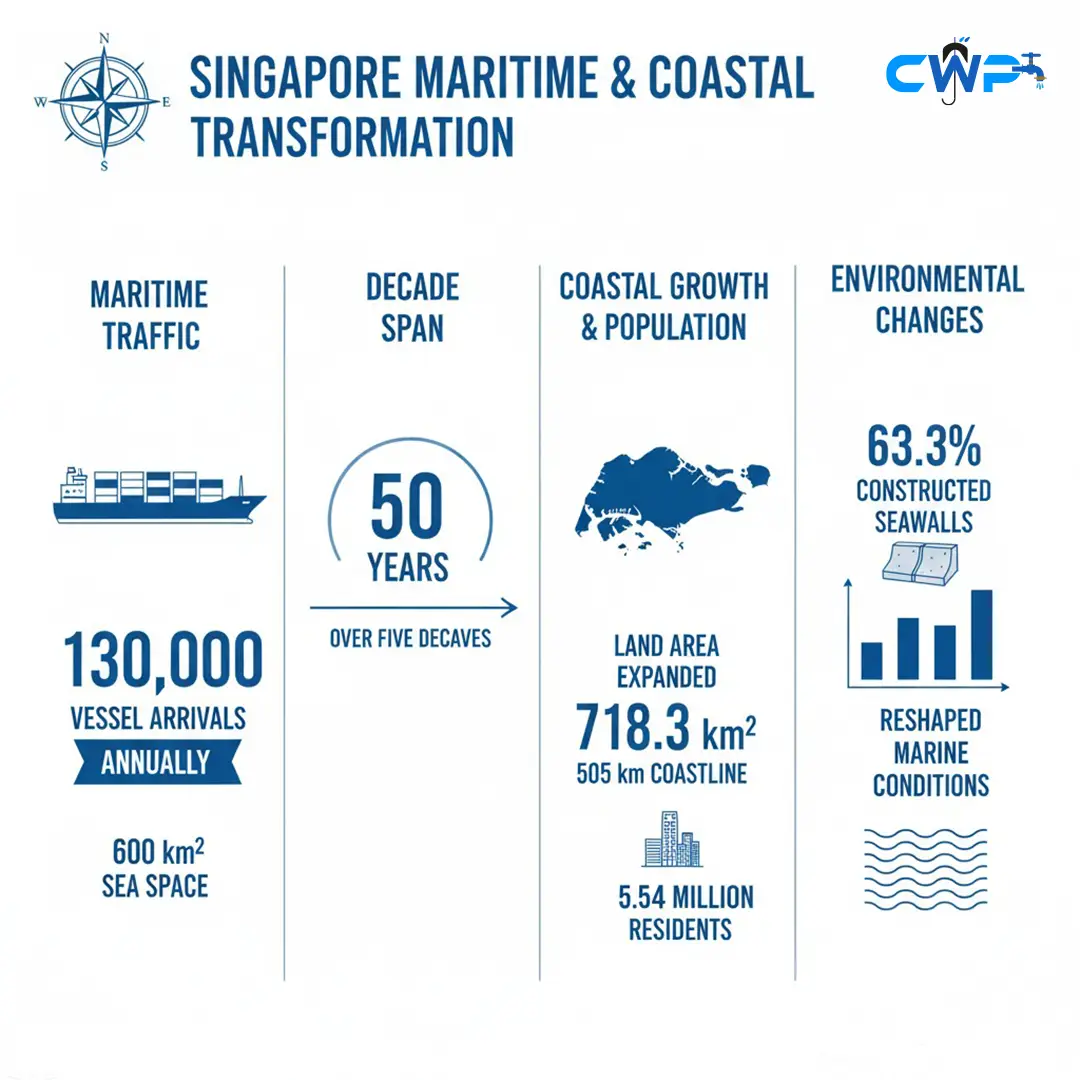
A study published in the journal Regional Studies in Marine Science entitled “The urban marine environment of Singapore” showed that Singapore manages approximately 130,000 vessel arrivals annually within 600 km2 of sea space. Over 50 years, rapid coastal development supporting 5.54 million residents expanded its 718.3 km2 land area and 505 km coastline, with 63.3% constructed seawalls, significantly reshaping marine environmental conditions.
The following image shows warm seawater in Singapore.
How Does the Climate in Singapore Affect Waterproofing?
Singapore’s equatorial climate makes waterproofing essential for structural systems. High-intensity rainfall, elevated humidity, and strong ultraviolet radiation impose environmental stress on building envelope components. Understanding waterproofing strategies helps mitigate water ingress and structural degradation. Appropriate materials and application techniques enhance durability in this humid tropical environment.
A study published in Buildings (an international, peer-reviewed, open access journal) entitled “Developing a Waterproofing Decision-Making Model for High-Rise Building Projects in the Tropics” emphasised climate-responsive waterproofing selection in tropical high-rise developments.
1. Heavy Rain Creates Continuous Water Exposure
High-intensity rainfall in Singapore subjects buildings to continuous hydrostatic pressure. Persistent moisture exposure may cause infiltration and structural weakening over time. Waterproofing membranes prevent moisture penetration into façades and roof assemblies. They keep buildings dry during recurrent intense precipitation events.
A study published in Applied Sciences entitled “Effects of Heavy Rainfall on Shallow Foundations in Bukit Timah Granite in Singapore” found that rainfall intensities of 8–32 mm/h over 1–5 days significantly reduced matric suction and bearing capacity in shallow foundations. Settlement increased up to 100%, with finite element modelling underpredicting results by 4–26% compared to empirical calculations.
2. High Humidity Causes Moisture Retention
Elevated humidity levels cause surface moisture accumulation. This may lead to mould growth, condensation, and material degradation. Waterproofing systems limit moisture ingress into structural components such as walls and floors. They support healthier and more durable built environments.
3. Temperature Fluctuations
Thermal fluctuations in Singapore affect construction materials. Elevated temperatures cause expansion, while cooling induces contraction. This cyclic movement stresses sealants and expansion joints over time. Flexible waterproofing membranes accommodate thermal movement and reduce cracking.
4. Strong UV Exposure Degrades Materials
Intense ultraviolet radiation accelerates polymer degradation. Prolonged solar exposure weakens waterproof membranes and sealants. UV-resistant materials extend service life. They protect building envelope systems from solar-induced deterioration.
A study published in the Slovak Journal of Civil Engineering entitled “Physical-mechanical Properties Of Waterproofing Materials Applied To Roofs In The Context of UV Degradation” analysed PVC-P membranes under UV (290–400 nm), humidity, and temperature exposure. Accelerated testing increased exposure ninefold and deterioration rates five to six times compared to natural conditions. Another study in the International Journal of Infrastructure Research and Management entitled “Sustained Load And Aging Impact On Waterproof Membranes: A Review Of Current Research” reported that waterproof membranes account for 85.29% of materials used in leakage prevention, including over 60% modified bitumen and 11.44% polymer membranes. Testing showed 100% strain at 115°C caused PVC failure within 7 days, while aging at 90°C showed performance decline between 364 and 504 days.
5. Accelerated Material Deterioration
Singapore’s equatorial climate accelerates progressive material degradation. Rainfall, humidity, and ultraviolet radiation intensify deterioration processes. Waterproofing systems act as protective barrier layers, reducing environmental stress. They ensure structural integrity and extended service life.
What Causes Climate Change in Singapore?
Climate change in Singapore results from anthropogenic activities and natural variability. Greenhouse gas emissions, urbanisation, and increasing sea surface temperatures contribute significantly. Understanding these drivers supports mitigation strategies. Emission reduction and environmental management can slow climatic shifts.
1. Increase Greenhouse Gases
Greenhouse gases increase thermal retention in the atmosphere. Fossil fuel combustion and industrial processes emit these gases. This elevates average temperatures and alters precipitation patterns. Emission control strategies help address this issue.
2. Urban Heat Island Effect
The urban heat island effect elevates urban temperatures. Built surfaces absorb and re-radiate heat energy, increasing local thermal intensity. Urban greenery and reflective materials can moderate this effect.
3. Deforestation and Land Development (Regional Impact)
Deforestation reduces carbon sequestration capacity, while land development intensifies heat absorption. These processes influence regional climate dynamics. Forest conservation supports environmental equilibrium.
4. Rising Sea Temperatures
Increasing sea surface temperatures influence regional atmospheric circulation. Warmer oceans contribute to intensified storm systems and sea-level rise. Coastal infrastructure and ecosystems face elevated risk. Global mitigation efforts can reduce long-term impacts.
A study published in the Indonesian Journal of Geography entitled “Sea Surface Temperature (SST) and Rainfall Trends in the Singapore Strait from 2002 to 2019” showed that SST ranged between approximately 28°C and 31°C, inversely correlating with rainfall. Higher rainfall and lower SST occurred during December-February, while lower rainfall and warmer SST prevailed from March to August.
5. Increased Frequency of Extreme Weather
Extreme climatic events are becoming more frequent in Singapore. High-intensity rainfall, heatwaves, and severe storms disrupt urban systems. Climate change intensifies these atmospheric extremes. Proactive adaptation reduces long-term vulnerability.
How Often Does It Rain in Singapore?
Precipitation occurs almost daily in Singapore. The tropical climate produces recurrent afternoon rainfall events. Rainfall distribution remains consistent throughout the year, with no extended dry season. Abrupt downpours are common but typically short in duration. This persistent precipitation sustains dense vegetation and refreshes air quality.
A study published in the Journal of Applied Meteorology and Climatology entitled “Observed Rainfall Trends over Singapore and the Maritime Continent from the Perspective of Regional-Scale Weather Regimes” reported that from 1980–2014, sea surface temperatures averaged 27–29°C, influencing rainfall variability across eight identified monsoon-related weather regimes.
When Is the Monsoon Season in Singapore?
The monsoon season in Singapore occurs twice annually. The Northeast Monsoon extends from December to March, generating sustained rainfall. The Southwest Monsoon lasts from June to September, producing shorter precipitation episodes. These seasons bring cooler atmospheric conditions and increased rainfall frequency.
How Much Rainfall Does Singapore Receive Each Year?
Singapore receives approximately 2,400 millimetres of precipitation annually. Rainfall remains evenly distributed without a prolonged dry period. Certain months, including December, record heavier rainfall intensity. This substantial precipitation supports tropical ecosystems but may cause surface flooding in low-lying districts.
A study by the Meteorological Service Centre entitled “Climate of Singapore” reported that from 1991 to 2020, Singapore recorded an annual average of 2,113.3 mm of rainfall across approximately 171 rain days per year. Rainfall intensity peaks during the wet phase of the Northeast Monsoon (November–January), with daily maximum temperatures ranging 31–33°C and mean relative humidity averaging 82%. The National Climate Change Secretariat reported that from 1984 to 2022, annual mean temperature increased by 0.24°C per decade, rainfall rose by 83 mm per decade, and projected mean sea level may rise 0.23–1.15 m by 2100.
Does Heavy Rainfall Affect Buildings in Singapore?
High-intensity rainfall can compromise building envelope systems. Water may infiltrate façades and roofing assemblies, causing leaks and mould growth. Integrated waterproofing systems and drainage infrastructure protect structural components. Routine maintenance preserves durability during recurrent precipitation.
A study published in Sustainability entitled “Climate Change Projection and Its Impacts on Building Façades in Singapore” indicated that projected increases in rainfall intensity and extreme events may accelerate corrosion, material fatigue, adhesive failure, and biological growth on façades.
How Does Frequent Rain Impact Roof Structures?
Frequent rainfall gradually weakens roof assemblies. Moisture may infiltrate micro-cracks, leading to leakage. Prolonged exposure promotes corrosion in metallic components and biological decay in timber elements. Preventive waterproofing and inspection maintain structural reliability.
A study published by Springer Nature Singapore entitled “Wind Driven Rain Analysis for Effective Industrial Building Design in Singapore to Mitigate Rainwater Penetration” demonstrated that wind-driven rain can increase façade wetting by 22–35%, while architectural elements such as louvres and overhangs reduce infiltration.
How Much Rainfall Does Singapore Receive Each Year?
Singapore receives about 2,400 millimetres of rain annually. Rainfall is evenly distributed, with no distinct dry months. Some months, like December, see heavier rain. This high rainfall supports the tropical environment but can cause flooding in low-lying areas.
A study published on Meteorological Service Centre entitled “Climate of Singapore” showed that From 1991 to 2020, Singapore received an average of 2,113.3 mm of rainfall annually over approximately 171 rain days per year. Rainfall is heaviest during the wet phase of the Northeast Monsoon (November–January), with peak daily temperatures ranging 31–33 °C and humidity averaging 82 %. Another study published on National Climate Change Secretariat entitled “Impact of Climate Change in Singapore”, showed that from 1984 to 2022, Singapore’s annual mean temperature increased by 0.24 °C per decade, with 2024 among the hottest years. Rainfall rose 83 mm per decade, while mean sea level is projected to increase 0.23–1.15 m by 2100.
Does Humidity Cause Concrete Damage?
Elevated humidity can degrade concrete structures over time. Moisture penetrates capillary pores, weakening the matrix. This may result in mould growth and reinforcement steel corrosion. Protective sealants and routine inspection mitigate humidity-related damage.
How Does High Humidity Affect Buildings?
High humidity promotes moisture retention within building materials. This results in damp surfaces, mould proliferation, and gradual weakening. Timber components may warp, and metallic elements may corrode. Adequate ventilation and moisture-resistant materials reduce these effects.
How Does UV Exposure Affect Roof Waterproofing?
Ultraviolet radiation gradually degrades roof waterproofing membranes. Solar exposure reduces elasticity and performance. Cracking and water ingress may follow. UV-stabilised materials and scheduled maintenance extend service life.
What Are the Wettest Months in Singapore?
The wettest months in Singapore are November through January. These months correspond with the Northeast Monsoon phase. Intense rainfall and convective thunderstorms occur frequently. Recurrent high-intensity precipitation may trigger surface flooding in low-lying areas. Effective drainage systems mitigate excess runoff.
What Building Materials Perform Best In Singapore’s Climate?
Climate-resilient construction materials perform optimally in Singapore’s equatorial conditions. Reinforced concrete, treated timber, and UV-resistant coatings withstand thermal stress and precipitation exposure. Stainless steel provides corrosion resistance under elevated humidity. Appropriate material selection ensures structural durability in this humid tropical climate.
Why Do Balconies Leak More During Monsoon Season?
Balconies experience increased leakage during monsoon periods due to sustained rainfall. Water accumulates on horizontal surfaces and infiltrates compromised sealants. Inadequate drainage gradients exacerbate pooling. Routine balcony waterproofing maintenance and proper slope design reduce infiltration risk and protect balcony assemblies.
Does Singapore’s Tropical Climate Shorten Waterproofing Lifespan?
Yes, Singapore’s tropical climate shortens waterproofing lifespan. High heat and humidity speed up waterproofing wear. UV rays bake coatings daily. Heavy rain tests seals often. These forces make materials crack fast. Dirt and mould grow in wet air. They clog and weaken layers. Regular checks help. Clean and recoat yearly to fight back.