
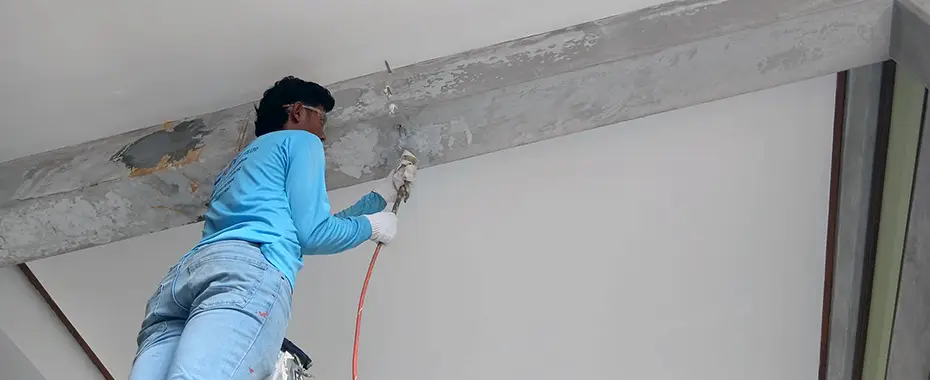
PU Injection Waterproofing is a highly effective method used to prevent water from entering a structure. PU injection waterproofing is essential for repairing leaking basements, tunnels and concrete structures quickly. It stops active water leaks immediately even whilst water is flowing through.
PU injection waterproofing, also called polyurethane grouting, is a proven remedial fix. Specialists inject expanding resin directly into cracks, stopping ingress at its source. This guide explains seven types of PU injection used across Singapore buildings. It covers benefits, required materials, step-by-step application, and cost expectations. It also explains what to look for when hiring a qualified specialist. Whether you manage a leaking basement or a cracked retaining wall, this guide helps.
What Is PU Injection Waterproofing?
PU injection waterproofing is a specialized technique that pumps polyurethane material into cracks to stop water leaks. It forms part of the broader waterproofing system protecting a building’s envelope. Trained technicians inject polyurethane resin, also called PU grout, into cracks and voids. The liquid resin reacts with moisture, expands, and cures to form a tight seal. This stops water ingress at the source rather than masking it at the surface.
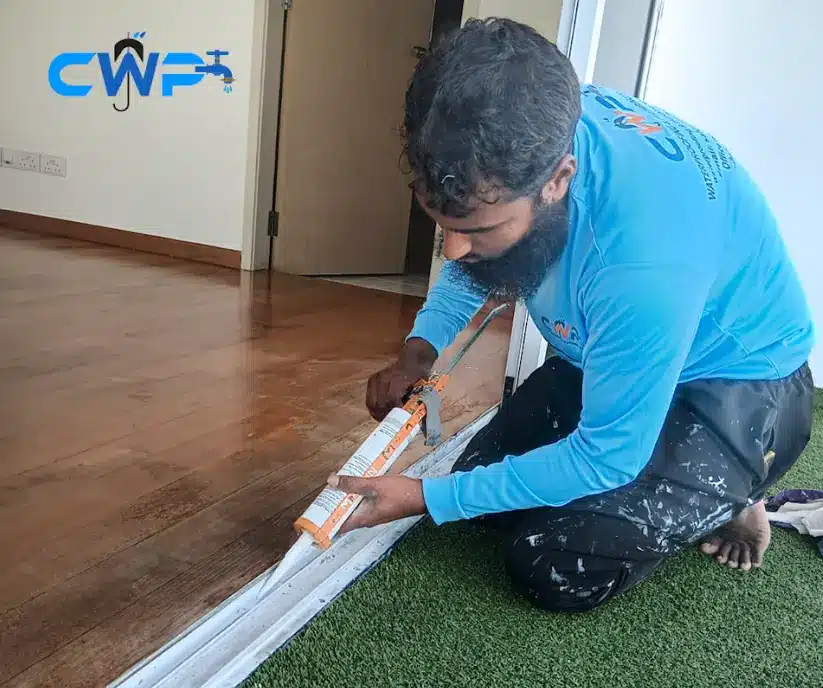
Unlike bituminous coatings, cementitious render, or surface-applied membranes, resin injection works from within the substrate. Technicians use it to address everything from minor seepage to severe active leaks. The cured grout bonds with surrounding concrete, restoring structural integrity alongside waterproofing performance. Building professionals in Singapore rely on PU grouting for concrete repair and structural rehabilitation. It is a trusted solution within the broader field of remedial construction works.
A study from Science Direct entitled “Evaluation of polyurethane resin injection for concrete leak repair”, showed that polyurethane resin injection for stopping water leakage in concrete structures. The resin expands upon contact with water, creating a durable, elastic foam that effectively blocks cracks and voids. It significantly reduces concrete permeability and provides a reliable solution for waterproofing various concrete elements.
What Are the Different Types of PU Injection for Waterproofing?
PU injection for waterproofing types include hydrophilic, hydrophobic, flexible, rigid, high-pressure, low-pressure and cementitious grout formulations. Different Pressure injection waterproofing (PU-based) types work through various chemical reactions and expansion characteristics. Hydrophilic polyurethanes need moisture to cure and expand forming gels or foams. Hydrophobic polyurethanes cure without water creating flexible rubber-like seals. Single-component systems react with air moisture whilst two-component systems mix before injection. Fast-reacting formulations stop flowing water within seconds. Slow-reacting types penetrate deeper into structures before expanding.
1. Hydrophilic PU Injection
Hydrophilic polyurethane resin, meaning water-attracting resin, actively draws in moisture to expand and seal. Technicians use it where active water ingress is present and flowing through the crack. The resin saturates the void, swells significantly, and forms a watertight plug inside the substrate. This makes hydrophilic PU grouting ideal for wet basements, tunnels, and underground car parks. It handles dynamic cracks that widen, narrow, or shift with structural movement over time. Buildings in Singapore’s high-water-table areas benefit most from this water-reactive formulation.
A study conducted by Science Direct titled “Hydrophilic thermoplastic polyurethanes for the manufacturing of highly dosed oral sustained release matrices via hot melt extrusion and injection molding”, showed that hydrophilic thermoplastic polyurethane matrices with high water uptake capacity and controlled performance characteristics. Their hydrophilic structure and adjustable properties demonstrate strong penetration, expansion, and stability potential, supporting the technical foundation of hydrophilic PU injection systems for effective moisture control applications.
2. Hydrophobic PU Injection
Hydrophobic PU injection, meaning water-repelling resin, cures into a firm, stable foam without needing moisture. Unlike its hydrophilic counterpart, it does not rely on water to activate, expand, or consolidate. Technicians apply it to dry or damp cracks needing consistent, controlled sealing performance. It resists re-wetting, thermal movement, and substrate vibration without losing bond integrity over time. Hydrophobic PU grouting suits cold joints, construction joints, and areas with recurring minor seepage. Compared to cementitious render, hydrophobic PU resin penetrates deeper and cures faster on site.
A study from Wiley Online Library entitled “Preparation of thermoplastic polyurethane blend foams with controlled hydrophobicity via vapor induced phase separation”, showed that PDMS-modified thermoplastic polyurethane significantly enhances hydrophobic performance, increasing water contact angle and improving oil adsorption efficiency. This advanced material design supports effective oil–water separation, highlighting the potential of hydrophobic PU injection technology for superior moisture resistance, sealing performance, and durability.
3. Flexible PU Injection
Flexible polyurethane injection produces an elastomeric, rubber-like seal that accommodates structural movement. The cured resin stretches and compresses without cracking; rigid epoxy injection would fail instead. Technicians use flexible PU grouting on expansion joints, live cracks, and thermally cycled areas. It suits Singapore buildings prone to settlement, vibration, or soil movement beneath the foundation. The elastomeric seal maintains waterproofing performance through repeated movement cycles without debonding or failing. For dynamic cracks with minor seepage or active leaks, flexible PU injection works best.
A study from the American Society of Civil Engineers (ASCE) entitled showed that foamable polymers used in underground grouting shows strong water-plugging performance. NMR analysis confirmed sealing pressure thresholds up to 1.50 MPa, increasing with density. Findings support the effectiveness of flexible PU injection for waterproofing cracks and preventing water intrusion in underground structures.
4. Rigid PU Injection
Rigid PU injection cures into a high-density foam that fills voids and stabilises loose material. It consolidates loose soil, gravel, or degraded concrete behind walls and under floor slabs. Technicians use it where both structural support and waterproofing performance are needed simultaneously. Rigid PU grout resists deformation and supports load-bearing areas with minimal vertical movement. It is widely used in basement waterproofing, retaining wall stabilisation, and slab lifting across Singapore. In structural rehabilitation works, rigid PU grouting strengthens the substrate itself, not just the surface.
A study from Taylor & Francis Online entitled “Consolidation and waterproofing by injection of PU resins. Ilarion Dam – treatment on the spillway tunnel”, showed that Ground conditions in underground construction are often unpredictable, leading to fractures and water ingress. The study highlights how fast-reacting, low-viscosity PU resins effectively stabilized and sealed tunnel strata. Results from the Ilarion Dam project demonstrate the practical benefits of rigid PU injection in controlling water flow and ground instability.
5. High-Pressure PU Injection
High-pressure PU injection uses specialised pumping equipment to force resin deep into hairline fractures. Technicians apply elevated pressure to ensure complete resin penetration throughout the crack network. This method suits dense concrete structures, deep cracks, and complex fracture systems with multiple branches. High-pressure grouting distributes resin far more effectively than low-pressure methods in such conditions. It is the preferred method for severe ingress in basement walls, tunnels, and MRT structures. The injection pump, packers, and resin formulation all require precise calibration for high-pressure applications.
A study from MDPI entitled “Experimental Study on Improving the Impermeability of Concrete under High-Pressure Water Environments Using a Polymer Coating”, showed that high-pressure tunnel waterproofing shows that advanced polymer coatings significantly improve concrete impermeability. Tests confirm resistance up to 3 MPa pressure and major reductions in seepage. Findings support the effectiveness of High-Pressure PU Injection and protective coatings in demanding water-pressure environments.
6. Low-Pressure PU Injection
Low-pressure PU injection delivers resin gently through surface-mounted packers and injection ports. Technicians regulate flow carefully to avoid fracturing or damaging thin or weakened concrete sections. This method suits surface cracks, shallow voids, and substrates where integrity is already compromised. Low-pressure grouting is the most cost-effective method for residential waterproofing repairs across Singapore. It allows precise, controlled application with no risk of secondary cracking in the substrate. Singapore homeowners use it for roof slabs, balconies, and bathroom waterproofing repairs most commonly.
A study from MDPI entitled “Technical Evaluation Method for Physical Property Changes due to Environmental Degradation of Grout-Injection Repair Materials for Water-Leakage Cracks”, showed that evaluates grout-injection materials for concrete crack repair under ISO TS 16774 standards. It highlights that low-pressure PU injection is essential for direct crack sealing, preventing additional damage while effectively controlling water leakage in underground concrete structures.
7. PU Injection With Cementitious Grout
PU injection combined with cementitious grout delivers a two-stage waterproofing and structural repair solution. Technicians first inject polyurethane resin to stop active leaks and seal water ingress rapidly. They then apply cementitious grout over the zone to restore strength and surface integrity. This hybrid approach suits severe leaks where PU resin or render alone is insufficient. It is common in Singapore basement remediation, retaining wall repair, and MRT tunnel maintenance contracts. The combination of chemical grouting and cementitious patching provides both immediate sealing and long-term durability.
A study from MDPI entitled “Properties and Microstructure of a Cement-Based Capillary Crystalline Waterproofing Grouting Material” cement-based capillary crystalline waterproofing (CCCW) grout shows improved sealing and strength compared to traditional cement grout. By promoting cement hydration and filling micro-voids, CCCW enhances waterproofing performance, reduces permeability, and provides stronger, longer-lasting protection against water leakage in structures.
What Are the Benefits of PU Injection Waterproofing?
The benefits of PU injection waterproofing include stopping active leaks immediately without excavation or concrete removal. This waterproofing method works whilst water is actively flowing through cracks. It avoids expensive excavation and demolition saving time and money significantly. Chemical grouting (polyurethane) works from inside buildings without needing external wall access. The technique causes minimal disruption to building occupants during repairs. Workers complete repairs in hours not days allowing quick return to normal. The expanding foam fills all voids ensuring complete crack sealing. PU injection is perfect for emergency leak repairs in basements and tunnels.
1. Stops Active Leaks Within Minutes: PU resin reacts fast with moisture and seals flowing water ingress at the source. Technicians do not need to drain or dry out the structure before injecting.
2. Penetrates Deep Into Hairline Cracks: The low-viscosity resin permeates hairline fractures that surface coatings and cementitious render cannot reach. This ensures complete sealing throughout the full depth and width of the defect.
3. Strengthens the Substrate From Within: Cured PU grout bonds with concrete and consolidates the repaired zone structurally. This improves load-bearing integrity alongside waterproofing performance in a single operation.
4. Requires No Hacking, Chipping, or Demolition: Technicians drill only small injection ports rather than breaking out concrete sections. This reduces waste, noise, and disruption compared to traditional breakout and patch methods.
5. Works Across Wet, Damp, and Dry Conditions: Hydrophilic resin handles wet and active leak conditions; hydrophobic resin handles damp or dry cracks. This range of formulations makes PU grouting adaptable across varied substrate conditions.
6. Delivers Long Service Life With Low Maintenance: Cured polyurethane resin resists hydrostatic pressure, chemical exposure, and ongoing substrate movement. A well-executed PU injection repair typically lasts ten to twenty-five years before re-treatment is needed.
7. Accesses Confined and Inaccessible Spaces: Portable injection pumps and flexible packers allow technicians to work in tight, restricted spaces. This suits lift pits, narrow crawl spaces, and underground car parks in Singapore buildings.
8. Minimises Disruption to Occupants and Operations: PU injection completes faster than traditional membrane replacement or cementitious waterproofing methods. Commercial tenants and residential occupants experience shorter downtime and less construction noise overall.
What Materials Are Used in PU Injection Waterproofing?
Materials used in PU injection waterproofing include various polyurethane formulations, injection equipment and installation accessories. The main material is liquid polyurethane resin available in different chemical formulations. Hydrophilic polyurethanes react with water forming expanding gels or foams. Hydrophobic polyurethanes cure without moisture creating flexible rubber seals. Single-component PU systems come ready to use from containers. Two-component systems require mixing resin and catalyst before injection. Each formulation type suits specific crack conditions and waterproofing requirements. Quality polyurethanes from reputable manufacturers ensure reliable long-lasting results.
- Polyurethane Resin (PU Grout): This is the primary sealing agent and the core component of the entire injection system. It comes in hydrophilic and hydrophobic formulations, each curing into a flexible or rigid seal. PU resin belongs to a wider family of chemical grouts, alongside epoxy and acrylic systems.
- Injection Packers (Ports): Packers are the entry fittings inserted into pre-drilled holes along the crack. They channel resin under pressure directly into the defect via the drilled port. Without properly seated packers, the resin cannot penetrate the substrate at the required depth.
- Injection Pump: The pump drives resin through the packers and into the crack under controlled pressure. Technicians select between single-component and dual-component pumps based on resin type and site conditions. Pump calibration directly affects resin distribution, penetration depth, and overall waterproofing effectiveness.
- Surface Sealant or Epoxy Paste: Technicians apply epoxy paste or hydraulic cement along the crack surface between each installed packer. This forms a temporary face seal that prevents blowback and directs grout deeper. Epoxy paste serves a different but complementary purpose alongside PU resin in the repair system.
- Accelerators and Catalysts: Accelerators adjust the resin’s gel time, expansion rate, and cure speed for specific conditions. Technicians use fast catalysts for flowing water and slower ones for dry crack filling. The catalyst determines how quickly the injected resin consolidates and seals the crack from within.
- Primers: Certain concrete substrates require priming before injection to improve adhesion and penetration depth. Primers form part of the preparation stage and directly affect long-term bond quality. They are most commonly used on porous, carbonated, or heavily contaminated concrete surfaces.
When Should You Use PU Injection Waterproofing?
You should use PU injection waterproofing when facing active leaks in basements, tunnels or concrete structures. This method stops flowing water immediately whilst the leak is happening. Use PU injection for emergency repairs preventing flooding in occupied buildings. It works perfectly for repairing leaks that traditional waterproofing cannot reach easily. PU resin injection suits situations where excavation is impossible or too expensive. The technique is ideal when you need quick results without major building disruption. Unlike waterproof coatings that need dry surfaces, Injection grouting with polyurethane works in wet conditions. It provides protection that is truly waterproof and water resistant, creating a complete barrier against water penetration.
- Active Leaks in Basement Walls or Floors: Basements with flowing water through walls or floor slabs need immediate, targeted polyurethane injection.
- Cracked Concrete Causing Water Ingress: When structural or non-structural cracks allow seepage, PU grout permeates and seals them from within.
- Leaking Construction Joints or Cold Joints: Cold joints and construction joints regularly fail in Singapore, bypassing the existing waterproof membrane below.
- Failing or Deteriorated Expansion Joints: When expansion joints lose sealing capacity, flexible PU injection restores water-resistant performance reliably.
- Seepage Through Retaining Walls: Retaining walls under sustained hydrostatic pressure benefit from PU grouting to restore waterproof integrity.
- Leaking Underground Structures: Tunnels, MRT structures, and underground car parks with active seepage need polyurethane grouting treatment promptly.
- Water Infiltration in Lift Pits: Lift pits in Singapore buildings frequently collect groundwater and require waterproof resin injection to seal.
- Remedial Action After Membrane Failure: When an existing waterproof membrane fails, PU injection offers a non-invasive, cost-effective alternative.
How Do You Use PU Injection Waterproofing?
You use PU injection waterproofing by first inspecting cracks to determine their extent and water flow. Examine the entire crack length marking start and end points clearly. Check if water is actively flowing or if cracks are dry. Measure crack width and depth estimating the volume needing filling. Identify the crack type whether structural, settlement or thermal movement. Determine appropriate polyurethane formulation based on crack conditions observed. Plan injection port spacing typically every 15 to 30 centimetres. Prepare all equipment, materials and safety gear before starting work.
Step 1: Inspect and Prepare the Surface
Technicians inspect the crack, assess water ingress severity, and clean the concrete surface. They remove loose material, carbonated concrete, dust, and any existing failed sealant or coating.
Step 2: Drill Injection Ports Along the Crack
They drill holes at 45-degree angles into the crack at regular spacing intervals. Port spacing ranges from 150 to 300 mm, depending on crack depth and resin type.
Step 3: Install Injection Packers
Technicians insert mechanical or surface-mounted packers firmly into each pre-drilled hole. Each packer locks into position and connects to the injection pump via a threaded fitting.
Step 4: Seal the Crack Face
They apply epoxy paste or hydraulic cement along the crack surface between each packer. This prevents blowback and forces the resin to permeate deeper into the substrate.
Step 5: Inject Polyurethane Resin
Technicians connect the pump and inject resin from the lowest or wettest port upward. They move progressively until resin bleeds through at the next packer port.
Step 6: Remove Packers and Restore the Surface
After the resin cures, technicians remove all packers and grind down any protruding material. They apply a cementitious render or compatible finish coat to restore the surface appearance.
Should You Hire a Specialist for PU Injection Waterproofing?
You should hire a specialist for PU injection waterproofing to ensure effective long-lasting leak repairs. Specialists have training, experience and equipment for successful PU chemical injection applications. They understand which polyurethane formulations suit different crack types and conditions. Professional specialists avoid common mistakes that cause DIY repairs to fail quickly. They provide warranties on work protecting your investment from failures. Specialists complete repairs faster with better results than amateur attempts. Although hiring professionals costs more initially, it prevents expensive re-treatment later. Waterproof flooring and other critical applications always need specialist expertise.
1. Relevant Site Experience and Portfolio
Check that the contractor has delivered PU injection and waterproof flooring projects locally. Ask for documented case studies covering basements, lift pits, retaining walls, and underground structures.
2. BCA Licence and Certifications
Ensure the specialist holds a Building and Construction Authority (BCA) licence for waterproofing works. Licenced contractors follow Singapore’s regulatory standards for structural repair and waterproofing application.
3. Material Quality and Product Transparency
Ask which polyurethane resin formulations and product brands the contractor uses on site. Reputable specialists source certified materials from established chemical grouting and waterproofing product suppliers.
4. Thorough Site Assessment Before Quoting
A credible contractor always inspects the site and identifies the source of water ingress first. Be cautious of firms that quote without visiting the site or reviewing existing waterproofing drawings.
5. Written Workmanship Warranty
Ask for a written warranty covering PU injection and any waterproof flooring repairs on site. Two to five-year warranties are standard across Singapore’s waterproofing and remedial construction industry.
6. Public Liability Insurance
Confirm the contractor carries adequate public liability insurance for on-site damage and accidents. This protects building owners and management corporations from unexpected financial liability during repair works.
7. Itemised Written Quotation
Request a detailed, itemised quotation covering labour, materials, equipment hire, and warranty terms. Avoid contractors who give verbal estimates or refuse to specify materials and methods clearly.
8. After-Works Support and Maintenance Guidance
A qualified specialist provides post-repair maintenance advice and follow-up inspection schedules after completion. This ongoing support forms part of a responsible waterproofing contractor’s service commitment in Singapore.
How Much Does PU Injection Waterproofing Cost in Singapore?
PU injection waterproofing cost in Singapore ranges from SGD $50 to $200 per metre depending on crack size and complexity. Simple basement crack repairs cost SGD $50 to $100 per metre for straightforward applications. Complex structural cracks requiring high-pressure injection cost SGD $100 to $200 per metre. Wide cracks needing more material cost more than hairline cracks. Minimum charges typically start from SGD $300 to $500 for small residential jobs. Large commercial projects benefit from economies of scale reducing per-metre costs. Emergency or after-hours services cost 30% to 50% more than standard rates.
Material costs represent 30% to 50% of total polyurethane injection waterproofing expenses in Singapore. Quality polyurethane costs SGD $50 to $150 per litre depending on formulation. Hydrophilic PU is generally cheaper than hydrophobic or hybrid types. Injection packers cost SGD $2 to $5 each with dozens needed per project. Labour charges account for 50% to 70% of total costs reflecting skilled work. Professional contractors charge SGD $80 to $150 per hour for experienced technicians. Complete basement wall treatment costs SGD $300 to $10,000 depending on leak extent. Swimming pool crack repairs cost SGD $5,000 to $15,000 for complete sealing. Although PU grouting waterproofing seems expensive, it costs 50% to 70% less than traditional excavation and waterproofing methods.
How Long Does PU Injection Waterproofing Last?
PU injection waterproofing lasts 10 to 15 years in typical basement and concrete structure applications. Quality polyurethane formulations from reputable manufacturers provide reliable long-term performance. Hydrophobic PU generally lasts longer than hydrophilic types in underground conditions. Flexible PU formulations last longer in structures experiencing ongoing movement. Rigid PU provides permanent sealing in stable cracks without movement. Professional application maximizes lifespan ensuring proper material selection and injection technique. Harsh chemical environments reduce lifespan requiring more frequent re-treatment.
FAQ’s
Yes, PU injection is highly effective for concrete cracks. It seals hairline fractures, structural cracks, and active leaks using expanding polyurethane resin injected directly into the defect.
PU injection delivers long-lasting results of ten to twenty-five years. It is durable but not permanent, as new cracks can form if the building shifts or settles further.
No. PU injection requires no hacking, chipping, or demolition. Technicians drill small ports and inject resin directly into the crack. This makes it a minimally invasive concrete repair method with no structural removal.
Yes, polyurethane grouting repairs basement leaks effectively, including water ingress through walls and cold joints. It stops active leaks quickly with minimal disruption to building occupants or tenants.
PU injection seals cracks and stops water ingress using flexible or expanding polyurethane resin. Epoxy injection restores structural strength in dry, stable, non-moving cracks. PU suits wet or active conditions; epoxy suits dry structural repair.