
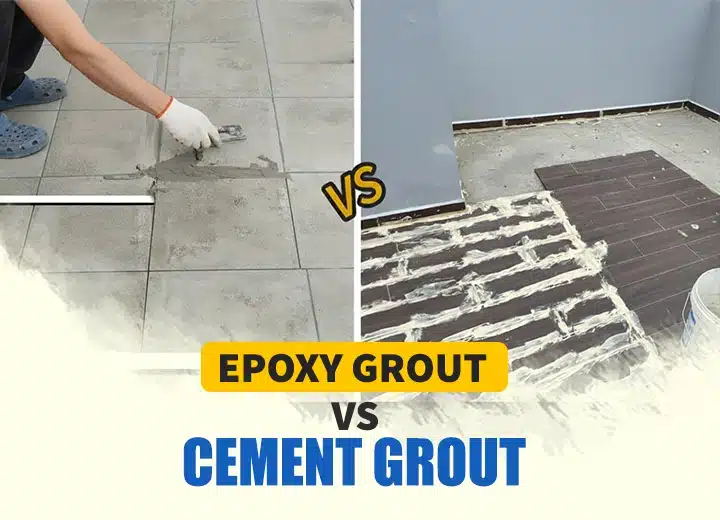
Epoxy grout vs cement grout is the most common material decision in Singapore tiling projects. Both fill tile joints, but they differ in performance, cost, durability, and best application. Epoxy grout, also called resin grout, resists stains, moisture, and chemicals without needing a sealer. Cement grout remains affordable, easy to apply, and widely available for standard renovation work. Both come in multiple subtypes, from sanded and unsanded to polymer-modified and rapid-setting variants. Costs range from SGD 5 to SGD 80 per kilogram depending on the type chosen. Epoxy grout lasts up to 30 years, while sealed cement grout lasts up to 15. This guide covers types, pros and cons, where to use, cost, and lifespan for both.
Epoxy Grout vs Cement Grout: Definition
Tiling a surface involves more than choosing the right tile for the job. The grouting material you use affects durability, hygiene, and long-term performance greatly. Epoxy grout and cement grout are the two main options for filling tile joints. Knowing what sets them apart saves you time, money, and maintenance effort in Singapore.
What Is Epoxy Grout?
Epoxy grout is a two-component, resin-based tile joint filler made from two core parts. The first component is an epoxy resin, and the second is a chemical hardener. When you blend both together, they cure into a dense, non-porous solid. This cured material resists stains, acids, grease, and moisture extremely well. Professionals in Singapore also call it resin grout or polymer grout in the trade. Unlike cement grout, epoxy grout never needs sealing once you apply it correctly.
Epoxy grout belongs to the wider family of resin-based tile finishing materials. Alongside it sit polyurethane grout and furan resin grout, both in the same material family. Its physical parts include the resin component, hardener, filler aggregate, and pigment. These components work together to create a chemically stable and long-lasting joint filler. In tiling, “set” means how grout hardens over time, not a collection of tiles. Using epoxy grout leads directly to better durability and lower maintenance over time.
A study published in Construction and Building Materials, (an international journal) entitled “Epoxy-based grouting materials with super-low viscosities and improved toughness” showed that Epoxy grouts achieved ultra-low viscosity of 5.15 mPa·s using acetone, improving crack penetration. Additives increased toughness and impact strength, while toxicity tests exceeded 5000 mg/kg, confirming safe, flexible materials for repairing micro-cracks in construction.
What Is Cement Grout?
Cement grout is a traditional tile joint filler made from Portland cement and water. Builders and tilers across Singapore have relied on it for renovation work for decades. Its affordability, wide availability, and ease of spreading make it universally popular. You find it in hardware shops, tile suppliers, and building material merchants everywhere.
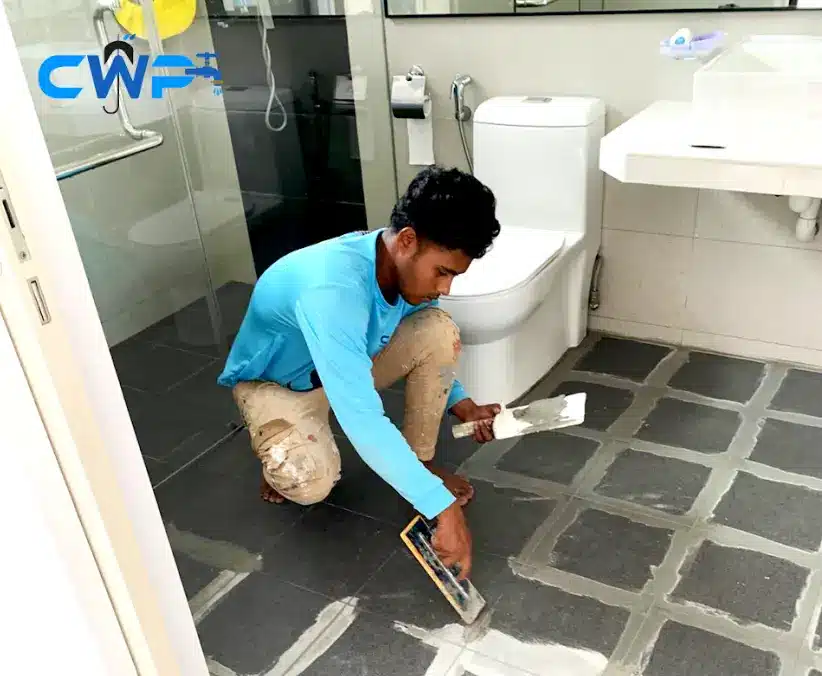
Cement grout sits within the broader category of cementitious building materials in construction. Its close relatives include mortar, concrete, render, and floor screed, all cement-based products. Sanded grout and unsanded grout are its two most widely used variants. Sanded grout suits wider tile joints, while unsanded grout fills narrower gaps effectively. Without sealing, cement grout absorbs moisture and develops stains and cracks over time. Applying a penetrating sealer every one to two years keeps it performing consistently well.
Epoxy Grout vs Cement Grout: Types
Epoxy grout and cement grout each come in several distinct subtypes for different tasks. Performance in grouting moves across a scale, from basic cement grout to advanced resin grout.
Knowing each subtype helps you choose the right material for the right surface and condition.
What Are the Different Types of Epoxy Grout?
The different types of epoxy grout are designed for specific surfaces, conditions, and performance needs. Each variant delivers properties that standard Portland cement grout simply cannot replicate or match. Choosing the right subtype prevents grout failure and ensures a long-lasting, bonded installation.
1. Two-Part Epoxy Grout
Two-part epoxy grout consists of a resin component and a chemical hardener. You blend both parts together just before troweling them into the tile joints. Once cured, it forms a strong, chemically resistant bond deep inside each joint. It resists acids, oils, and harsh cleaning agents found in commercial environments. Contractors across Singapore use it widely in commercial kitchens, labs, and industrial sites.
2. Three-Part Epoxy Grout
Three-part epoxy grout adds a powdered filler to the resin and hardener mix. This extra component increases density and reduces the risk of failure in wide joints. The result handles heavy-traffic flooring, pool surrounds, and demanding industrial floor applications well. Builders specify it where high compressive strength and joint stability are both essential. It shrinks less during curing than two-part alternatives and maintains stronger bonded joints.
3. Pre-Mixed Epoxy Grout
Pre-mixed epoxy grout comes ready to use straight from the container. You need no measuring, blending, or chemical handling before pressing it into joints. This makes it popular among DIY tilers and homeowners doing small renovation projects. It suits small re-grouting jobs where pot life is less of a concern. Pot life refers to the working time available before the epoxy begins to set hard.
4. Chemical-Resistant Epoxy Grout
Chemical-resistant epoxy grout withstands prolonged contact with acids, alkalis, and strong solvents. Food processing, pharmaceutical, and manufacturing industries specify this grouting compound for their facilities. Its non-porous surface blocks chemical penetration and maintains structural integrity throughout its lifespan. Standard cementitious grout degrades quickly in these environments, making resin grout the better choice. Chemical plants and food factories across Singapore float and pack this grout into joints regularly.
5. Anti-Microbial Epoxy Grout
Anti-microbial epoxy grout contains agents that actively stop bacterial and mould growth on surfaces. Healthcare facilities, wet rooms, and food preparation areas benefit most from this specific type. It keeps grout lines clean and hygienic where standard grouting materials allow microbial colonisation. Hospitals, clinics, and laboratories across Singapore increasingly specify it for all tiled wall surfaces.
6. Self-Leveling Epoxy Grout
Self-leveling epoxy grout flows into tile joints without any manual pressing or tooling needed. Its fluid consistency allows it to settle evenly across large floor tile installations. This saves time and reduces the effort needed on expansive, large-format tiled floor areas. The cured joints show a consistently smooth and uniform finish across the entire surface.
What Are the Different Types of Cement Grout?
The different types of cement grout are formulated to handle a wide range of applications. Each type adjusts the Portland cement base with different aggregates, additives, or accelerating agents. Moving from basic sanded grout towards polymer-modified variants represents a clear and measurable performance upgrade.
1. Sanded Cement Grout
Sanded cement grout contains fine sand aggregate blended directly into the cement base. The sand adds bulk and compressive strength to the cured tile joint. Tilers float it into joints wider than 3mm using a standard grout float. A grout float is the flat rubber tool used to press grout firmly into joints. Builders use sanded grout for floor tiles, natural stone, and outdoor paving across Singapore.
2. Unsanded Cement Grout
Unsanded cement grout contains no sand aggregate, producing a smooth and fine-textured paste. It works best in narrow tile joints with a joint width of less than 3mm. Joint width refers to the measured gap between adjacent tiles on any tiled surface. Tilers spread it carefully into wall tiles, glass mosaic grout lines, and polished stone surfaces. Its smooth texture avoids scratching delicate tile surfaces during the application process.
3. High-Strength Cement Grout
High-strength cement grout delivers superior compressive strength compared to all standard mixes. Engineers and contractors use it for structural grouting, machinery bases, and anchor bolts. It handles heavy mechanical loads without cracking or debonding under sustained, long-term pressure. Standard tiling grout cannot match its bond strength in these demanding structural applications. Construction teams in Singapore specify it for civil engineering and heavy industrial projects.
4. Polymer-Modified Cement Grout
Polymer-modified cement grout blends Portland cement with polymer additives for significantly better performance. These polymers increase flexibility, adhesion, and water resistance beyond basic cementitious formulations. The modification prevents debonding and cracking in areas with thermal movement or substrate vibration. Renovation teams in Singapore use it for balconies, building facades, and exposed wet areas.
5. Rapid-Setting Cement Grout
Rapid-setting cement grout cures and sets faster than any standard cement grout formulation. Contractors use it when a project requires a quick turnaround with minimal downtime or disruption. It reaches workable strength within hours rather than the usual 24-hour curing period. Reducing open time between grouting stages is critical in commercial refurbishments and retail fit-outs. Open time is the window you have before the grout surface begins to skin over.
6. Non-Shrink Cement Grout
Non-shrink cement grout maintains its full volume as it cures and sets solid. Standard cementitious grout shrinks slightly, creating small gaps in precision tiling installations. Expansion agents within its formulation eliminate that grout failure risk completely and reliably. Engineers use it for machine base plates, anchor bolts, and structural support pads. It provides a stable, gap-free fill that sustains full load-bearing capacity over many years.
7. Coloured Cement Grout
Coloured cement grout incorporates pigments to match or contrast with surrounding tile surfaces. Interior designers use it to achieve precise grout colour matching across a tiled installation. In Singapore, it comes in a wide palette from neutral greys to bold accent tones. Choosing the right shade transforms a plain tile layout into a considered design statement.
Epoxy Grout vs Cement Grout: Pros and Cons
Every grouting material carries strengths and limitations that affect its suitability for each project. Epoxy grout excels in performance but demands more skill, time, and upfront budget. Cement grout remains accessible and affordable but needs regular sealing and ongoing maintenance. Understanding both sides helps you make the right decision for your renovation in Singapore.
What Are the Advantages and Disadvantages of Epoxy Grout?
Advantages and disadvantages of epoxy grout reveal a clear performance trade-off for every user. It outperforms cementitious grout in bond strength, stain resistance, and long-term chemical durability. One known issue is grout haze, a residue film left on tile faces after grouting. Grout haze must be removed promptly, as cured epoxy bonds firmly onto tile surfaces.
| Advantages | Disadvantages |
|---|---|
| Non-porous and highly stain-resistant | Higher cost than cementitious grout |
| Excellent chemical and acid resistance | Requires skilled mixing and precise application |
| No sealing required after installation | Short pot life limits available working time |
| Long lifespan of 20 to 30 years | Can discolour porous natural stone tiles |
| Resists mould, bacteria, and fungi | Grout haze is difficult to remove if left |
| Fully waterproof for wet and submerged areas | Bond failure likely if mixing ratios are wrong |
| Wide colour and finish range available | Fewer pre-mixed, user-friendly DIY formats |
What Are the Advantages and Disadvantages of Cement Grout?
Advantages and disadvantages of cement grout explain its continued dominance across Singapore’s renovation market. It is affordable, easy to trowel and float, and available in every hardware shop. Its porous surface, however, absorbs moisture and stains without the protection of proper sealing.
| Advantages | Disadvantages |
|---|---|
| Low cost and widely accessible | Porous surface stains without regular sealing |
| Easy to spread, float, and apply | Requires periodic re-sealing to stay protected |
| Compatible with most tile types | Prone to cracking and debonding over time |
| Wide colour range for grout matching | Harbours mould, mildew, and bacteria |
| Simple to re-grout and repair | Less chemically resistant than epoxy grout |
| Fast and simple blending process | Shrinks slightly as it cures and sets |
| Long track record in construction | Lower durability in permanently wet conditions |
Epoxy Grout vs Cement Grout: Where to Use
The right grout choice depends on the environment, traffic level, and moisture exposure it faces. Each grouted joint forms part of the tile surface within the wider tiled area. That tiled area sits within the full renovation project and the building interior. Picking the wrong grout type for a location leads to grout failure and expensive repairs.
Where Do You Use Epoxy Grout?
You use epoxy grout in the following areas and locations:
1. Kitchens: Epoxy grout resists cooking oils, food stains, and acidic spills on all kitchen surfaces. A non-porous, bonded surface keeps grout lines clean with minimal maintenance effort daily.
2. Bathrooms and Wet Rooms: Trowel epoxy grout into showers, wet rooms, and around bathtubs for complete waterproofing. Its non-porous surface prevents moisture ingress and stops mould from forming inside joints.
3. Swimming Pools: Epoxy grout withstands constant water immersion and pool chemicals such as chlorine effectively. It holds its colour and joint integrity in both submerged and splash-zone tiled areas.
4. Commercial Kitchens: Food preparation areas need hygienic, chemical-resistant grouting material on all tiled surfaces. Resin grout meets food safety and hygiene standards in professional kitchen environments across Singapore.
5. Hospitals and Laboratories: Healthcare and research facilities float anti-microbial epoxy grout into tile joints on walls. It resists bacterial growth and survives repeated disinfection with very harsh chemical agents.
6. Industrial Floors: Factory and warehouse floors face heavy machinery, chemical spills, and constant impact loads. Epoxy floor coating and epoxy grout together protect these surfaces from the inside out.
7. Outdoor Terraces and Balconies: Singapore’s tropical heat, humidity, and heavy rainfall test outdoor grout joints constantly. Epoxy grout maintains colour stability and joint integrity across all exposed tiled surfaces.
8. Food Processing Facilities: These facilities need grouting compounds that resist acids, fats, and industrial sanitising agents. Epoxy grout meets food-grade hygiene and surface durability requirements across Singapore.
Where Do You Use Cement Grout?
You use cement grout in the following areas and locations:
1. Living Room Floor Tiles: Spread or float cement grout into joints between large-format floor tiles in living rooms. It suits dry, low-traffic residential spaces at a cost-effective and practical price point.
2. Bedroom Wall and Floor Tiles: Cementitious grout is a practical and affordable option for standard bedroom tiling work. It applies easily and delivers a clean, neat finish in all dry interior spaces.
3. Exterior Wall Cladding: Polymer-modified cement grout handles Singapore’s humidity and temperature changes on building facades. Builders trowel it into facade tile joints on both residential and commercial buildings.
4. Garden Paths and Driveways: Sanded cement grout fills wide joints in outdoor pavers, garden paths, and driveways. It bonds well and handles regular pedestrian and light vehicular traffic loads effectively.
5. Structural and Civil Engineering: High-strength cement grout anchors foundation bolts, machinery base plates, and structural support pads. Engineers pack and press it into precision joints in civil and industrial construction projects.
6. Roof Tiles: Cement grout seals joints between roofing tiles and prevents water from penetrating inside. It remains a standard grouting material for residential roof maintenance and repairs across Singapore.
7. General Home Renovation Projects: For standard renovation tiling, cement grout offers speed, economy, and ease of application. Both DIY homeowners and professional tiling contractors use it extensively across Singapore.
8. Mosaic Tile Installations: Unsanded cement grout fills narrow grout lines in mosaic and glass tile layouts. Its fine texture prevents scratching of delicate decorative tile surfaces during application.
Epoxy Grout vs Cement Grout: Cost
Grouting materials vary significantly in price, and budget shapes most renovation decisions in Singapore. Epoxy grout delivers superior performance but carries a noticeably higher upfront material cost. Cement grout suits budget-conscious homeowners and contractors handling general renovation projects. Both material cost and labour cost form part of the total grouting project expense.
How Much Does Epoxy Grout Service Cost in Singapore?
Epoxy grout service cost in Singapore between S$30 and S$80 per kilogram on average. Chemical-resistant and anti-microbial formulations sit at the higher end of this price range. Standard two-part and pre-mixed types fall within the lower to mid-price bracket comfortably. Labour costs are also higher, as skilled application requires experienced grouting contractors in Singapore. Buying in larger quantities for bigger projects lowers the overall cost per square metre.
How Much Does Cement Grout Service Cost in Singapore?
Cement grout service cost in Singapore between S$5 and S$20 per kilogram. This makes it far more affordable than polymer grout or resin grout alternatives available. Polymer-modified and rapid-setting variants sit towards the upper end of this price range. Buying in bulk bags for large renovation or construction projects reduces the per-unit cost. Low material and labour costs make it the preferred choice for budget-conscious renovation projects.
Epoxy Grout vs Cement Grout: Lifespan
Lifespan is a critical factor when comparing grouting materials for Singapore’s tropical climate. The city’s year-round humidity, heavy rainfall, and heat accelerate grout deterioration over time. Choosing a longer-lasting grout reduces the need for frequent re-grouting and costly repairs. Proper installation and sealing are the two habits that extend any grout’s active lifespan.
How Long Does Epoxy Grout Last in Singapore?
Epoxy grout typically lasts between 20 and 30 years in Singapore’s tropical conditions. Its non-porous, bonded surface withstands humidity, UV exposure, and frequent wet cleaning well. In commercial kitchens, swimming pools, and industrial floors, correctly grouted joints last even longer. Properly applied resin grout can outlast the tile surface it fills in many cases. Regular inspection and prompt repair of any edge damage extend its full service life.
How Long Does Cement Grout Last in Singapore?
Sealed cement grout generally lasts between 8 and 15 years in Singapore’s conditions. Singapore’s humidity and rainfall accelerate moisture absorption in cementitious grout joints over time. Unsealed joints develop discolouration, cracking, and grout failure without regular sealing and protection.
Applying a penetrating grout sealer every one to two years extends its service life. Pairing it with a cementitious waterproof coating adds an extra layer of moisture protection.
FAQ’s
Yes, correctly applied epoxy grout is effectively 100% waterproof throughout its full lifespan. Unlike cementitious grout, it does not absorb any moisture into its surface. Its non-porous structure suits submerged surfaces and constantly wet areas across Singapore.
Yes, epoxy grout outperforms normal cement grout in durability and stain resistance. It lasts significantly longer and needs no sealing after correct application. However, it costs more and requires skilled grouting contractors to apply it properly.
Epoxy grout is significantly stronger than cement grout in all key performance areas. It delivers superior compressive strength, bond strength, and chemical resistance throughout its lifespan. Cement grout cannot match epoxy’s mechanical performance under heavy or chemical loading conditions.
Yes, epoxy grout costs significantly more than cement grout across Singapore. Epoxy grout ranges from SGD 30 to SGD 80 per kilogram on average. Cement grout costs between SGD 5 and SGD 20 per kilogram, making it budget-friendly.
Epoxy grout feels hard, slightly glossy, and repels water dropped on the surface. Cement grout feels rougher, more porous, and darkens when you apply water directly. Check with your tiling contractor or the original product label for clear confirmation.
No, mould does not grow on correctly grouted epoxy joints under normal conditions. Its non-porous surface gives bacteria and fungi no foothold to colonise and spread. Anti-microbial epoxy variants offer extra protection in Singapore’s high-humidity bathroom environments.
No, water cannot penetrate correctly applied epoxy grout at all. Its dense, non-porous, bonded structure blocks moisture completely from entering the joint. This makes it the ideal grouting choice for wet areas and pools across Singapore.
Avoid epoxy grout on porous natural stones such as marble and limestone. It can cause staining or discolouration on these sensitive tile surfaces. Where pot life management and precise blending are not feasible, use cementitious grout instead.