
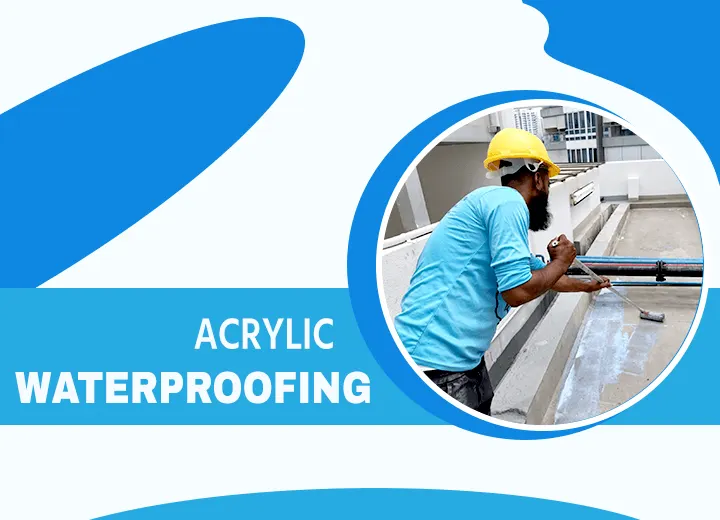
Acrylic waterproofing is a liquid coat that seals building surfaces. It stops water, moisture, and rain from entering any structure. Builders apply it on roofs, walls, and all concrete areas. It forms a tough, flexible barrier that resists harsh weather. The coat dries fast and bonds firmly to most surfaces.
Acrylic waterproofing coating is a flexible, liquid-applied membrane that seals surfaces from water ingress. Contractors apply this elastomeric sealant to roofs, concrete decks, exterior walls, and balconies. It prevents moisture penetration, carbonation, and long-term structural deterioration across Singapore buildings.
This water-based coating belongs to the broader waterproofing systems category alongside polyurethane and cementitious alternatives. It bonds firmly to most construction substrates and forms a seamless, elastic moisture barrier. The coating resists UV rays, thermal cycling, and sustained tropical rainfall effectively. Professionals rate it as a cost-effective, low-VOC alternative to solvent-based waterproofing solutions.
What Is Acrylic Waterproofing Coating?
Acrylic waterproofing coating is a flexible, liquid-applied membrane that seals surfaces from water ingress. Contractors apply this elastomeric sealant to roofs, concrete decks, exterior walls, and balconies. It prevents moisture penetration, carbonation, and long-term structural deterioration across Singapore buildings.
This water-based coating belongs to the broader waterproofing systems category alongside polyurethane and cementitious alternatives. It bonds firmly to most construction substrates and forms a seamless, elastic moisture barrier. The coating resists UV rays, thermal cycling, and sustained tropical rainfall effectively. Professionals rate it as a cost-effective, low-VOC alternative to solvent-based waterproofing solutions.
Is Acrylic Material Waterproof?
Yes, acrylic material is waterproof and does not absorb water easily. Acrylic material is water-resistant, but not inherently waterproof across all product types. Specially engineered acrylic compounds, such as elastomeric membranes and polymer-modified coatings, deliver dependable moisture barriers. These formulated waterproofing products serve both structural protection and surface sealing applications in construction.
A study published in the Journal of Engineering Science & Technology Review, 2024, Vol 17, Issue 4, p40 entitled “Experimental Study on High-Bonding Acrylic-Polymer Waterproofing Materials”, showed that acrylic waterproofing was optimised by blending 65% pure acrylic with 27% styrene-acrylic. Using C42.5 cement and 0.3% defoamer, the coating passed 0.3 MPa for 30 minutes, achieved 2.6 MPa tensile strength, 84% elongation, and 1.8 MPa bonding.
Is Acrylic Cement Waterproof?
Yes, acrylic cement is waterproof and seals surfaces from water entry. It bonds tightly to surfaces and stops moisture from getting through. Builders use acrylic cement on cracks, joints, and damp building areas. It dries fast, holds firm, and resists water in all conditions.
A study published in the Construction and Building Materials Journal titled “Preparation of Janus-type styrene-acrylic emulsions and performance in polymer cement waterproof coatings”, showed that Janus-type styrene-acrylate emulsion with 0.8 wt% modified nano-SiO₂ improved polymer-cement waterproof coating performance, increasing tensile strength by 64% and bonding strength by 140%, while reducing 7-day water absorption by 31% and achieving a 99.16° contact angle.
Does Acrylic Sealer Waterproof?
Yes, acrylic sealer effectively waterproofs surfaces when trained applicators apply it correctly. It penetrates porous substrates and forms a protective film that blocks water ingress and reduces surface absorption. This extends the service life of treated roofs, screed floors, concrete decks, and masonry walls.
Is Acrylic Paint Waterproof?
Yes, acrylic paint is waterproof once it fully dries. Acrylic paint is water-resistant but not fully waterproof under sustained or ponding conditions. It repels light moisture but allows water ingress during prolonged rainfall or submersion. For reliable moisture protection, professionals specify purpose-built acrylic waterproofing membranes rather than standard decorative acrylic paint.
A study published in the Journal of Building Engineering entitled “Development of a water-based acrylic paint with resistance to efflorescence and test method to determine the appearance of stains”, Researchers developed an acrylic paint resisting efflorescence by testing porous ceramic tiles in 5 wt% NaCl for 15 days. ASTM (American Society for Testing and Materials) showed no stains after 96 hours, while elastomeric resin outperformed formulations containing 0.1–0.6 mass per cent surfactants, which are compounds that reduce the surface tension of liquids.
What Are the Advantages and Disadvantages of Acrylic Waterproofing?
Acrylic waterproofing offers strong UV resistance, elasticity, and ease of application across most building substrates. However, it suits low to moderate hydrostatic pressure environments and requires thorough surface preparation for peak performance.
| Advantages | Disadvantages |
|---|---|
| Excellent UV resistance and weatherproofing | Requires thorough surface preparation and priming |
| Fast recoating time between successive coats | Less effective on constantly submerged surfaces |
| Elastic membrane bridges hairline cracks | Requires reapplication every 5 to 10 years |
| Low VOC, water-based formula | Adhesion fails on contaminated or dusty substrates |
| Simple application: brush, roller, or airless spray | Not suitable for high hydrostatic pressure zones |
| Cost-effective versus polyurethane systems | Colour may fade under prolonged UV exposure |
| Bonds to most construction substrates | Moisture during application compromises adhesion |
What Are the Differences Between Acrylic Waterproofing Vs Acrylic Polymer Waterproofing?
Both systems use acrylic resins as their base material. Acrylic polymer waterproofing incorporates polymer modifiers for superior bonding strength, flexibility, and crack-bridging performance on cementitious and concrete surfaces.
| Feature | Acrylic Waterproofing | Acrylic Polymer Waterproofing |
|---|---|---|
| Base | Acrylic waterproofing uses a simple acrylic resin as its base. | Acrylic polymer waterproofing blends acrylic with polymers for extra strength. |
| Flexibility | It offers basic flexibility on most building surfaces. | It gives much higher flexibility and handles more movement. |
| Bond Strength | It bonds well to dry and clean building surfaces. | It bonds far stronger to concrete and rough surfaces. |
| Durability | It lasts well but may need recoating after some years. | It lasts longer and resists wear and tear much better. |
| Uses | It suits light waterproofing jobs on walls and roofs. | It suits heavy-duty waterproofing on large construction projects. |
What Are the Differences Between Acrylic Waterproofing and Polyurethane Waterproofing?
Both are polymer-based waterproofing membranes used across Singapore’s construction sector. Acrylic systems excel in UV resistance and ease of application; polyurethane systems offer superior elongation, durability, and performance in wet, high-traffic zones.
| Feature | Acrylic Waterproofing | Polyurethane Waterproofing |
|---|---|---|
| Flexibility | Acrylic waterproofing stays flexible but handles low to medium movement. | Polyurethane waterproofing handles very high movement and stretches much further. |
| UV Resistance | It resists UV rays and keeps its colour much longer. | It fades under UV rays without a special protective topcoat. |
| Drying Time | It dries fast and lets you recoat it very quickly. | It takes longer to dry and cure on most surfaces. |
| Cost | It costs less and suits projects with a tight budget. | It costs more but delivers stronger and longer-lasting protection. |
| Best Use | It suits roofs, walls, and light waterproofing applications well. | It suits basements, terraces, and high-exposure waterproofing areas best. |
What Are the Differences Between Acrylic Waterproofing and Cementitious Waterproofing?
Acrylic waterproofing offers elasticity and UV resistance for exposed surfaces. Cementitious waterproofing suits rigid, high-hydrostatic-pressure environments such as basements, water tanks, lift pits, and swimming pools.
| Feature | Acrylic Waterproofing | Cementitious Waterproofing |
|---|---|---|
| Flexibility | Acrylic waterproofing stays flexible and moves with the building structure. | Cementitious waterproofing stays rigid and cracks if the structure moves too much. |
| Application | You apply it easily with a brush, roller, or spray. | You mix it with water and apply it like plaster. |
| Surface Type | It suits roofs, walls, and all types of exterior surfaces. | It suits water tanks, basements, and all wet internal areas. |
| Durability | It resists UV and weather but may need periodic recoating. | It lasts very long but works best in non-moving structures. |
| Cost | It costs more due to its flexible and advanced formula. | It costs less and stays affordable for most construction budgets. |
Where Is Acrylic Waterproofing Generally Used?
Contractors apply acrylic waterproofing across exposed roofs, balconies, podium decks, and exterior concrete walls. It is the preferred protective coating for Singapore buildings facing year-round tropical rainfall, high UV intensity, and thermal movement.
- Acrylic Roof Waterproofing
Acrylic waterproofing is a primary choice for flat and pitched roof protection across Singapore. Contractors roll or spray the elastomeric roof coating evenly to seal membrane joints and prevent water infiltration. The coating also resists ponding water, UV degradation, and thermal cracking on exposed roof decks.
- Acrylic Balconies and Terraces Waterproofing
Acrylic waterproofing protects balcony and terrace decks from persistent tropical rainfall and water ponding. Applicators apply the liquid membrane over concrete screed and tiled surfaces to seal slab joints. The flexible coating also resists thermal expansion and contraction without cracking or delaminating over time.
- Acrylic Floor Waterproofing
Acrylic floor waterproofing protects floor substrates from water ingress, dampness, and structural damage. It forms a seamless, elastic membrane that bonds firmly across the entire floor surface. Builders coat it on bathroom floors, kitchen floors, and wet areas easily. It seals all floor joints, tile grout lines, and pipe penetrations thoroughly.
- Acrylic Concrete Surfaces Waterproofing
Acrylic waterproofing protects concrete surfaces from water absorption, chloride ingress, and carbonation. These processes accelerate corrosion of embedded steel reinforcement and cause structural spalling. Rolling or spraying the acrylic sealant onto concrete creates a breathable, durable moisture barrier that extends the asset’s service life.
- Acrylic Metal Roofs Waterproofing
Acrylic waterproofing suits metal roof systems, including zinc, Colorbond, and corrugated steel roofing. Contractors apply a corrosion-inhibiting primer first, then roll or spray the acrylic membrane across seams, laps, and fastener points. This prevents rust formation, water infiltration at joints, and premature metal roof deterioration.
- Acrylic Parapet Walls Waterproofing
Acrylic waterproofing seals parapet walls against rainwater penetration, capillary moisture rise, and wind-driven rain. Applicators coat wall faces, coping joints, and upstands to protect the entire building envelope. This prevents water from tracking behind renders, tiles, or cladding on high-level external walls.
- Acrylic Podium Decks Waterproofing
Acrylic waterproofing protects podium deck slabs from water ingress that damages spaces below. Applicators install the liquid-applied membrane over the structural slab before screed, tiling, or landscaping begins. Correct membrane selection and detailing at drains, upstands, and joints prevent costly remedial waterproofing in future.
How Many Coats Are Needed for Acrylic Waterproofing?
Most acrylic waterproofing systems require two to three coats for a complete, durable membrane. The number of coats depends on substrate type, surface porosity, system specification, and the required dry film thickness.
The following diagram shows the 3 coats are needed for Acrylic waterproof coating.
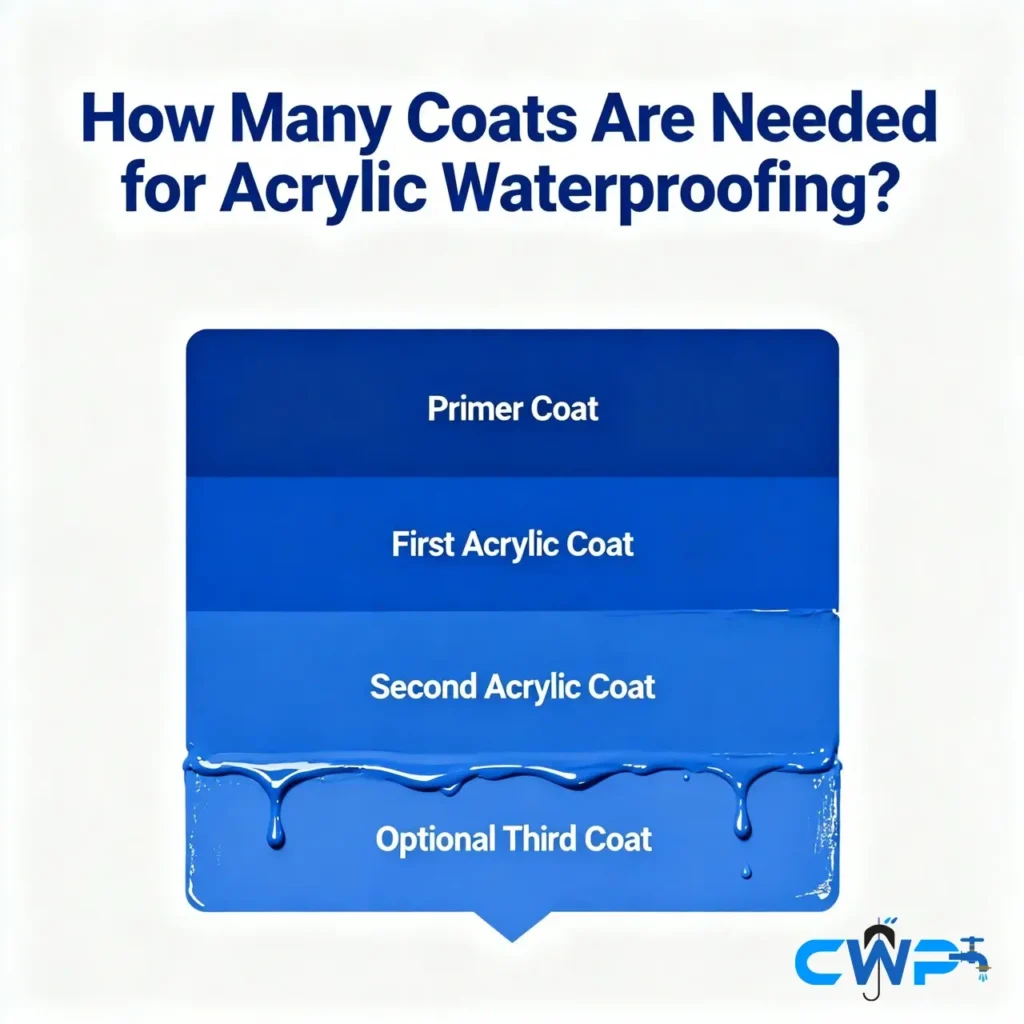
1. Primer Coat: Applicators brush or roll a dedicated acrylic adhesion primer onto the prepared substrate first. The primer penetrates porous surfaces, reduces surface suction, and promotes a strong bond between the substrate and waterproofing membrane. Without a primer coat, the membrane risks delamination or premature failure in service.
2. First Acrylic Coat: Applicators apply the first acrylic waterproofing coat once the primer fully cures. This base coat forms the membrane foundation and begins establishing the primary moisture barrier across the surface. Applicators maintain a consistent wet film thickness throughout to avoid holidays, thin spots, or missed areas.
3. Second Acrylic Coat: The second coat builds upon the base layer, reinforcing the membrane and filling micro-pinholes in the first coat. Applicators apply this coat perpendicular to the first to ensure uniform coverage and eliminate weak spots. Together, both coats deliver a fully sealed, continuous waterproof membrane across the treated surface.
4. Optional Third Coat: You can apply an optional third coat for extra strong protection. Builders use it in areas that face very heavy rainfall often. It adds more thickness and makes the waterproofing layer much stronger. This coat also helps the surface last longer in tough conditions.
How Do You Apply Acrylic Waterproofing?
Applying acrylic waterproofing typically involves surface preparation, primer application, two or more coating layers, proper drying time, and final curing to create a durable waterproof membrane.
This diagram lists 7 steps of applying acrylic waterproofing.
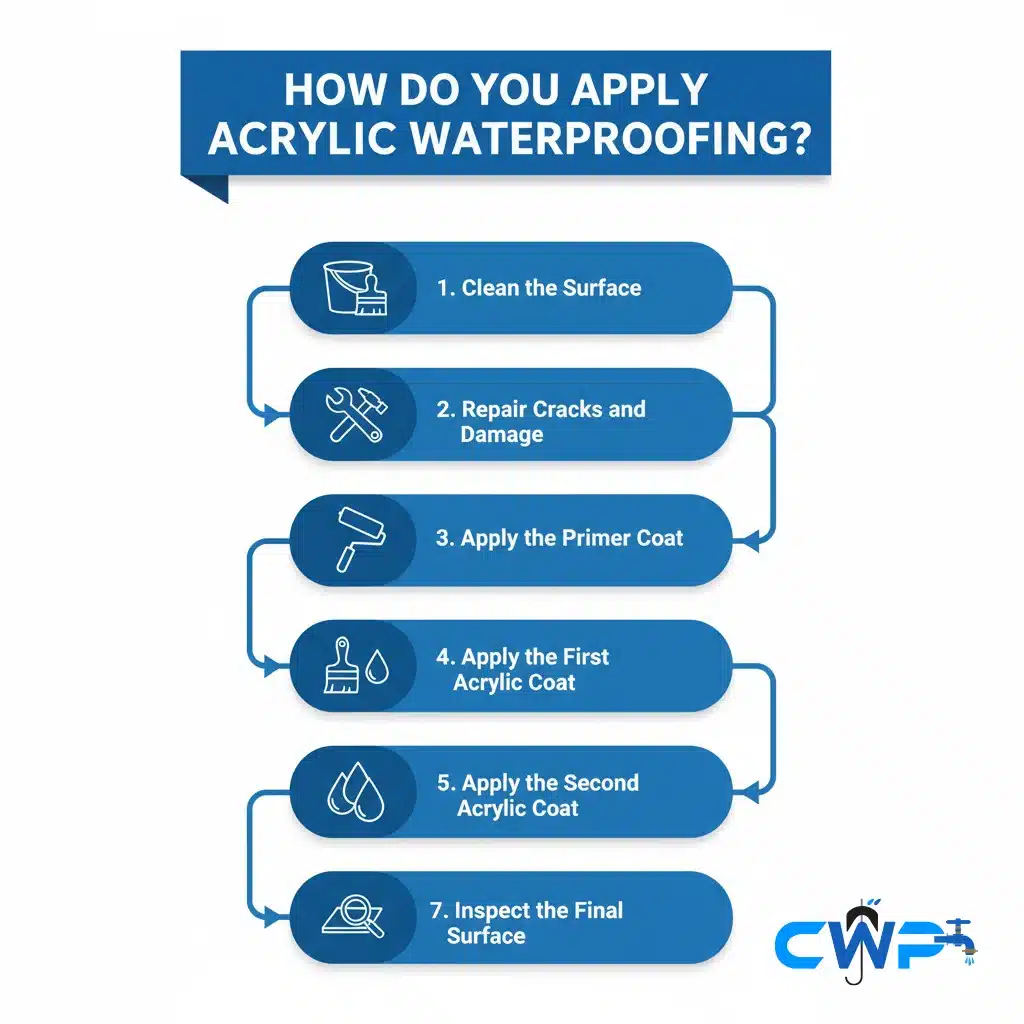
Step 1: Surface Preparation and Cleaning
Clean the substrate thoroughly to remove dust, laitance, oil, and loose or friable material. Fill all cracks, voids, and blow holes with a compatible repair mortar or filler compound. Surface preparation is the most critical step for achieving good membrane adhesion and long-term waterproofing performance.
Step 2: Repair Cracks and Damage
Fill all cracks, holes, and joints with a suitable filler product. Allow the filler to dry fully before you move any further. A smooth and solid surface helps the acrylic coat bond better.
Step 3: Apply the Primer Coat
Apply the primer coat evenly across the entire prepared surface area. Use a brush, roller, or spray to spread it evenly. Let the primer dry fully before you apply the acrylic coat.
Step 4: Apply the First Acrylic Coat
Apply the first acrylic coat evenly using a brush or roller. Work in one direction to make sure you cover all areas. Let this coat dry fully before you add the next one.
Step 5: Apply the Second Acrylic Coat
Apply the second acrylic coat perpendicular to the first for uniform membrane thickness and full surface coverage. This crosshatched application eliminates pinholes, thin spots, and application holidays left in the first coat. The second coat significantly improves overall waterproofing performance and membrane integrity.
Step 6: Apply the Third Coat
Apply a third coat to high-exposure areas such as flat roofs, podium decks, and heavily trafficked terraces. The third coat adds membrane thickness, improves long-term UV resistance, and extends the waterproofing recoating cycle. Some manufacturers recommend a third coat as standard for roof and podium applications.
Step 7: Inspect the Final Surface
Inspect the completed membrane for thin spots, pinholes, missed areas, and inadequate coverage. Use a wet film thickness gauge to verify the applied coating meets the product specification and required dry film thickness. Address all defects before reinstating foot traffic, tiles, screed, or protective floor finishes.
How Long Does Acrylic Waterproofing Take to Dry?
Acrylic waterproofing dries to touch within one to two hours and accepts recoating within two to four hours. Ambient temperature, relative humidity, and coating thickness all affect actual drying and curing times. In Singapore’s humid tropical climate, allow sufficient curing time before applying each successive coat.
| Drying Stage | Drying Time | What You Should Do |
|---|---|---|
| Touch dry | 30 to 60 minutes | Avoid touching the surface after applying each coat. |
| First coat dry | 1 to 2 hours | Apply the second coat once the first fully dries. |
| Second coat dry | 1 to 2 hours | Check the surface before applying any third coat. |
| Foot traffic safe | 4 to 6 hours | Walk on the surface only after it dries fully. |
| Full cure time | 24 hours | Wait before exposing the surface to any rain. |
| Hot weather drying | Faster than normal | Heat speeds up drying in Singapore’s warm climate. |
| Humid weather drying | 2 to 4 hours per coat | High humidity slows the drying and curing process down. |
| Rainy season drying | 4 to 6 hours per coat | Avoid applying coats during Singapore’s heavy monsoon season. |
What Steps Should You Take Before Hiring an Acrylic Waterproofing Service Provider?
Always verify a contractor’s credentials, experience, and track record before engaging any waterproofing service provider. Choosing a reliable, BCA-registered contractor protects your investment and ensures a durable, long-lasting waterproof membrane.
- Verify contractor’s registration and licence: Always verify a contractor’s credentials, experience, and track record before engaging any waterproofing service provider. Choosing a reliable, BCA-registered contractor protects your investment and ensures a durable, long-lasting waterproof membrane.
- Look for waterproofing experience: Always choose a contractor who meets BCA waterproofing requirements and standards. Experienced contractors handle all BCA-compliant surfaces and complex waterproofing jobs well. Engage contractors with proven, hands-on experience in acrylic membrane application and related waterproofing systems. Look for portfolios covering residential condominiums, commercial buildings, industrial facilities, and institutional projects in Singapore. An experienced contractor understands substrate conditions, membrane compatibility, and Singapore’s tropical climate challenges.
- Verify professional accreditation: Check whether the contractor holds relevant professional accreditations beyond BCA registration alone. These include product-specific applicator approvals from established manufacturers such as Sika, Mapei, Fosroc, and Tremco. Manufacturer-approved applicators follow tested installation systems and often qualify for extended material and workmanship warranties.
- Check customer review, testimonials, and projects: Review past client testimonials, Google ratings, and completed project portfolios before committing to a contractor. A contractor with a strong remedial waterproofing track record demonstrates consistent workmanship and client satisfaction. Ask to inspect a recently completed project to assess membrane quality and surface detailing.
- Ensure they use quality waterproofing materials: Confirm the contractor specifies approved, high-performance acrylic waterproofing products from reputable manufacturers. Avoid contractors who use unbranded or substitute materials, as these compromise membrane performance and reduce service life. Request product data sheets and Safety Data Sheets before approving any material selection.
- Ask about warranty coverage: Request a written warranty covering both workmanship quality and waterproofing material performance after project completion. A reputable contractor provides a five-year workmanship warranty alongside the manufacturer’s product guarantee. This warranty protects you against membrane failure, water leakage, and costly remedial repair works.
- Compare detailed quotations: Obtain itemised quotations from at least three BCA-registered contractors before awarding the job. Compare scope of works, materials specified, coat count, warranty terms, and cost per square metre. The lowest price rarely delivers the best value. Always evaluate quality, specification, and warranty together.
How Much Does Acrylic Waterproofing Cost in Singapore?
Acrylic waterproofing in Singapore typically costs between S$5 and S$15 per square metre. The final price depends on surface area, substrate condition, system specification, coat count, and site accessibility. High-specification systems with three coats, primer, and manufacturer certification typically reach the upper end of this cost range.
How Long Does Acrylic Waterproofing Last in Singapore?
A professionally applied acrylic waterproofing membrane typically lasts between 5 and 10 years in Singapore. Service life depends on surface exposure, UV intensity, roof traffic, maintenance frequency, and the quality of the waterproofing system used. Regular inspection and timely recoating extend the membrane’s protective lifespan considerably.
FAQ’s
Yes, acrylic waterproofing suits most building types in Singapore, including residential condominiums, commercial offices, and industrial facilities. It protects exterior walls, rooftops, balconies, and podium decks from moisture ingress and UV-driven surface deterioration. The elastomeric membrane extends the service life of key structural and architectural building elements.
Yes, acrylic waterproofing suits flat concrete, pitched, and metal roof types across Singapore. Contractors apply elastomeric acrylic roof coatings to prevent water infiltration, reduce solar heat gain, and resist UV degradation. The durable membrane also bridges hairline cracks and protects the roofing substrate from tropical weathering.
Yes, applicators use acrylic waterproofing on exterior walls to create a seamless, breathable moisture barrier. It blocks water ingress, resists mould growth, and protects render and masonry from sustained tropical weathering. The coating also prevents carbonation, chloride ingress, and surface spalling on reinforced concrete walls.
Yes, acrylic waterproofing performs well on balconies and terraces in Singapore’s tropical climate. It seals concrete and screed surfaces against heavy rainfall and prevents water from penetrating slab joints. The flexible membrane also accommodates thermal movement and protects structural slabs and spaces below from moisture damage.
Yes, contractors can apply acrylic waterproofing over existing coatings in sound, well-adhered condition. The surface must be clean, free from delamination and contamination, before overcoating begins. Applicators conduct an adhesion pull-off test to confirm the existing substrate can safely accept the new waterproof membrane.