
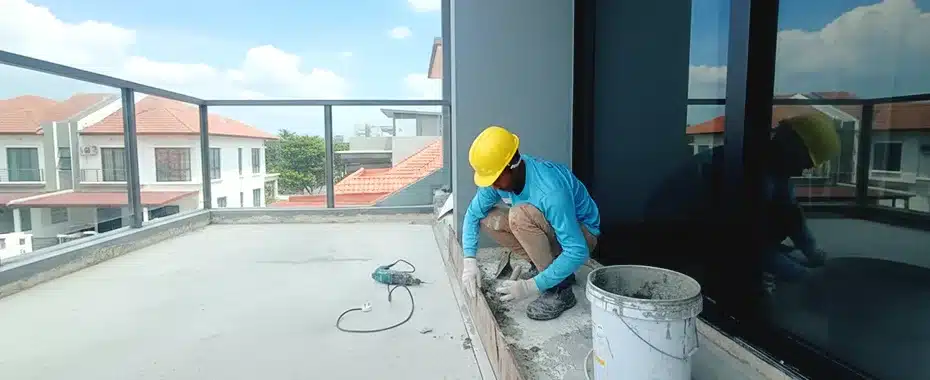
Cementitious waterproofing is a cement-based mineral coating that protects concrete structures from water ingress, moisture penetration, and early structural deterioration. It suits basements, water tanks, roofs, wet rooms, and external walls across Singapore’s humid tropical climate. Available in rigid, flexible, crystalline, and polymer-modified systems, it adapts to a wide range of structural conditions and exposure levels. Correct surface preparation, application, and curing determine how long the protective barrier lasts. This guide covers everything building owners in Singapore need to know, including types, application steps, costs, service life, and how cementitious waterproofing compares to bituminous, polyurethane, and liquid-applied membrane alternatives.
A study from Science Direct entitled “Combined effect of rice husk ash and cementitious capillary crystalline waterproofing materials on the performance of mortar”, showed that sustainable improvements in cement-based protective coating by using rice husk ash (RHA), an agricultural waste, as a partial cement replacement to reduce carbon emissions from cement production. RHA contains high silica content, which enhances strength, durability, and impermeability while supporting internal curing through water retention. However, excessive use may affect crack self-healing.
To address this, researchers combined RHA with a capillary crystalline waterproofing (CCCW) admixture that forms crystals within pores and cracks, improving sealing performance. Experimental results show that the combination enhances mechanical properties, reduces water absorption, and increases resistance to corrosion and chloride penetration. Optimal results depend on proper mix proportions and curing methods, with water immersion delivering better performance. The study concludes that integrating RHA and CCCW can create more durable, eco-friendly cementitious waterproofing materials suitable for modern construction.
What Is Cementitious Waterproofing?
Cementitious waterproofing is a cement-based coating that blocks moisture penetration and water ingress from entering concrete structures. Also called mineral waterproofing or hydraulic cement coating, it combines cement, sand, and active chemical additives into a protective barrier. Contractors brush, trowel, or spray the slurry directly onto concrete or masonry substrates. The hardened mineral membrane bonds permanently to the structure and resists hydrostatic pressure effectively.
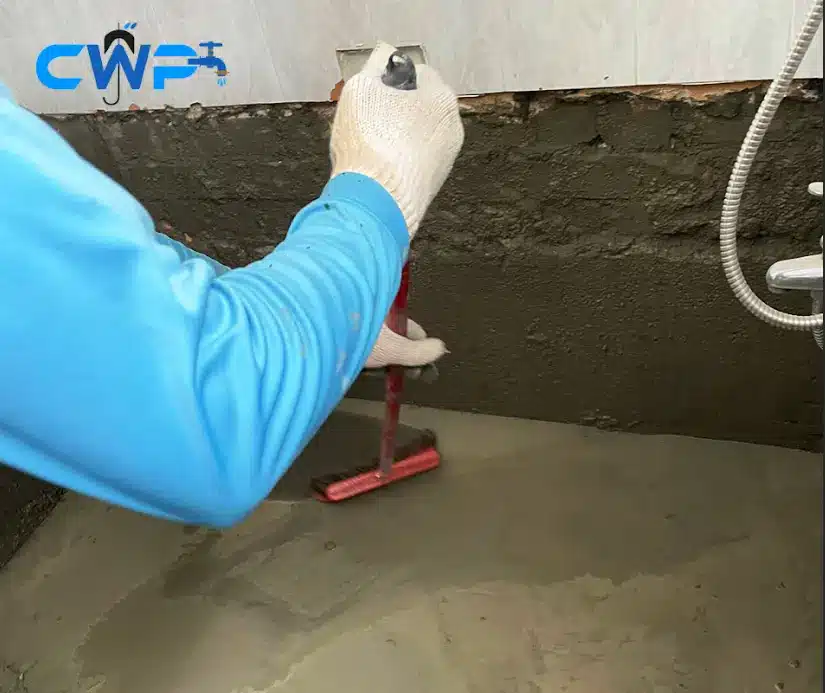
Unlike unprotected surfaces that suffer dampness, seepage, and moisture penetration over time, a cementitious coating seals pores and capillary channels completely. It suits both new construction and remedial repair projects across Singapore, protecting assets reliably for many years ahead.
Building owners and waterproofing specialists choose this cement-based treatment for its strength, affordability, and proven performance. It protects wet environments including basements, water tanks, sewage structures, and swimming pools from persistent water infiltration. After full curing, the rigid or semi-flexible mineral membrane resists both positive-side and negative-side water pressure. In Singapore’s tropical climate, where heavy rainfall and high humidity drive rapid concrete deterioration, this protective coating guards against chronic water damage. Many cementitious products also resist carbonation, chemical attack, and biological growth such as mould and algae effectively. This makes cement-based waterproofing a dependable and cost-effective solution for residential, commercial, and infrastructure projects across Singapore.
A study on cementitious repair mortars highlights how polymer emulsions can improve the performance of cement-based materials used in concrete protection and waterproofing. As many concrete structures age, effective repair materials must offer strong workability, durability, and resistance to cracking.
What Are the Different Types of Cementitious Waterproofing?
Cementitious waterproofing covers six distinct system types, each offering different levels of flexibility, rigidity, and penetration depth. The main categories include rigid coatings, flexible polymer-modified membranes, self-healing crystalline treatments, single-component slurries, two-component systems, and polymer-modified formulations. Rigid types suit stable, low-movement concrete surfaces without thermal expansion or structural vibration.
Flexible types accommodate minor cracks, movement joints, and cyclic wetting and drying across tropical building envelopes. Crystalline products penetrate deep into capillary channels and seal the concrete from within permanently. Understanding these classification types helps you specify the most appropriate waterproofing solution, product grade, and application method for your Singapore project.
Understanding the different types ensures effective protection for your building.
1. Rigid Cementitious Waterproofing
Rigid cementitious waterproofing is a hard, inflexible mineral coating designed for structurally stable concrete. Unlike flexible polymer-modified membranes, a rigid system does not stretch, bend, or accommodate thermal expansion after curing. It resists high hydrostatic pressure effectively and bonds tightly to concrete and masonry substrates. This inflexible mineral render suits water-retaining structures such as reservoirs, water tanks, and underground basement walls. Contractors mix the product with water, apply it as a stiff slurry or cementitious mortar, and build up the required coat thickness. It remains one of the most cost-effective waterproofing coatings available from building suppliers across Singapore.
Key features of rigid cementitious waterproofing include:
- High compressive strength and strong substrate adhesion after full curing
- Suitable for both positive-side and negative-side hydrostatic waterproofing
- Non-toxic after curing, approved for contact with potable water structures
- Resistant to water pressure, mild chemical attack, and biological growth
- Not suitable for surfaces subject to structural movement or cyclic cracking
Rigid systems perform best on structurally stable, non-moving concrete surfaces that do not flex or vibrate. They are widely used in potable water tanks because the cured mineral membrane releases no harmful substances. Contractors must prepare the substrate thoroughly, removing all loose concrete, dust, oil contamination, and surface delamination before application. In Singapore, rigid cementitious coatings protect HDB infrastructure, commercial basement walls, and water storage facilities reliably. Without proper surface preparation, the coating delaminates early and the waterproofing barrier fails. Always engage a BCA-registered waterproofing contractor to specify the correct rigid product grade for your structure.
2. Flexible Cementitious Waterproofing
Flexible cementitious waterproofing is a polymer-modified coating that stretches, flexes, and moves with the structure without cracking or splitting. It bridges minor cracks, accommodates thermal expansion, and resists cyclic wetting and drying in Singapore’s tropical climate. Unlike a rigid mineral render, this elastic cementitious system uses polymer modifiers to deliver high elongation and strong crack-bridging ability. Common applications include wet rooms, bathrooms, balconies, planted roof decks, and external walls subject to windblown rainfall ingress. The polymer additive transforms the cured coating into a semi-flexible membrane that remains intact under movement and vibration. This makes it a popular choice for residential wet area waterproofing and remedial repair works across Singapore.
A study from Science Direct entitled “Influences of temperature and opening rate of substrate cracks on the mechanical behaviour, crack–bridging ability and deformation mechanisms of one–component, cementitious, flexible waterproofing membranes”, showed that crack-bridging performance depends strongly on temperature and movement rate. Above the polymer’s glass transition temperature, crack-bridging ability decreases, while below it membranes behave brittle. Slower displacement rates also reduce flexibility, highlighting key factors affecting membrane durability.
Key features of flexible cementitious waterproofing include:
- High elongation factor and strong crack-bridging performance at joints and cracks
- Good adhesion to concrete, block, and tile substrates without a separate primer
- Suitable for both internal wet rooms and external waterproofing applications
- Resistant to mould growth, biological attack, and repeated cyclic wetting
- Compatible with ceramic tile adhesives, decorative overlays, and protective screeds
Flexible cementitious coatings protect wet areas from persistent moisture ingress, dampness, and long-term water infiltration. They act as a reliable tile-backing membrane in bathrooms, shower enclosures, and wet preparation areas. Contractors apply the product in at least two coats, allowing each layer to cure before the next goes on. Internal angle fillets, pipe penetrations, and movement joints need reinforcing fabric embedded in the first coat. This detail treatment prevents future leakage at the most vulnerable points of the waterproofing system. A BCA-registered waterproofing contractor in Singapore can specify the correct flexible grade for your application.
3. Crystalline Cementitious Waterproofing
Crystalline cementitious waterproofing works by growing insoluble mineral crystals deep inside the concrete pore structure. When moisture is present, the active reactive silicates in the product react with calcium compounds inside the concrete body. These crystallisation reactions fill capillary channels, micro-cracks, and sub-surface voids permanently and completely. Unlike a surface-applied coating or topical sealer, crystalline waterproofing seals the concrete from within rather than just covering the outer face. This self-healing, reactive mineral system also re-activates and seals new hairline cracks that form in the structure over time. It suits below-grade waterproofing, water-retaining structures, and foundations where future maintenance access is difficult or impossible.
A study from Science Direct entitled “Development of cementitious capillary crystalline waterproofing agents and durability study of concrete in the presence of chloride with sulfate in aqueous environment” showed that optimised cementitious capillary crystalline waterproofing agents significantly enhance concrete durability and impermeability. Using specific proportions of EDTA, l-aspartic acid, sodium sulfate, sodium silicate, and nano-silica, substrate impermeability improved by up to 300%, strengthening resistance against water penetration and chemical attack.
Key features of crystalline cementitious waterproofing include:
- Permanent sealing through deep crystal formation inside capillary pores
- Self-healing capability that re-seals new hairline cracks over the service life
- Suitable for both positive-side surface application and integral concrete admixture use
- No membrane overlay, protective screed, or subsequent maintenance coating required
- Approved for potable water structures, sewage channels, and drainage infrastructure
Crystalline products are widely used in Singapore for basement construction, tunnel linings, and underground infrastructure projects. Contractors apply the reactive mineral slurry directly to the damp concrete surface as part of the waterproofing works. Unlike a standard topical sealer that degrades and needs periodic reapplication, the crystals remain permanently stable inside the substrate. This low-maintenance nature makes crystalline waterproofing a cost-effective long-term solution for structures where reapplication is not practical. Specialist waterproofing contractors also use crystalline compounds as integral admixtures in new concrete pours. It provides durable, permanent protection that outlasts most surface-applied cementitious coatings.
4. Polymer-Modified Cementitious Waterproofing
Polymer-modified cementitious waterproofing blends cement powder with a synthetic polymer emulsion to create a high-performance protective coating. The polymer additive, typically an SBR latex or acrylic modifier, improves adhesion, flexibility, and long-term durability over plain unmodified cement mortars. Contractors combine the liquid polymer component with the dry cement powder before applying the mixed coating to the prepared substrate. This enhanced formulation performs better than rigid plain cement coatings under movement, thermal cycling, and repeated vibration. It suits roofs, balconies, external walls, water features, and planter boxes that face Singapore’s intense UV radiation and heavy monsoon rainfall. Polymer-modified systems are widely specified by waterproofing contractors and structural engineers for both new works and remedial repair projects.
A study from Trans Tech Publications Ltd integrated into the Scientific.Net website entitled “The Effect of Polymer Emulsion Addition on the Setting Time, Crack Formation and Strength of Cementitious Patch Repair Mortars” found that adding polymer emulsions such as natural rubber, polyacrylonitrile, and polyvinyl acetate enhances crack resistance and improves the curing behaviour of cementitious mortars. These polymers help reduce the risk of crack formation, which is essential for preventing water penetration in concrete structures.
Key features of polymer-modified cementitious waterproofing include:
- Better flexibility and crack resistance than plain rigid cementitious renders
- Strong adhesion to concrete, masonry, and block substrates including smooth faces
- Improved chemical resistance from the SBR latex or acrylic polymer additive
- Compatible with ceramic tile finishes, protective screeds, and decorative overlays
- Available in single-component powder and two-component powder-and-liquid formulations
Polymer-modified coatings suit Singapore’s warm, humid, and UV-intense tropical climate extremely well. The SBR latex or acrylic content resists degradation from UV radiation, thermal movement, and repeated wetting and drying cycles. Contractors apply the product by brush, roller, or steel trowel across the full substrate surface in multiple coats. Each individual coat must cure to the correct stage before the next layer goes on top. This enhanced waterproofing system works effectively for both internal wet areas and exposed outdoor concrete waterproofing applications. It remains a versatile and cost-effective choice for building owners requiring long-term moisture barrier protection across Singapore.
5. Single-Component Cementitious Waterproofing
Single-component cementitious waterproofing comes as a pre-blended dry powder ready for on-site mixing with water only. Unlike two-component systems that require combining a powder and a separate polymer liquid, this one-part formula eliminates on-site mixing errors completely. Contractors add only the specified volume of water, mix to a uniform working consistency, and apply the slurry immediately. The pre-mixed formulation delivers consistent performance across all product batches without variation in polymer content or mixing ratio. This simplicity makes single-pack cementitious waterproofing a popular choice for small to medium waterproofing projects across Singapore. It suits residential wet rooms, kitchens, roof slabs, and light commercial waterproofing applications where ease of installation is a priority.
A study from Trans Tech Publications Ltd. into the Scientific.Net website entitled “The Technique of Single-Component Synchronous Grouting Allocation to Resist Floating in High Pressure Water-Rich Formation”, showed that Research indicates that in high-pressure, water-rich environments, conventional grout can be diluted, delaying strength development and reducing sealing performance. By incorporating selected organic and inorganic additives, single-component waterproofing grout achieved faster setting, improved anti-dispersion, low shrinkage, and better overall performance than two-component systems.
Key features of single-component cementitious waterproofing include:
- Pre-blended one-part formula eliminates on-site mixing ratio errors
- Quick and simple to prepare by adding water only before application
- Consistent batch-to-batch performance across the full project area
- Available in standard-set and rapid-setting grades for different site conditions
- Suitable for residential bathrooms, wet rooms, kitchens, and roof slabs
Single-component products suit both new waterproofing works and routine maintenance patch repairs equally well. They are ideal for small waterproofing teams working without specialist mixing equipment on residential projects. The consistent pre-blended formulation ensures reliable bonding, uniform curing, and predictable service life across the treated area. In Singapore, single-pack cementitious slurries are widely available from building material suppliers and waterproofing product distributors. Always follow the manufacturer’s water-to-powder ratio and application guidelines precisely to achieve full cured performance. Thorough surface preparation remains essential for good long-term adhesion, even with a simple pre-mixed product.
6. Two-Component Cementitious Waterproofing
Two-component cementitious waterproofing consists of a dry cement powder and a separate liquid polymer emulsion that contractors combine on site. Unlike a single-pack pre-blended product, this dual-component system requires precise measurement and thorough mixing of both parts before application begins. The liquid polymer emulsion, typically an SBR latex or acrylic dispersion, activates the full waterproofing performance of the combined mixture. Correctly blending both components unlocks superior flexibility, adhesion strength, and chemical resistance over standard single-component coatings. This powder-and-liquid system delivers a high-performance protective membrane for demanding structural waterproofing applications in Singapore. It is the preferred specification for balconies, basement walls, planter boxes, and high-movement water-retaining structures.
A study from Emerald Insight entitled “Influence of cement and aggregate type on steam-cured concrete – an experimental study” found that Concretes made with HESC developed up to 83% of their design strength within just one day, demonstrating faster strength gain. Although mixtures containing recycled aggregates showed slightly lower mechanical strength, they delivered improved abrasion and skid resistance, making them suitable for pavements, flooring, and slabs.
Key features of two-component cementitious waterproofing include:
- Higher flexibility and crack-bridging performance than single-component systems
- Superior adhesion to difficult, smooth, or contaminated substrates
- Better chemical resistance from the liquid polymer emulsion additive
- Suitable for high hydrostatic pressure and high-movement environments
- Ideal for balconies, planters, basements, and water-retaining concrete structures
Two-component systems require careful on-site mixing to achieve consistent performance across the entire waterproofed area. Contractors must follow the manufacturer’s powder-to-liquid ratio precisely; over-mixing or under-mixing weakens the cured coating significantly. In Singapore, dual-component cementitious waterproofing suits condominium balconies, planted roof decks, basement slabs, and lift pits. Specialist waterproofing contractors apply it as part of a full building envelope protection programme. The higher material cost reflects the superior cured performance, long service life, and reduced risk of early coating failure. Always engage a BCA-registered contractor for two-component waterproofing specification and installation.
Why Is Cementitious Waterproofing Important?
Cementitious waterproofing protects concrete structures from water damage, surface delamination, and early structural deterioration. Without a protective mineral coating, water ingress seeps through concrete pores and capillary channels to reach the embedded steel reinforcement bars. The rebar corrodes, expands, and fractures the concrete cover outward, causing concrete spalling, surface flaking, and structural delamination. Singapore’s tropical climate, with its heavy monsoon rainfall and persistent high humidity, accelerates this entire deterioration cycle significantly. A cement-based waterproofing system creates a durable moisture barrier that stops water infiltration before it reaches the reinforcing steel. Building owners in Singapore carry a legal duty under BCA regulations to maintain their structures in safe and sound condition.
Key reasons why cementitious waterproofing is important:
- Stops water ingress that drives rebar corrosion, concrete spalling, and surface delamination
- Protects structural elements including basement slabs, beams, columns, and water-retaining walls
- Reduces lifecycle maintenance costs by preventing early concrete deterioration and costly remediation
- Helps HDB, MCST, and commercial building owners comply with BCA maintenance obligations
- Extends the service life of concrete structures across Singapore’s humid tropical environment
Without a protective waterproofing barrier, moisture penetration corrodes the reinforcing steel quietly beneath the surface. Rust spreads, expands, and causes progressive concrete delamination and structural weakening over time. Cementitious waterproofing breaks this deterioration cycle before costly structural rehabilitation becomes necessary. Early application of a mineral coating always costs far less than full rebar treatment and patch repair remediation later. Singapore’s BCA recommends proactive waterproofing as part of every building’s planned maintenance programme. Act promptly to protect your structure from dampness, water damage, and progressive concrete deterioration.
What Are the Advantages of Cementitious Waterproofing?
Cementitious waterproofing offers numerous performance advantages that make it one of the most widely used waterproofing methods in Singapore’s construction industry. Unlike polyurethane membranes or bituminous coatings, cement-based systems bond directly into the concrete substrate rather than forming a separate surface layer. This strong chemical bond prevents delamination, peeling, and surface separation over the full service life of the structure. Contractors apply it using standard brushes, trowels, or rollers without specialist equipment or complex application processes, reducing installation time and overall project cost. Cementitious coatings are non-toxic after curing and approved for contact with potable water in drinking water tanks, reservoirs, and swimming pools. These combined advantages make mineral waterproofing a cost-effective, reliable, and versatile solution for building owners across Singapore.
Key advantages of cementitious waterproofing include:
- Strong substrate adhesion through direct chemical bonding to concrete and masonry
- Non-toxic after curing and approved for potable water structures and food-safe applications
- Easy application with standard brushes, rollers, and trowels without specialist tools
- Resistant to high hydrostatic pressure from both positive-side and negative-side faces
- Durable in Singapore’s humid, UV-intense, high-rainfall tropical climate conditions
- Compatible with ceramic tile adhesives, protective screeds, and decorative overlays
Cementitious waterproofing tolerates damp substrates during application, which gives it a real advantage over many polymer-based systems. Achieving a fully dry surface in Singapore’s humid tropical climate is often difficult, particularly in basements and underground structures. Contractors can apply it during remedial repair works without waiting for extended substrate drying periods. It suits both retrofit waterproofing projects and new construction equally well across all building types. The system also acts as a secondary protective barrier alongside other waterproofing membranes in high-risk below-grade structures. These performance advantages make cementitious waterproofing a smart, practical investment for any Singapore building owner.
What Are the Disadvantages of Cementitious Waterproofing?
Cementitious waterproofing has real limitations that building owners and waterproofing specifiers must understand before selecting it for a project. Rigid mineral coatings cannot accommodate structural movement, thermal expansion, or joint cycling, which leads to surface cracking and waterproofing failure over time. Once a rigid cementitious membrane cracks, moisture ingress resumes and rebar corrosion begins again at the compromised zone. On highly dynamic or vibrating structures, a flexible polyurethane membrane or polymer-modified flexible system outperforms a rigid cement-based coating considerably. Surface preparation must be thorough and complete before application begins; poor preparation causes coating delamination, early failure, and repeated remediation costs. Contractors must also consider that some formulations degrade under prolonged strong chemical solvent exposure.
Key limitations of cementitious waterproofing include:
- Rigid types crack under structural movement, thermal expansion, and joint cycling
- Requires complete and thorough surface preparation for adequate long-term adhesion
- Less effective than flexible PU membranes in high-movement or vibrating structural zones
- Needs a protective screed, tile finish, or overlay on trafficked floor surfaces
- Some formulations suffer early degradation from strong chemical solvent exposure
Trafficked surfaces such as car park floors, walkways, and podium decks need a screed or tile overlay placed over the cementitious waterproofing layer. Leaving the mineral coating exposed to mechanical abrasion, traffic loading, and UV radiation shortens the service life significantly. Contaminants including oil, grease, and industrial cleaning agents can attack and degrade unprotected cementitious surfaces. Building owners must build a scheduled maintenance programme into their long-term asset management plan to monitor and maintain the waterproofing system. In Singapore, specialist advice from a BCA-registered waterproofing contractor helps you avoid costly early failures. Understanding these constraints helps you make an informed, cost-effective waterproofing decision for your building.
How Do You Apply Cementitious Waterproofing?
Applying cementitious waterproofing correctly ensures a durable, long-lasting moisture barrier for your concrete structure. The process follows a clear sequence covering surface preparation, defect repair, mixing, application, curing, and final inspection. Nanotechnology waterproofing has enhanced some modern cementitious products by allowing active compounds to penetrate the substrate at a molecular scale. These nano-enhanced mineral coatings fill pores, hairline cracks, and micro-voids deeper than conventional surface-applied slurries, significantly improving the long-term barrier performance. Singapore’s BCA recommends engaging a registered waterproofing contractor for all structural or overhead waterproofing applications. Following each application step in the correct sequence is critical to achieving the full design performance of the system.
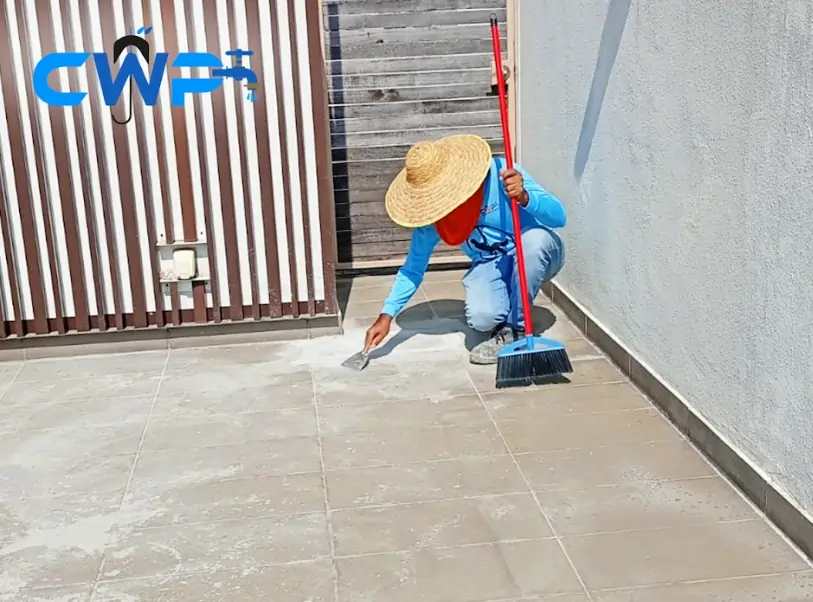
The standard step-by-step application process for cementitious waterproofing is as follows:
1. Inspect the full surface area for cracks, surface delamination, rebar corrosion, and loose material.
2. Remove all loose concrete, dust, oil, grease, and surface contamination by mechanical grinding or wire brushing.
3. Repair all cracks, spalled zones, and surface defects using a compatible polymer-modified repair mortar.
4. Pre-wet the substrate to achieve a saturated surface dry (SSD) condition before applying the slurry.
5. Mix the cementitious waterproofing product to a uniform, lump-free working consistency using a slow-speed drill mixer.
6. Embed reinforcing fabric into internal angles, pipe penetrations, and movement joints during the first coat.
7. Apply the first coat by stiff brush, trowel, or roller across the full prepared substrate surface.
8. Allow the first coat to cure to the manufacturer’s specified stage before applying the second coat.
9. Apply the second coat in the opposite direction to the first for full coverage and pin-hole elimination.
10. Cure the finished surface by misting with water or covering with damp hessian for the required period.
Surface preparation is the single most critical factor determining the long-term success of any cementitious waterproofing installation. A contaminated, weak, or poorly profiled substrate prevents the mineral coating from bonding correctly and causes premature delamination. Nano waterproofing-enhanced products improve penetration depth into pores and capillary channels, reducing pin-hole formation in the cured membrane. Contractors must give extra attention to internal angles, pipe penetrations, cold joints, and construction joints, as these are the most common water ingress pathways. A final hammer tap test confirms no hollow, delaminated, or poorly bonded sections remain before project sign-off. Always follow the manufacturer’s product data sheet and application guide precisely for every cementitious waterproofing project in Singapore.
Where Is Cementitious Waterproofing Used?
Cementitious waterproofing protects a wide range of concrete, masonry, and block structures across Singapore and beyond. Contractors use it wherever persistent water ingress, hydrostatic pressure, dampness, or moisture seepage threatens the structural integrity and service life of a building. Basements, underground car parks, lift pits, water tanks, and retaining walls all face high-pressure groundwater that demands a reliable waterproofing membrane. Waterproof paint formulations based on cementitious chemistry provide a practical, cost-effective solution for external brick, block, and concrete walls exposed to Singapore’s heavy monsoon rainfall. These waterproof paint coatings block windblown moisture, penetrating rain, and driving water from entering the building envelope through porous or cracked wall surfaces. From residential HDB blocks to large commercial developments, cement-based waterproofing protects Singapore’s built environment reliably.
A study from E3S Web of Conferences entitled “Waterproofing material for protection of underground structures” showed that this new material exhibited strong physical and mechanical properties, making it ideal for protecting concrete structures in underground construction.
Cementitious waterproofing suits the following locations and structure types:
- Basement walls, basement floors, and lift pits subject to groundwater hydrostatic pressure
- Potable water tanks, swimming pools, and service reservoirs storing treated water
- Flat roof slabs, roof gardens, planted deck areas, and balcony floors
- External walls, corridors, and facades exposed to Singapore’s driving monsoon rainfall
- Wet rooms, bathrooms, shower enclosures, and kitchen preparation areas
- Retaining walls, foundation walls, and other below-ground concrete structures
- Sewage channels, drainage structures, and wastewater treatment facilities
Waterproof paint coatings based on cementitious formulations also protect exposed external walls from surface staining, efflorescence, and biological growth. In Singapore, heavy monsoon rainfall and high humidity make external wall waterproofing essential for all building types and ages. Cementitious coatings protect HDB common corridors, condominium external walls, and commercial podium structures from water ingress and surface deterioration. Building owners and MCSTs use these mineral protective coatings to maintain their properties in compliance with BCA maintenance obligations. A BCA-registered waterproofing contractor advises on the correct product grade, application method, and coating thickness for your specific structure and site exposure conditions. Proactive waterproofing always costs far less than reactive structural repair after prolonged moisture damage.
How Much Does Cementitious Waterproofing Cost in Singapore?
Cementitious waterproofing costs SGD $50 to $150 for materials covering small bathroom-sized areas in Singapore. A 20-kilogram bag of cementitious waterproofing powder costs SGD $40 to $80 depending on brand quality. This covers approximately 10 to 15 square metres with two coats. Premium polymer-modified cementitious waterproofing costs SGD $80 to $150 per bag. Labour charges add SGD $200 to $500 depending on area size and complexity. Complete bathroom waterproofing including materials and labour totals SGD $500 to $1,500. Flexible cementitious systems cost 20% to 40% more than rigid types.
Several cost factors affect the final project price for any cementitious waterproofing job in Singapore. Large surface areas require more material, more labour time, and more surface preparation, all of which raise the total project cost. Deep structural damage or corroded rebar requires crack repair, patch mortar, and anti-corrosion primer treatment before waterproofing work can begin. Overhead or restricted-access areas attract a higher labour premium because installation is more difficult and time-consuming. Confirm whether the quotation includes full surface preparation, bonding primer, repair mortar, all coats of waterproofing slurry, and a full workmanship warranty period. Proactive early waterproofing always delivers a far lower total lifecycle cost than reactive repair after prolonged water ingress damage.
How Long Does Cementitious Waterproofing Last?
Cementitious waterproofing lasts 10 to 15 years in typical bathroom and wet area applications. Quality polymer-modified cementitious waterproofing lasts 15 to 20 years with proper installation and maintenance. Rigid cementitious systems last 8 to 12 years on stable surfaces without movement. Flexible cementitious waterproofing lasts 12 to 18 years handling building settlement better. Crystalline cementitious systems last 30 years or more becoming permanent parts of concrete. Swimming pool cementitious waterproofing lasts 10 to 15 years with good water chemistry balance.
A study from MDPI entitled “Inventive Microstructural and Durability Investigation of Cementitious Composites Involving Crystalline Waterproofing Admixtures and Portland Limestone Cement” showed that the strength of cement-based waterproofing lies in its ability to block water. Crystalline waterproofing admixtures (CWA) enhance concrete by filling pores, reducing permeability, and forming microscopic crystals that seal tiny cracks. Studies show different CWA types create unique crystal structures and improve chemical composition, making the concrete more durable. By strengthening both microstructure and overall performance, cementitious waterproofing with CWAs offers a reliable, long-lasting solution to protect buildings from water damage.
Factors that affect the service life of cementitious waterproofing:
- Product type: crystalline delivers permanent protection; rigid coatings may crack under movement earlier
- Application quality, coat thickness, and surface preparation standard on the original installation
- Degree of structural movement, joint cycling, and loading in the substrate over time
- UV radiation exposure and thermal cycling on exposed outdoor surfaces in Singapore’s climate
- Maintenance inspection frequency and the speed of remedial repair after early signs of failure
Regular inspection and prompt maintenance significantly extend the effective service life of any cementitious waterproofing system. Waterproofing specialists recommend a full condition assessment, including a hammer tap survey and water bead test, every two to three years. Identify and repair minor surface cracks, pin-holes, and coating delamination before water infiltration resumes and rebar corrosion begins. Singapore’s BCA-registered waterproofing contractors provide scheduled maintenance programmes to keep waterproofed surfaces in reliable, compliant condition. A proactively maintained cementitious coating delivers far greater value over its design life than a neglected system needing full re-waterproofing. Act early, and your waterproofing investment protects your building for many years ahead.
FAQ’s About Cementitious Waterproofing
Yes, cementitious waterproofing can stop active leaks using crystalline or quick-setting formulations designed for this purpose. Crystalline cementitious waterproofing reacts with water in leaks to form crystals that seal cracks. Quick-setting cementitious plugs stop flowing water within minutes. However, standard cementitious waterproofing cannot stop active leaks and needs dry surfaces. You must use specialized products designed specifically for wet conditions and active water flow.
No, standard rigid cementitious waterproofing is not flexible and cracks easily with movement. However, Flexible cementitious waterproofing slurry/mortar containing polymers can stretch slightly without cracking. Flexible types accommodate minor building settlement and temperature changes effectively. Rigid cementitious waterproofing suits only stable surfaces that do not move. Choose flexible cementitious systems for bathrooms, balconies and areas experiencing movement or thermal expansion regularly.
Yes, you can paint over cementitious waterproofing once it has fully cured. This provides additional protection and aesthetic appeal.Yes, you can paint over cementitious waterproofing once it has fully cured and dried. The waterproofing surface accepts acrylic, emulsion and waterproof paint directly without special primers. Wait at least 7 days after application before painting for proper curing. Clean the surface lightly before painting to remove any dust or powder. Painting does not affect waterproofing performance and provides decorative finish or extra protection layer.Yes, you can paint over cementitious waterproofing once it has fully cured. This provides additional protection and aesthetic appeal.
The main difference between cementitious and liquid waterproofing membrane is that cementitious uses cement-based materials whilst liquid membranes use polymers. Cementitious waterproofing is rigid or semi-flexible whilst liquid membranes are highly flexible. Cementitious costs less but liquid membranes last longer. Cementitious breathes naturally whilst some liquid membranes do not. Liquid membranes handle movement better than rigid cementitious waterproofing systems.
Cementitious waterproofing is cement-based, while bituminous waterproofing uses bitumen to create a waterproof barrier. Bitumen is more flexible, but cementitious offers stronger adhesion to surfaces.The main difference between cementitious and bituminous waterproofing is that cementitious uses cement whilst bituminous uses tar-like materials. Cementitious works well above ground whilst bituminous excels underground. Cementitious breathes allowing vapour escape whilst bituminous creates sealed barriers. Cementitious is easier to apply whilst bituminous often needs heating. Bituminous lasts longer underground but cementitious is safer for drinking water applications.
The main difference between cementitious and polyurethane waterproofing is flexibility and application method. Cementitious is rigid or semi-flexible whilst polyurethane is highly elastic and stretches. Cementitious costs less but polyurethane provides superior performance. Cementitious applies like plaster whilst polyurethane applies as liquid coating. Polyurethane resists UV damage better than cementitious waterproofing. Cementitious is better for drinking water whilst polyurethane suits exposed roofs.